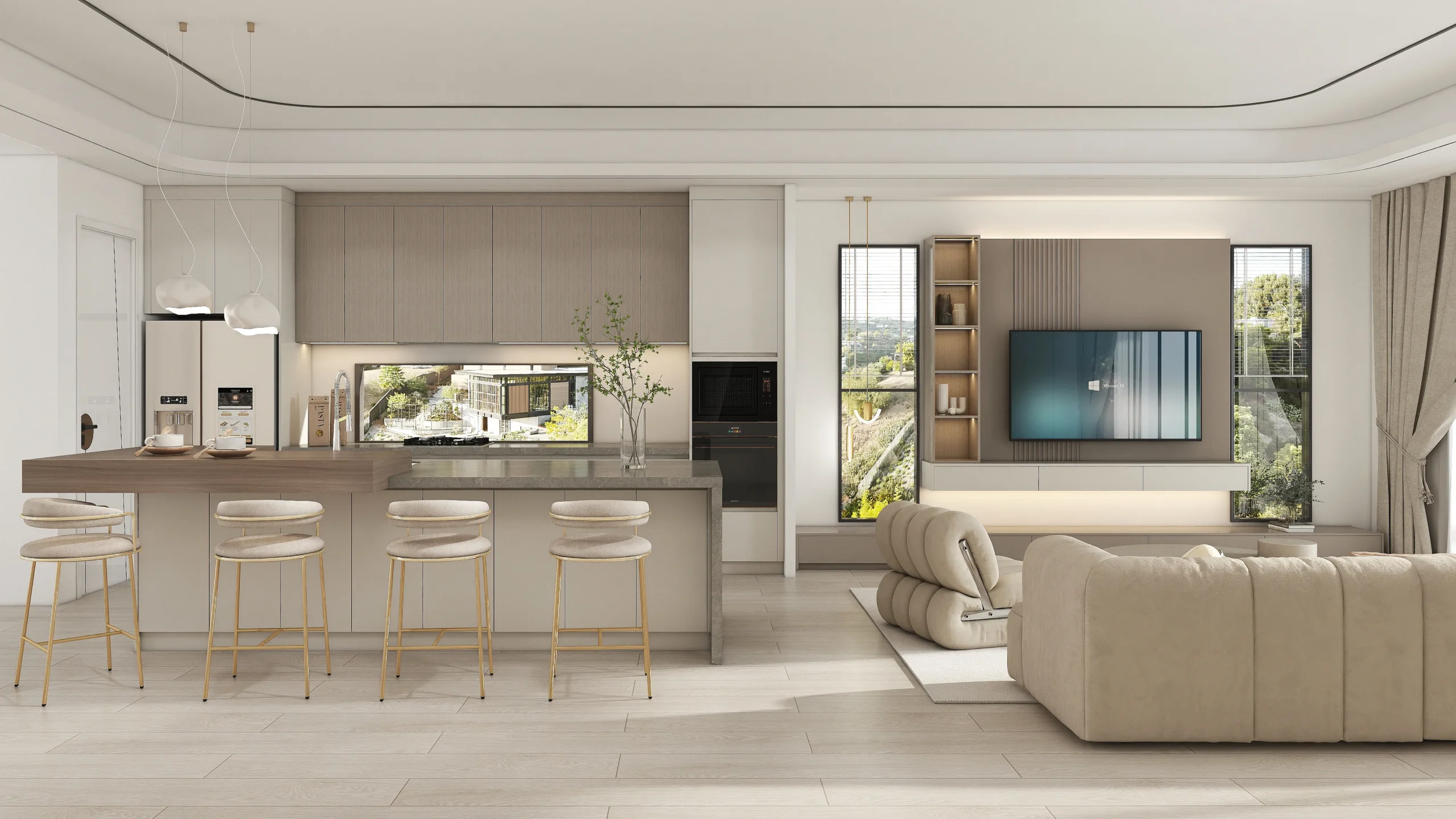
A villa wardrobe may look perfect in a showroom, but daily living can quickly reveal its weaknesses. Open shelves create a stylish, boutique-like look, yet they also expose clothing, bags, and accessories to dust, sunlight, and visual clutter. Closed wardrobes offer better protection and privacy, but if the design is too heavy, they can make a bedroom or dressing room feel flat and bulky.
That is why the open wardrobe vs closed wardrobe decision matters in villa design. The real question is not simply which one looks better, but which one keeps the space clean, protects valuable items, adapts to the local climate, and remains easy to use every day.
“For most villas, a closed wardrobe is the more practical foundation, while open wardrobe sections work best as curated display areas.“
What Is an Open Wardrobe?
An open wardrobe is a storage system without full doors. It usually includes exposed hanging rails, shelves, drawers, display zones, and sometimes a center island.
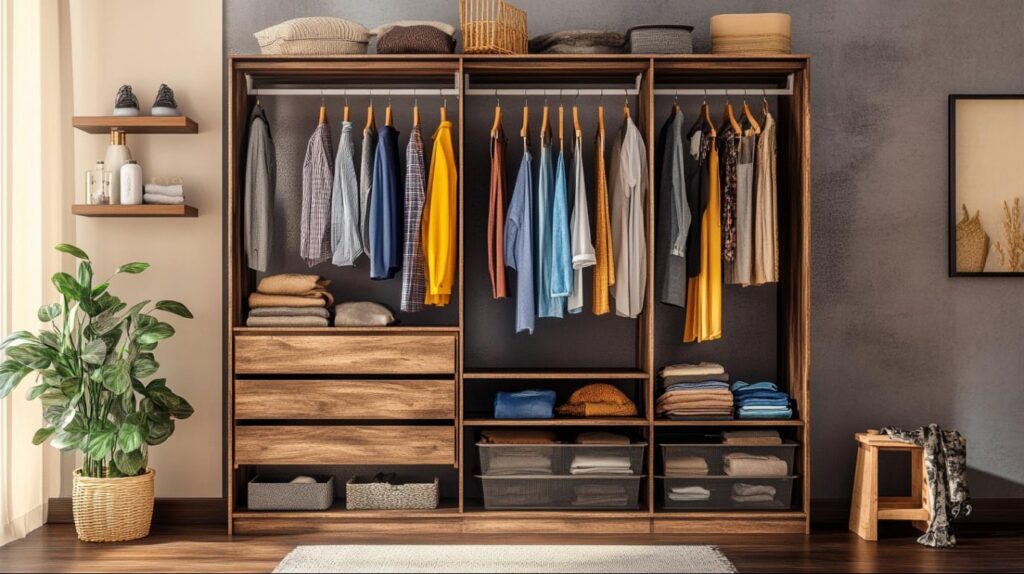
In villas, open wardrobes work best in private areas such as master walk-in closets, dressing rooms, shoe walls, and curated bag displays. A well-planned open walk-in wardrobe can feel like a personal boutique when it combines clean lines, integrated lighting, and enough circulation space.
Choose an open wardrobe if you want:
- Fast access to daily outfits
- Clear visibility for shoes and accessories
- Display space for bags or fashion pieces
- A lighter look in a large walk-in closet
- A boutique-style dressing experience
The biggest benefit is convenience. You can see everything at once, so daily dressing becomes faster. The trade-off is that every visible item becomes part of the room design.
What Are the Pros and Cons of an Open Wardrobe?
An open wardrobe can make a villa dressing room feel personal and high-end. With LED lighting, glass shelves, and a clean layout, it can create a strong display effect.
However, open wardrobes require more care. Dust settles directly on shelves, garments, shoes, and accessories, while private items are harder to hide. They are also less practical for seasonal storage, and strong sunlight may gradually affect fabrics, leather goods, and dyed materials.
Pros:
- Easy access to daily clothing
- Strong visual display
- Makes the dressing area feel larger
- Helps with outfit planning
- Works well for bags, shoes, and selected fashion pieces
Cons:
- Needs frequent cleaning
- Can look messy without organization
- Offers less privacy
- Exposes items to light and dust
- Not ideal for seasonal storage
- Less suitable for guest or children’s rooms
Design note: Avoid a fully exposed layout if the room has strong sunlight, frequent dust, limited cleaning time, or many private items. Use display sections only for frequently used pieces or selected accessories.
What Is a Closed Wardrobe?
A closed wardrobe uses doors or panels to cover the storage area. It may include hinged doors, sliding doors, folding doors, glass doors, or full-height built-in panels.
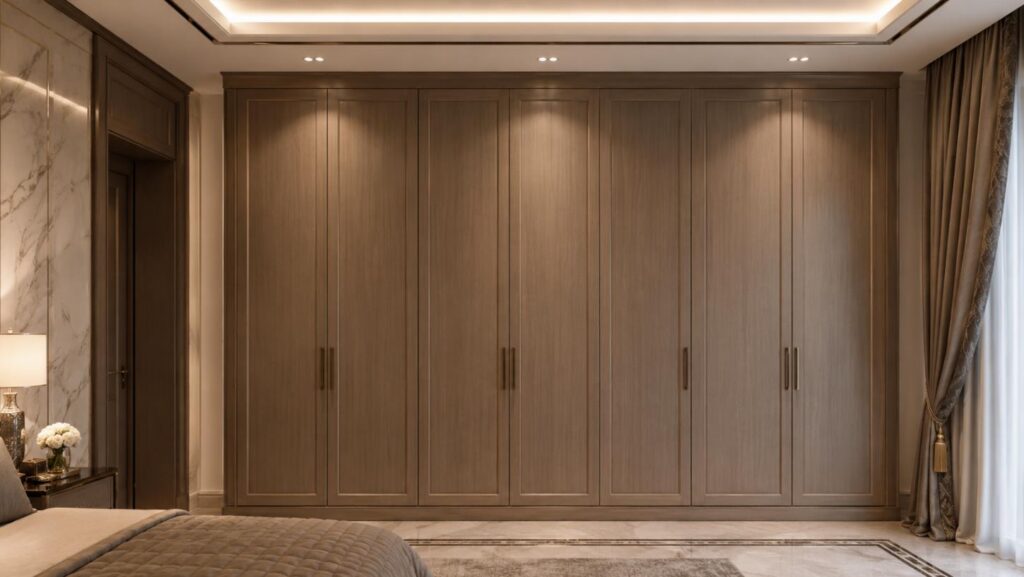
Closed storage works best when protection, privacy, and easy maintenance matter more than full display. It is especially useful in villa bedrooms, guest rooms, children’s rooms, utility rooms, and climate-sensitive spaces.
Choose a closed wardrobe if you need:
- A cleaner bedroom appearance
- Private storage for family or guests
- Better protection for clothes and bags
- Long-term storage for seasonal items
- Lower daily maintenance
- A calmer interior look
A wardrobe with doors does not have to look plain. Full-height panels, slim handles, internal lighting, glass sections, and refined finishes can make it feel elegant and architectural.
What Are the Pros and Cons of a Closed Wardrobe?
The main strength of a closed wardrobe is control. Doors reduce visual clutter and help protect stored items from daily exposure. This is useful in villas, where storage needs are often larger and more complex.
The main risk is poor design. A large wall of doors can feel bulky if the proportions, finishes, and lighting are not handled well.
Pros:
- Cleaner room appearance
- Better privacy
- Easier daily maintenance
- More practical for bedrooms
- More useful in dusty or sunny environments
Cons:
- Can look heavy if poorly designed
- Hinged doors need clearance
- Sliding doors may limit access
- Offers less open display
- Interior clutter can build up if storage is not planned
Design note: To avoid these problems, use drawers, adjustable shelves, dividers, hanging zones, lighting, and selected glass sections. A good built-in system should feel like part of the room, not like a cabinet added later.
Open Wardrobe vs Closed Wardrobe: Key Comparison
When comparing open wardrobe vs closed wardrobe designs, the best choice depends on how the space is used.
Open storage works better for display and easy access, while closed storage is stronger for privacy, protection, and daily maintenance.
| Factor | Open Wardrobe | Closed Wardrobe |
|---|---|---|
| Best for | Display and quick access | Protection and privacy |
| Visual effect | Open, light, and boutique-like | Clean, calm, and built-in |
| Maintenance | Requires more cleaning and organization | Easier to keep neat every day |
| Privacy | Lower, because items are visible | Higher, because storage is hidden |
| Light and dust exposure | Higher exposure to dust and sunlight | Better protection from dust and light |
| Best villa area | Walk-in closet, dressing room, display area | Bedroom, guest room, children’s room, utility area |
| Long-term storage | Less practical for seasonal or delicate items | More practical for long-term storage |
In any open wardrobe vs closed wardrobe decision, start with the room’s purpose. If the goal is display, open storage works better. If the goal is protection, privacy, and low-maintenance living, closed storage is usually stronger.
Which Wardrobe Works Better in Different Villa Spaces?
A villa should not use one wardrobe style everywhere. Each room has its own role, so the better choice depends on how the space is used. The right wardrobe for villa living should support storage, comfort, and long-term care at the same time.

1. Master Walk-In Closet
Best choice: Open storage with selected closed sections.
Why it works: Daily outfits, favorite shoes, and bags are easier to access when they are visible. However, private items, bedding, luggage, and seasonal clothes are better stored behind doors.
Design tip: Keep display areas curated. Use closed cabinets for items that do not need to be seen every day.

2. Master Bedroom
Best choice: Closed wardrobe with small open or glass-door details.
Why it works: A master bedroom should feel calm and uncluttered. A closed wardrobe keeps visual noise low while protecting clothing from dust and light.
Design tip: Add open shelves or glass-door sections only where they improve the room’s luxury feeling.

3. Luxury Dressing Room
Best choice: Open display for selected items, closed storage for delicate pieces.
Why it works: Bags, shoes, and accessories can create a boutique-style look, but not everything should be exposed. Delicate fabrics, formalwear, and rarely used items need better protection.
Design tip: Use glass doors for pieces that deserve display but still need protection.

4. Guest Bedroom
Best choice: Mostly closed storage.
Why it works: Guests need privacy and a tidy space. Open storage can make the room feel too personal or exposed.
Design tip: Keep the layout simple, with enough hanging space and shelves for short stays.

5. Children’s Room
Best choice: Closed storage.
Why it works: Children’s rooms need easy cleanup. Closed doors hide clutter and make the room look neat with less effort.
Design tip: Choose durable panels, rounded edges, and Bright colors.
6. Basement, Linen Room, Utility Area, or Poolside Space
Best choice: Closed or semi-closed storage with ventilation.
Why it works: These areas need protection more than display. Bedding, towels, sportswear, and seasonal items should be kept away from dust and moisture.
Design tip: Use moisture-resistant materials, ventilated panels, and anti-rust hardware where needed.
This room-by-room approach is practical because villas store more than clothes. They also store luggage, bedding, towels, sportswear, formalwear, and seasonal items. By matching the wardrobe style to each room, the whole villa becomes easier to organize and maintain.
How Does Climate Affect the Choice?
Climate should shape the open wardrobe vs closed wardrobe decision. A clean, dry villa can use more open display, while a sunny, dusty, humid, or coastal villa usually needs more closed storage.
Use this simple rule:
- Dusty villa: choose closed storage to reduce cleaning.
- Sunny villa: use doors or tinted glass to protect fabrics.
- Humid villa: add ventilation and moisture-resistant materials.
- Coastal villa: use anti-rust hardware and stable panels.
- Air-conditioned villa: combine closed storage with proper ventilation to reduce dust circulation and moisture imbalance.
In challenging climates, closed storage helps reduce exposure, lower maintenance, and protect clothing, leather goods, shoes, and wood-based panels.
PA HOME’s Middle East Villa Project

PA HOME’s UAE villa project shows how climate can shape wardrobe design in real life. In a UAE villa environment, sunlight, dust, and air-conditioning can make fully open storage harder to maintain. To respond to this, PA HOME used a tall closed wardrobe in the bedroom to keep clothing hidden, protected, and visually tidy.
The same storage logic appears across the villa. Closed kitchen cabinets help hide cookware and daily items, while bathroom vanities provide practical storage for toiletries. The result is a cleaner, calmer home that is easier to maintain. For this project, closed storage was not just a design preference. It was PA HOME’s practical response to climate, daily use, and long-term villa living.
Recommended Materials for Villa Wardrobes
Once you choose between an open wardrobe and a closed wardrobe, the next key step is material selection. Materials affect not only the look, but also durability, cleaning, moisture resistance, and daily use.
In villas, this matters even more. Strong sunlight, dust, humidity, air-conditioning, and large storage areas can all test the wardrobe over time. The wrong material may look good at first, but become hard to maintain later.
For Open Wardrobes
Open wardrobe closets need materials that look refined and are easy to clean because shelves and hanging areas are exposed.
Recommended options:
- Lacquer panels for a smooth modern look
- Wood veneer for a warmer luxury feel
- Metal frames for a light structure
- Glass shelves for bags and accessories
- LED lighting for display areas
- Easy-clean or fingerprint-resistant finishes for exposed shelves and display areas
Avoid placing leather, silk, wool, or dark fabrics in direct sunlight for long periods.
For Closed Wardrobes
Closed wardrobes need stable panels, durable doors, and reliable hardware.
Recommended options:
- Moisture-resistant MDF or plywood for humid areas
- Melamine boards for easy daily cleaning
- Lacquer doors for a seamless finish
- Wood veneer panels for a high-end look
- Aluminum-framed glass doors for display with protection
For villa wardrobes, hardware quality is just as important as panel material. Soft-close hinges, smooth sliding tracks, anti-rust fittings, and stable door systems can greatly improve daily comfort and long-term durability.
Good materials reduce cleaning effort, protect stored items, and help the wardrobe stay refined for years.
Conclusion
Choose an open wardrobe if you want display, fast access, and a boutique-style dressing experience. Choose a closed wardrobe if you need privacy, dust protection, easier maintenance, and better long-term storage. For many villas, closed wardrobes are the more practical foundation, while open sections can be added where display truly matters.
For villa wardrobe and whole-house customization projects, PA HOME usually recommends a balanced storage strategy: use closed wardrobes as the practical foundation, then add open shelves, glass doors, and display zones where they truly enhance the space. This approach helps create a wardrobe system that looks refined, protects valuable items, and stays easy to maintain in daily villa living.
FAQ
Use full-height doors, slim handles, light finishes, vertical lines, and built-in lighting. If the wardrobe wall feels too heavy, add glass-door sections or small open display areas. The key is to make the wardrobe feel like part of the interior architecture, not a large cabinet placed in the room.
Yes. A closed wardrobe does not mean everything must be hidden. Glass doors, bronze glass, internal LED lighting, open niches, and drawer organizers can display selected bags, shoes, watches, or accessories while keeping them protected. This is often more practical than a fully open wardrobe.
Focus on internal layout, not only exterior finishes. A good wardrobe should include the right mix of long hanging, short hanging, drawers, shelves, shoe storage, luggage space, and accessory zones. Hardware quality also matters. Soft-close hinges, smooth sliding systems, and stable panels make a big difference in daily use.
Avoid exposing delicate fabrics, leather bags, formalwear, seasonal clothing, bedding, and rarely used items. These pieces are more sensitive to dust, sunlight, and air movement. They are better stored inside a closed wardrobe, glass-door cabinet, or drawer system.