Choosing wardrobe materials is not just about picking a board, finish, or hardware style. It is about choosing what works best for the project. A hotel wardrobe, apartment wardrobe, villa wardrobe, and rental property wardrobe all need different material solutions.
Pick the wrong material, and you may face swelling panels, sagging shelves, loose hinges, or costly repairs. Pick the right one, and your wardrobe will look better, last longer, and perform better in daily use.
In this guide, we will walk you through the best material choices for different project types, key mistakes to avoid, and practical tips to help you choose the right wardrobe materials with confidence.
Why Choosing the Right Materials Matters
A wardrobe is not just a cabinet with doors. It is part of the room’s storage, function, and design. People use it every day. They open doors, pull drawers, hang coats, store luggage, and place heavy items on shelves. In hotels, apartments, and rental properties, wardrobes often face even heavier use.
Good material wardrobes can improve:
- Long-term durability
- Moisture resistance
- Load-bearing strength
- Surface appearance
- Installation efficiency
- Maintenance cost
- Overall project value
Poor material choices can create the opposite result. A low-grade board may look fine at first, but it may swell in humid rooms. A beautiful door may also fail if the hinge area is too weak. Think of a wardrobe like a car. The finish matters, but the frame matters more.
Key Factors to Consider When Choosing Materials
Before choosing materials, start with the project. Wardrobe materials for a hotel, apartment, villa, or rental property will not use the same specification. The right choice depends on budget, climate, usage, design style, and installation needs.
Consider these key factors:
Budget
Use MDF or particle board for cost-sensitive projects. Choose plywood, veneer, glass, or aluminum for higher-end results.
Climate
For humid or coastal areas, choose moisture-resistant boards, sealed edges, and durable finishes to prevent swelling or warping.
Strength
For long shelves, heavy doors, and tall cabinets, use stronger materials such as plywood or reinforced boards.
Design Style
Modern wardrobes often use MDF, PET, laminate, glass, or aluminum. Luxury designs may use veneer, lacquer, or solid wood.
Maintenance
For hotels, apartments, and rentals, choose easy-clean and easy-repair surfaces like laminate or melamine.
Environmental Standards
For safer interiors, ask about formaldehyde emissions, low-VOC boards, FSC certification, and required compliance documents.
In short, do not choose by color alone. A good material plan should balance cost, durability, climate performance, design, and maintenance.
Best Material Options Compared
There is no single best material for wardrobe projects in every market. Each material has strengths and limits. Smart wardrobe projects often use a mix of boards, finishes, and hardware instead of one material everywhere.
| Material | Best For | Advantages | Limitations |
|---|---|---|---|
| Plywood | Carcass, shelves, premium projects | Strong, stable, and good screw holding | Higher cost than MDF or particle board |
| MDF | Doors, painted panels, flat designs | Smooth surface and easy to shape | Lower moisture resistance |
| Particle Board | Budget units, bulk projects | Cost-effective and good for standard units | Weaker in humid areas |
| Solid Wood | Luxury wardrobes, feature doors | Natural look and premium feel | Expensive and sensitive to humidity |
| HMR / HDHMR Board | Humid spaces | Better moisture resistance than standard MDF | Higher cost than regular MDF |
| Laminate | Doors and panels | Durable, easy to clean, and available in many colors | Less natural than veneer |
| Veneer | Premium finishes | Real wood look with elegant texture | Requires careful maintenance |
| Glass / Mirror | Doors and display areas | Modern, bright, and space-enhancing | Needs safety glass and regular cleaning |
| Aluminum Frame | Sliding doors, modern projects | Stable, moisture-resistant, and sleek | Best suited for modern styles |
Best Materials for Different Project Types
Different projects need different material strategies. An apartment project may focus on cost control and fast installation, while a villa project may need a more refined look and higher customization. Hotel and rental property wardrobes also require practical materials that can handle frequent use, easy cleaning, and long-term maintenance.
1. Apartment Projects

For apartment projects, balance is key. You need good appearance, stable quality, and controlled cost. For multi-unit projects, wardrobe materials should also support fast production and easy installation.
Recommended options include:
- MDF or particle board for budget units
- Plywood for stronger carcass areas
- Melamine or laminate finishes
- Standard hinges and drawer runners
- Modular wardrobe design
- Flat-pack packaging
This setup helps keep costs predictable. It also makes production and installation easier for large orders.
2. Villa Projects

Villa projects usually need a more refined look. Clients care about texture, details, and customization. They may also want walk-in closets, lighting, glass doors, and premium hardware.
Recommended options include:
- Plywood carcasses
- MDF or plywood door panels
- Veneer, lacquer, PET, or glass finishes
- Aluminum-frame sliding doors
- Soft-close hardware
- Custom internal organizers
For villas, wardrobe materials should feel like part of the architecture, not like loose furniture. The materials should match the home’s interior style while supporting long-term use.
3. Hotel Projects

Hotel wardrobes need to work hard. Guests open and close doors daily, and staff clean surfaces often. The finish must resist scratches, stains, and moisture.
Recommended options include:
- Plywood or high-quality MDF
- Laminate or melamine finish
- Moisture-resistant panels
- Strong hinges and sliding systems
- Easy-clean surfaces
- Standard internal layouts
Cabinet durability matters in commercial use. In commercial cabinetry, structure, door operation, drawer performance, and finish durability should all be considered before material selection.
4. Rental Property Projects

Rental property wardrobes need practical materials. The wardrobe should look good, but it must also be easy to repair. Tenants may not treat it gently, so delicate finishes are not ideal.
Recommended options include:
- Particle board or MDF
- Melamine or laminate finish
- Simple hinged doors
- Replaceable handles
- Standard drawer systems
- Simple internal layouts
For rental properties, wardrobe materials should be simple, durable, and easy to service. This approach helps reduce maintenance costs and makes replacement parts easier to manage.
How to Choose the Right Wardrobe Supplier
After comparing the best materials for different project types, the next step is choosing the right supplier. Even the best wardrobe material options can fail if the supplier lacks project experience, quality control, or installation support.
A reliable wardrobe supplier should help you choose the right materials, control production quality, and reduce project risks from design to delivery.
When comparing suppliers, focus on these points:
- Project Experience: Choose a supplier with experience in apartments, hotels, villas, or rental properties. Different material wardrobes need different design and production standards.
- Material Options: A good supplier should offer plywood, MDF, particle board, HMR board, laminate, veneer, glass, and aluminum options. This makes it easier to match wardrobe materials with your budget, climate, and design goals.
- Sample Confirmation: Always check real samples before production. Confirm board color, texture, thickness, edge banding, finish code, and hardware quality.
- Technical Support: For custom projects, ask for shop drawings, layout suggestions, material specifications, and installation guidance. Clear drawings help avoid mistakes on site.
- Production and Delivery: For bulk or overseas projects, confirm lead time, quality inspection, packaging, labels, spare parts, and after-sales support.
Do not choose a supplier only because the price is low. The right partner should help you balance cost, quality, delivery, and long-term performance. That is how you turn good material choices into successful wardrobe projects.
Custom Wardrobe Project Case Study: Villa Project in Indonesia

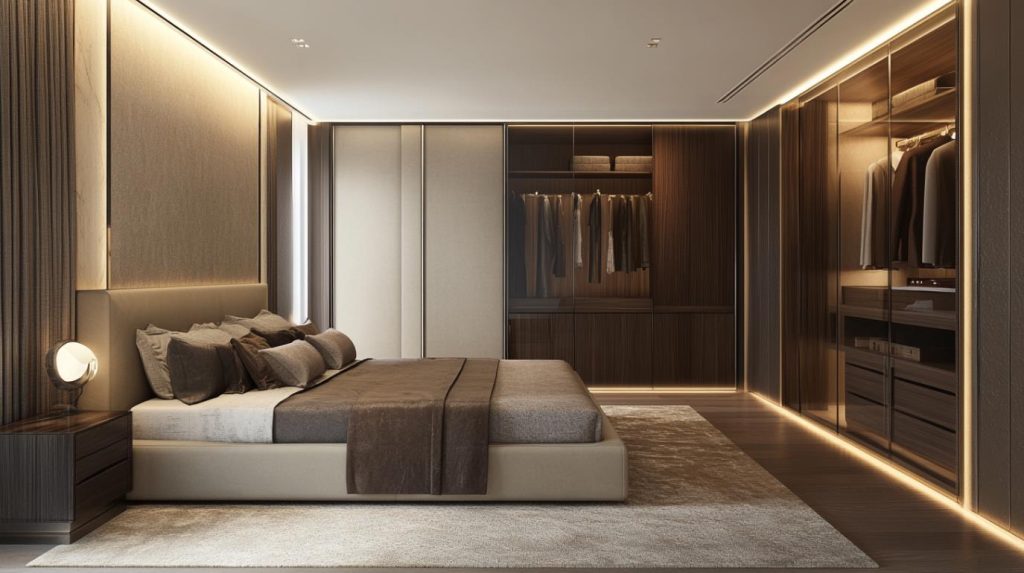
For this villa project in Indonesia, the client needed a custom bedroom storage solution that matched the home’s modern luxury style. The space included large windows, high ceilings, marble-look flooring, built-in bed structures, wall panels, and full-height wardrobes. The main challenge was to keep the whole room visually consistent while combining wardrobe storage, display areas, bedside units, and integrated furniture in one clean design.
PA Home provided a customized wardrobe and bedroom furniture solution with wood-grain panels, dark matte finishes, glass wardrobe sections, built-in storage, and matching wall panels. The design helped create a refined, hotel-like bedroom atmosphere while improving daily storage and space use. With coordinated materials, precise sizing, and installation guidance, the project achieved a modern villa interior with strong visual consistency and practical long-term function.
Want to see more project examples? Explore our completed wardrobe and villa projects.
Common Mistakes to Avoid
Choosing wardrobe materials becomes easier when you know what to avoid. Many buyers choose only by appearance and forget structure. Others ignore humidity, use weak boards for long shelves, or select low-quality hardware. These decisions may save money at first, but they often create repair costs later.
Avoid these common mistakes:
- Choosing materials only by appearance
- Ignoring moisture resistance
- Using weak boards for long shelves
- Selecting low-quality hardware
- Skipping material samples
- Using one material for every part
- Ignoring edge banding quality
- Not checking packaging for overseas delivery
- Starting production without final drawings
The cheapest option can become expensive later. Repairs, delays, and client complaints cost real money. A better approach is to compare wardrobe material options based on the project’s budget, use, and market position.
FAQ About Materials for Wardrobes
There is no single best material for every project. For apartments and rentals, MDF or particle board with laminate can control costs. For villas and luxury homes, plywood, veneer, glass, or aluminum gives better durability and style. The best choice depends on budget, climate, usage, and design goals.
For humid, coastal, or tropical areas, choose moisture-resistant plywood, HMR board, or HDHMR board. Also check edge banding, sealing, and surface finish quality. Moisture often enters through exposed edges, so a good board is not enough. Proper sealing and installation are just as important.
Use premium materials only where they matter most. For example, choose stronger boards for shelves, hanging zones, and hardware points. Use cost-effective finishes like laminate or melamine for large surfaces. This mixed-material approach keeps material wardrobes durable while helping control the total project budget.
Before ordering, confirm the layout, board type, finish code, color sample, edge banding, hardware, packaging, and installation drawings. For bulk or overseas projects, also check labels, spare parts, and delivery schedule. Clear details before production can prevent delays, wrong sizes, and expensive site changes.
Conclusion
The right material is not always the most expensive one. It is the one that fits your project. For apartments, focus on cost, speed, and consistency. For villas, focus on design, durability, and customization. For hotels, focus on strength, easy cleaning, and moisture resistance.
PA Home helps you make these choices with confidence. We provide custom design, material selection, production, packaging, and installation support for global projects. If you are planning apartment, villa, hotel, or residential material wardrobes, contact PA Home today to get a custom wardrobe material plan and project quotation.