When designing or renovating a space, one of the key elements to consider is the door height. Whether you’re installing a new door or replacing an old one, understanding standard door heights can help guide your choices and ensure a smooth installation process. So, how tall is the standard door? Let’s realize together!
What is the Standard Door Height?
So, how tall is the average door? In most homes, the standard interior door height is typically 80 inches, or about 6 feet 8 inches. This height is common across the U.S. and is the go-to measurement for most residential interior doors. Whether you’re replacing a bedroom door or installing a new bathroom entry, this height is often the best fit.
However, it’s important to note that this standard can vary depending on the type of door and the building. Exterior doors, for example, are often taller—84 inches or even 96 inches in some cases, especially in homes with high ceilings or custom design features.
The biggest advantages of choosing standard-sized doors are their cost-effectiveness and availability. Because standard-sized doors are mass-produced, they can be easily purchased as finished products from most home improvement suppliers.
Common Door Dimensions in the U.S.
| Door Type | Standard Height | Standard Width | Standard Thickness | Notes |
|---|---|---|---|---|
| Residential Interior Door | 80 inches (6'8") | 24–36 inches | 1 3/8 inches | Common in bedrooms, living rooms, hallways |
| Residential Exterior Door | 84 inches (7') | 36 inches | 1 3/4 inches | Often used for front doors or patio doors |
| Commercial Door | 84 inches (7') | 36 inches | 1 3/4 inches | Typically used in offices, public spaces |
Common Standard Door Heights by Region
While a door may seem like a simple element of a building, its standard height is actually a fascinating reflection of local building traditions, measurement systems, and human ergonomics. Understanding these regional differences is crucial for architects, global suppliers, and homeowners working with international designs.
This table compares the standard door heights for both interior doors and exterior doors across various regions. These standards may vary depending on the architectural style and local building codes.
| Region | Interior Door Height | Exterior Door Height | Notes |
|---|---|---|---|
| United States | 80 inches (2032 mm) | 84 inches (2134 mm) | Most common for residential interiors and exterior doors. |
| Canada | 80 inches (2032 mm) | 84 inches (2134 mm) | Similar to the U.S., with some variations in commercial buildings. |
| Europe | 78.7 inches – 86.6 inches (2000 mm – 2200 mm) | 82.7 inches – 94.5 inches (2100 mm – 2400 mm) | Interior doors are typically shorter, while exterior doors are taller. |
| Australia | 80.3 inches (2040 mm) | 92.1 inches (2340 mm) | Common for residential interiors and taller for exterior doors. |
| United Kingdom | 78 inches (1981 mm) | 82.7 inches – 94.5 inches (2100 mm – 2400 mm) | Standard interior height, with taller options for exterior doors. |
| Middle East (UAE, Saudi Arabia) | 82.7 inches – 86.6 inches (2100 mm – 2200 mm) | 94.5 inches – 106.3 inches (2400 mm – 2700 mm) | Taller doors are common, especially in luxury homes and modern builds. |
| China | 82.7 inches ( 2100 mm) | 80.7–86.6 inches (2050–2200 mm) | Typical residential interior door height around 2100 mm; exterior door heights vary by region and project type. |
Regional Building Codes
Understanding how local building codes influence door heights is essential, especially when purchasing or installing doors in different regions.
Egress Requirements
Many regional building codes require a minimum clear opening height of 80 inches (2032 mm) for egress doors to ensure safe passage. For example, the International Building Code (IBC) in the U.S. sets this height for most residential and commercial building doorways.
Accessibility Standards
According to the Americans with Disabilities Act (ADA), doorways in accessible spaces must provide a minimum height of 80 inches (2032 mm) to accommodate individuals with mobility challenges.
Regional Variations
In Europe, interior doors are often between 2000 mm and 2200 mm (78.7–86.6 inches), while in the Middle East, taller doors up to 2700 mm (106.3 inches) are common in luxury homes.
Why Regional Building Codes Matter?
Influence Door Sizes: Local codes dictate the standard door dimension, door manufacturers must produce to meet regional requirements.
Ensure Safety & Accessibility: Codes ensure doors meet safety, clearance, and accessibility requirements.
Prevent Inspection Issues: Non-compliance can lead to delays, fines, and rework during inspections.
Check Local Codes: Always verify local building codes before installation. Even a small difference in size can make a door non-compliant.
Avoid Costly Rework: Following codes helps prevent unexpected costs for adjustments or replacements.
Protect Legal & Insurance Interests: Non-compliance can result in legal trouble or insurance claims being denied.
Different Standard Door Heights by Door Type
While regional standards provide a baseline, the function of a door is often the ultimate dictator of its size. Asking “What is the standard door height?” is like asking “How big is a vehicle?”—the answer depends entirely on what it’s designed to do. From ensuring safe passage to moving large furniture, let’s break down the standards by door type.
1
Residential Interior Doors
Standard Height: 80 inches (2032 mm)
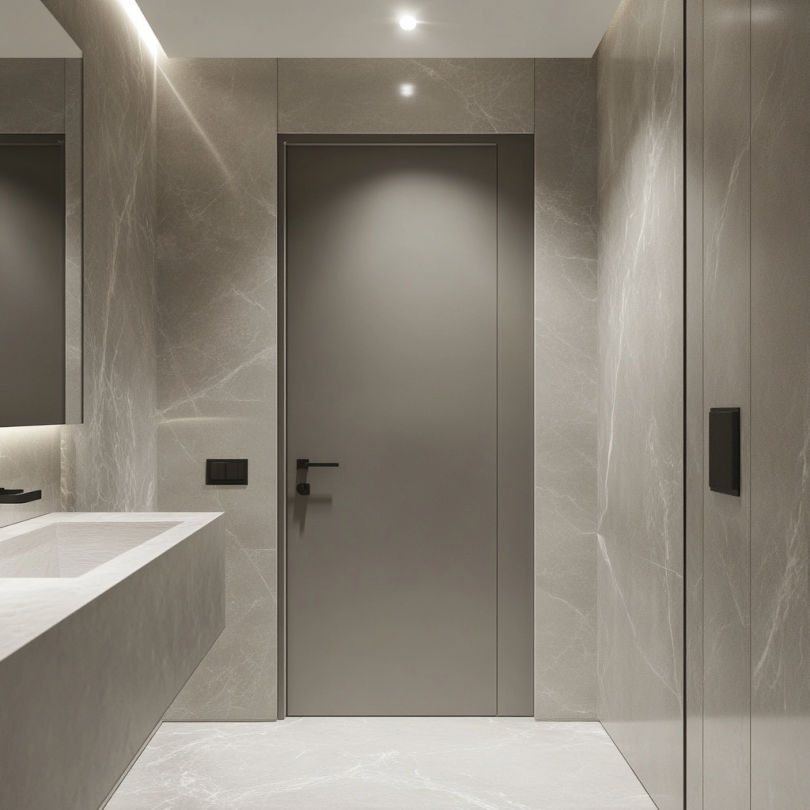
This is the most common size used in U.S. homes for bedrooms, bathrooms, hallways, and closets. It is indeed a cost-effective and readily available option that balances well with standard 8-foot ceilings.
Modern homes with higher ceilings might use 84″ or 96″ doors for a more spacious, luxurious feel.

2
Residential Exterior Doors
Standard Height: 84 inches (2134 mm)
Exterior doors, including front, back, and patio doors, are typically 84 inches to create a grander entrance and match higher ceiling heights in the entryways.
- The rough opening for a 84-inch exterior door is generally 86.5 inches, which accounts for the door frame and necessary clearance.
3
Commercial Doors

Standard Height: 84 inches to 96 inches (2134 mm – 2438mm)
Commercial doors, used in high-traffic areas such as offices and public buildings, often start at 84 inches, but larger sizes (90″ or 96″) are increasingly common to meet accessibility standards or accommodate large equipment.
Key Considerations:
- Accessibility (ADA): Must provide a minimum clear width (usually 32 inches) for wheelchair access.
- Durability: Designed to withstand high traffic.
- Fire Ratings: Often serve as certified fire exits, requiring specific materials and self-closing mechanisms.

4
French Doors
Standard Height: 80 inches (2032 mm) to 96 inches (2438 mm)
French doors typically follow the residential interior door standard of 80 inches when used indoors, but they are often custom-made up to 96 inches for a grander, more open look as exterior doors.
- For exterior French doors, 84 inches is a common height, and custom sizes up to 96 inches are used for larger openings.
5
Sliding Doors
Standard Height: 80 inches (2032 mm) to 96 inches (2438 mm)
Sliding doors, both interior barn doors and exterior patio doors, are designed to cover larger openings. While interior sliding doors are often custom-sized, exterior sliding glass doors are typically 96 inches or taller to seamlessly connect indoor and outdoor spaces.


6
Bi-Folding Doors
Standard Height: 80 inches (2032 mm)
Bi-folding doors, commonly used for closets and laundry rooms, usually match the standard interior door height of 80 inches.
Room-Dividing or Wall-to-Wall Folding Doors: Often custom-sized, but frequently align with standard ceiling heights, ranging from 84 to 108 inches, designed to stack compactly and create a large, seamless opening.
7
Garage Doors

Garage doors operate on a completely different scale, as their primary function is to allow vehicles and large items to pass through.
Standard Garage Door Height:
- Single Garage Door: Typically 7 feet (84 inches / 213 cm) tall.
- Double Garage Door: Also typically 7 feet (84 inches / 213 cm) tall, but can be 8 feet (96 inches / 244 cm) high to accommodate larger trucks, SUVs, or vans.
Chart of Common Standard Door Heights in the USA
The following chart provides a quick visual comparison of how these common door types measure up against each other:

How to Measure Door Height?
Knowing the standard dimensions is one thing; getting the measurements right in your own home is another. An incorrect measurement can lead to costly delays and installation headaches. Follow this precise guide to measure your door height like a pro, whether you’re replacing an existing door or preparing for a new one.
Replacing the Door Slab vs. Installing a New Door
First, determine your goal, as the measurement process is different for each:
Scenario 1: Replacing the Door Slab
You only want to replace the door panel itself and keep the existing door frame. This is the simplest case.Scenario 2: Measuring the Rough Opening
You plan to install a complete new door (including the frame) or replace the entire door set. This is a more comprehensive measurement and requires more precision.
How to Measure Door Slab Height
If you’re replacing the door slab (the door panel), follow these steps:
Tools Needed: A metal tape measure, paper, and pen.
Measure the Height: Measure the height of the door slab itself. Start from the outer edge of the door (not the hinge side), as the top and bottom may not be perfectly straight due to trimming.
Measure in Multiple Locations: Measure at least three different points: left, center, and right side of the door.
Record the Smallest Measurement: Use the smallest height value as your standard. The door can be trimmed slightly, but never enlarged.
Pro Tip
- 📏 Don’t just measure height: Also measure the width, thickness, and note the hinge placement (is it standard or special?) to ensure the new slab matches perfectly.
How to Measure Rough Opening Height
This is critical if you’re installing a new door frame:
Tools Needed: A metal tape measure and a level.
Clear the Area: Remove obstacles around the door opening, then measure from the bottom of the opening (floor or threshold) to the top of the structural opening.
Measure in Multiple Points: Measure the height on the left, center, and right of the opening.
Check for Level: Use the level to check if the top and bottom of the opening are level. If not, record the lowest measurement.
Record the Smallest Measurement: Again, use the smallest of the three height measurements.
Understand the Gap: The rough opening height should be about 2.5 to 4 cm (1-1.5 inches) higher than the door slab height. This gap allows space for the frame (top and side frame) and shims to adjust vertical alignment.
Formula: Rough opening height = Ideal door slab height + top gap (2.5-4 cm)
Common Measuring Mistakes and How to Avoid Them
| Mistake | Consequence | How to Avoid |
|---|---|---|
| Measuring only one point | If the wall or opening isn’t vertical, the door won’t fit properly. | Measure at three points (left, center, right) and use the smallest value. |
| Ignoring floor materials | If you measure before installing the new floor, the door may be too short. | Measure after the final floor is in place. |
| Confusing door slab with rough opening | You may order the wrong size. | Be clear: Are you measuring for a door slab replacement or a full frame installation? |
| Not checking for level/vertical alignment | The door may swing open by itself or not close properly. | Use a level to check both top and bottom of the opening. |
Final Check
-
✔️
Double-check your measurements: Before placing your order for a new door or frame, remember the old industry saying: “Measure twice, order once.” A few extra minutes of review can save you time and money in the long run!
How Does Door Height Impact Interior Design?
Door height is more than just a functional specification; it is a powerful design tool that subtly defines the character of a space, influences emotions, and guides the flow of life. Understanding its impact is key to creating a harmonious, comfortable, and visually stunning interior environment.
1. Creating Visual Balance and Proportion
Doors are one of the most prominent vertical elements in a room, and their height directly affects the visual balance of the space.
Standard Proportions: In standard apartments with ceiling heights ranging from 2.4m to 2.8m, a door height of 2.0m to 2.1m is in harmony with the space, neither too imposing nor out of place.
Enhancing Grandiosity: In spaces with higher ceilings (over 3m), using standard doors may feel disproportionate, like wearing clothes that don’t fit. Increasing the door height to 2.3m or even taller can “lift” the visual focus of the walls, making the space feel grander and more stable, complementing the high ceilings.
2. Coordinating Architectural Elements for Cohesion
A well-designed door should harmonize with other architectural elements in the room.
Aligning with Windows: One classic design rule is to align the top of the door frame with the top of the window frame. This continuous horizontal line creates a strong sense of order and neatness, making the space appear more organized.
Echoing Wall Panels and Moldings: If there are wainscoting or baseboards, the door height can be aligned with the top or bottom of these elements. Similarly, the style of the door frame can match the crown molding on the ceiling, creating a unified design language.
3. Shaping Spatial Perception
Door height is a “magician” in manipulating the perception of space.
Making Small Rooms Feel Bigger: A door extending from the floor to nearly the ceiling can draw the eye upwards, emphasizing the vertical dimension of the space, making the room feel taller and alleviating the feeling of being cramped in small spaces.
Guiding Flow and Defining Areas: A series of uniformly sized doors can create a smooth, continuous flow throughout the space. On the other hand, intentionally altering the height of doors in different areas (e.g., using a lower entry to define a cozy, private study or lounge area) can cleverly delineate different functional zones in an open space, creating interest and variety.
How Much Do Different Door Heights Cost?
After appreciating the design appeal of tall doors, a practical question arises: How much will it cost?
1. Standard Height vs. Custom Height
This is the core factor affecting costs.
Standard Doors (80 inches / 203 cm): These are the most economical choice. As mass-produced, standard products, they are widely available, in stock, and come at the most competitive prices. The cost range for a standard interior door slab is relatively fixed.
Custom Doors (Non-standard Sizes): Once you enter the realm of custom doors, costs and delivery times increase significantly. Custom doors are “made for you,” produced in small batches or individually, and can cost 1.5 to 3 times—or more—than standard doors. Additionally, custom doors may require several weeks for production.
2. Additional Costs for Specialty Doors
Different types of doors—such as sliding, folding, or French doors—can also affect costs. For example, sliding or folding doors may require additional tracks and hardware, while French doors, which often have glass panels, tend to be more expensive than simple wooden doors. Factor in these considerations when selecting door types to ensure they fit within your overall project budget.
3. Hidden Installation and Accessory Costs
Many overlook the fact that changing door height triggers a chain reaction of additional expenses.
Structural Modifications: Expanding an existing standard door opening may involve removing part of the wall, reinforcing the header, or other structural work. These require professional labor and can be a significant expense.
Accessory Costs: Custom-height doors require matching custom frames. Additionally, hardware like locks and hinges may need special sizes or longer models, which are more expensive than standard fittings.
Installation Labor: Installing taller or heavier doors requires higher craftsmanship, more time, and potentially higher installation costs.
Contact PA for Buying Doors
The standard door height is much more than just a simple number; it integrates engineering, design aesthetics, and regional culture, serving as an important element throughout home spaces. From standard sizes that ensure functionality to custom heights that define the tone of a space, every door choice directly impacts both comfort and visual appeal. If you still have questions about selecting the right door height for your project, PA Home‘s professional team is ready to provide comprehensive support, from standard consultations to custom solutions.
📞 Contact PA Home today, and let us help you create the perfect doorway that fits your space.
FAQs about Door Heights
High impact windows are permanently installed windows designed to withstand high winds, flying debris, and extreme weather conditions. Hurricane shutters, on the other hand, are removable or operable coverings that are placed over windows to protect them during a storm.
Yes — the rough opening height is usually larger than the door slab. For example, for an 80‑inch door, the rough opening might be around 82.5 inches (2096 mm).
Yes, custom door sizes can vary significantly from standard interior door dimensions. While the most common interior door height is 80 inches (2032 mm) and width ranges from 24 inches to 36 inches, custom doors can be made to fit any specific height, width, or design requirements. Custom doors are ideal for unique openings, taller ceilings, or specific design preferences, but they typically come at a higher cost and longer lead time compared to standard sizes.
Yes, door height directly impacts both the door size and door jamb. When you choose a taller or shorter door, the door jamb (the frame that holds the door) must be adjusted accordingly to fit the new dimensions. The rough opening for the door also needs to accommodate the height and width of the jamb, along with clearance for shims and proper alignment. If the door height is increased, the door jamb’s height and the rough opening size will need to be larger to ensure a proper fit.
Several factors influence door height, including:
Ceiling Height: Higher ceilings often require taller doors to maintain proportion and visual balance.
Building Codes: Local regulations may dictate minimum and maximum door height for safety and accessibility.
Room Function: Doors for rooms like bathrooms or closets may have different height requirements compared to living areas.
Design Style: Modern or luxury designs may feature taller doors for a more grand or spacious feel.
Accessibility Needs: In some cases, doors may need to be adjusted for easier access, particularly for people with disabilities.