Looking for a color that brings a sense of calm and timeless elegance to your kitchen? Sage green might be just what you need. Soft, soothing, and naturally refreshing, this gentle shade pairs beautifully with warm wood, crisp whites, and metallic accents, creating a kitchen that feels both inviting and comfortable. These 20 sage green kitchen cabinet ideas and color combinations might be just the inspiration you need to find a look you’ll love.

1
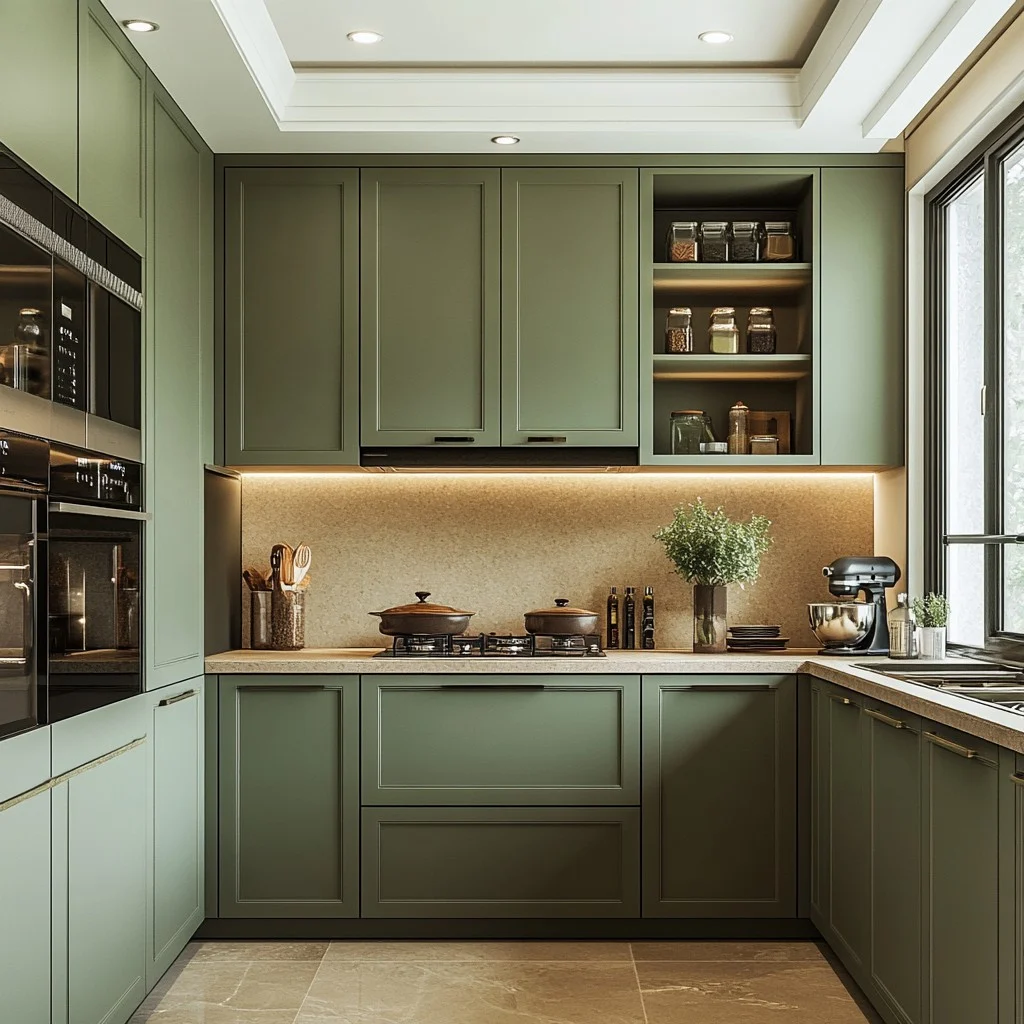
Modern Sage Green Cabinets
Modern kitchens sometimes need a little softness. All those clean lines and smooth surfaces can look beautiful, but without the right colors and materials, the room can feel a bit impersonal.
Sage green is a lovely way to bring some warmth into the picture without giving up that streamlined look.
Try flat-panel cabinets in a muted, slightly gray shade of sage. Pair them with pale quartz countertops, discreet hardware, and simple pendant lights. The green introduces just enough color to make the cabinetry interesting, while the uncluttered design keeps everything feeling fresh.
Natural oak flooring is especially nice here. It adds warmth beneath the cooler surfaces and helps the kitchen feel more connected to the rest of the home.


2
Farmhouse Sage Green Kitchen Cabinets
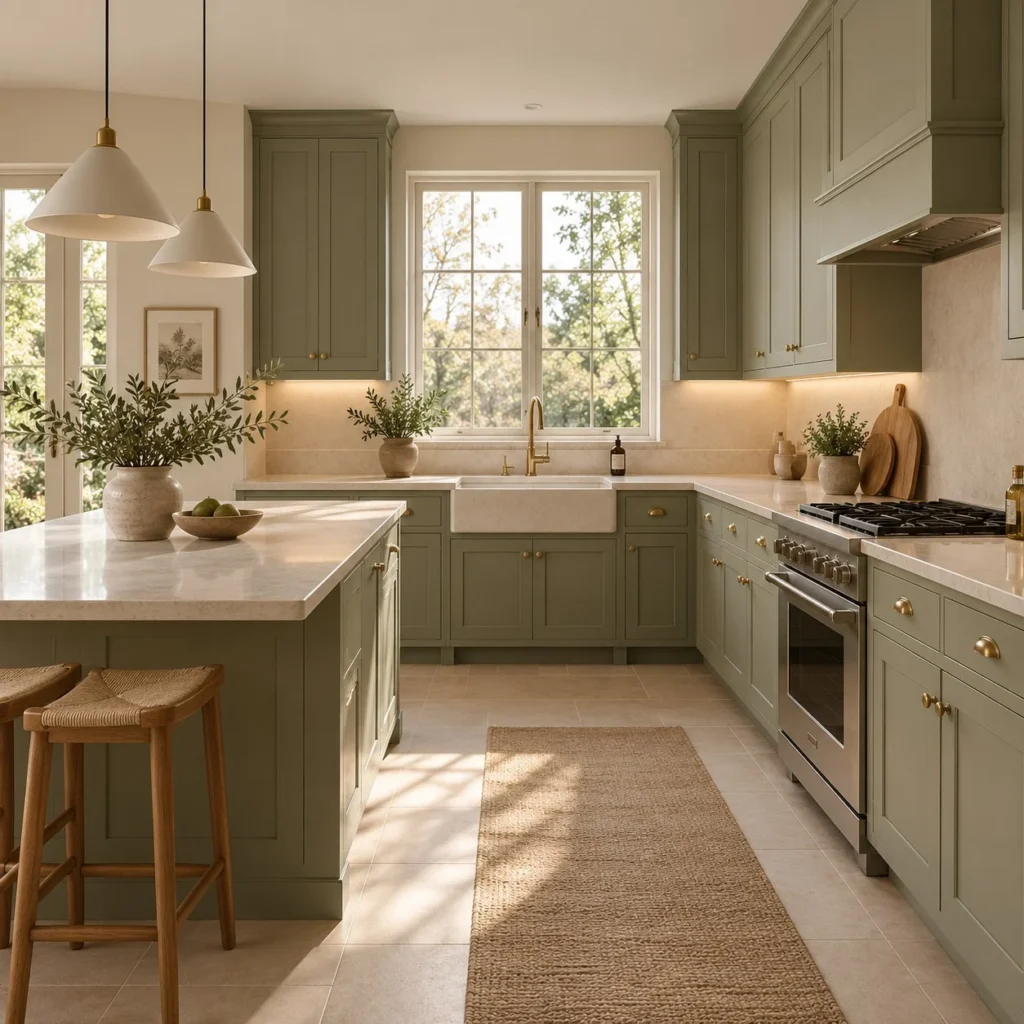
There’s something about sage green and farmhouse kitchens that just makes sense.
Perhaps it’s the way the color works with worn wood, woven baskets, and the creamy white of a traditional apron-front sink. It feels settled and comfortable, like a kitchen where someone always has a pot of coffee brewing.
Shaker-style sage green cabinets are a natural starting point. Their simple framed doors have enough detail to suit a traditional space without looking fussy.
Add butcher block countertops, aged brass knobs, and a few open shelves for everyday dishes. You don’t need to fill every corner with vintage accessories. A wooden cutting board, an old ceramic jug, and a bunch of garden flowers might be all the decoration the room needs.

3
Scandinavian-Style Sage Green Kitchen
Scandinavian kitchens have a lovely way of making simplicity feel warm rather than bare.
In this setting, sage green works best when it’s kept light and subdued. Think of the soft green-gray of eucalyptus leaves rather than a saturated botanical green.
Pair pale sage cabinets with white walls, light oak furniture, and simple open shelving. Keep the countertops understated and let natural light do most of the decorating.
One detail worth borrowing from Scandinavian interiors is their appreciation for texture. A linen tea towel, a handmade ceramic bowl, or a woven pendant shade can bring warmth to an otherwise minimal kitchen.
The result should feel easy to live in, not overly arranged.


4
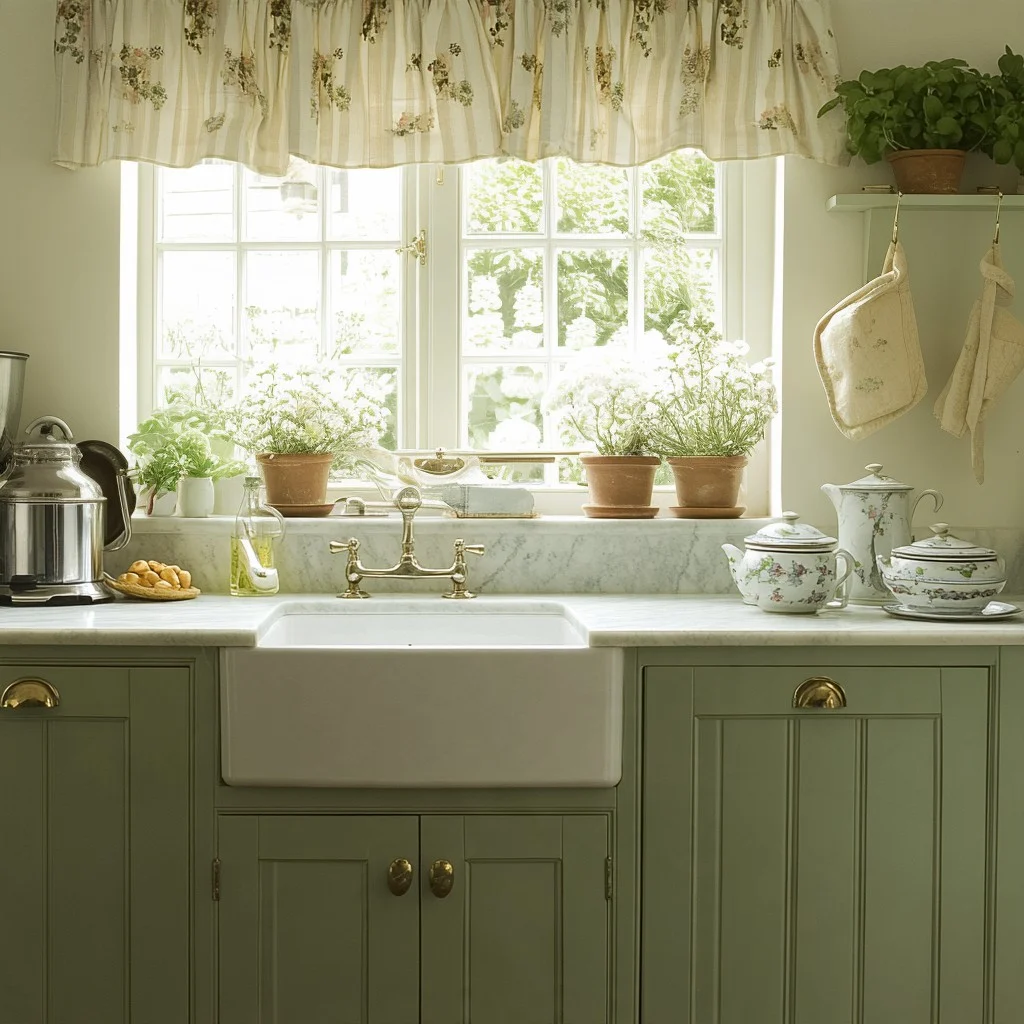
Sage Green Cabinets in an English Cottage Kitchen
An English cottage kitchen rarely looks as though everything was purchased at once. That’s part of its appeal.
Sage green cabinets fit beautifully into this kind of layered interior, particularly when paired with traditional details.
Consider framed cabinet doors, antique-style brass handles, a deep ceramic sink, and softly veined stone countertops. A little tongue-and-groove paneling can bring another layer of character to the walls or kitchen island.
Rather than choosing a perfectly uniform finish for everything, allow a few different textures to sit together. Painted wood, aged metal, pottery, and natural stone give the kitchen a sense of history, even in a newer home.
It’s a look that welcomes the occasional imperfection.

5
Pair Sage Green Cabinets with Warm White Walls
White walls are an obvious partner for green cabinets, but the particular white you choose makes a surprising difference.
A bright, cool white can make some sage greens appear grayer, while a warmer white brings out their softer, earthy side.
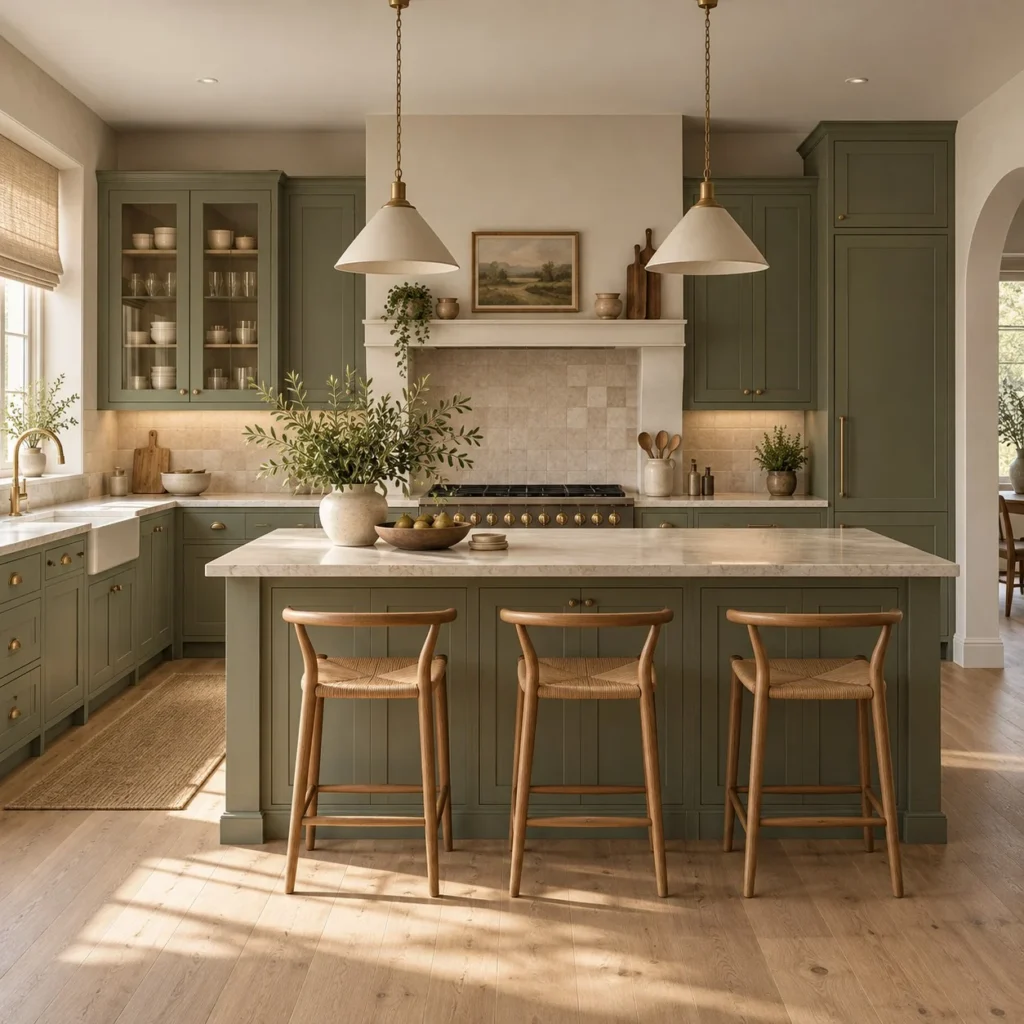
For a kitchen that feels inviting, try creamy white walls with medium-toned sage cabinetry. The contrast is gentle enough to keep the room calm but still gives the cabinets a defined presence.
This combination is also a wonderful backdrop for wooden stools, framed art, or a collection of everyday ceramics.
If you’re struggling to decide how much color to introduce, sage cabinets and warm white walls are a comfortable place to begin.

6
Mix Sage Green Kitchen Cabinets with Natural Wood
One of my favorite things about sage green is how easily it settles alongside wood.
The pairing feels instinctive, almost like looking at leaves and branches together. Oak brings out sage’s warmth, while walnut introduces a richer, slightly moodier quality.
You could choose sage green lower cabinets with natural oak uppers, or keep the cabinetry green and introduce wood through floating shelves, flooring, or a substantial kitchen island.
The wood doesn’t need to match perfectly. A little variation between stools, shelving, and flooring can make the space feel more collected.
What matters is that the undertones feel comfortable together. Warm wood generally looks especially inviting against muted sage.


7
Two-Tone Sage Green with White Kitchen Cabinets
A full wall of green cabinetry can be beautiful, but it isn’t always the right choice for every kitchen.
If you have a smaller room or limited natural light, consider painting the lower cabinets sage green and keeping the upper cabinets white.
The green anchors the room, while the lighter cabinetry allows the upper half to feel more open.
For a softer result, choose warm white rather than stark white. Carry that same warm tone into the backsplash or walls so the two cabinet colors feel connected.
This approach works particularly well with Shaker doors, where the repeated frame details help the different finishes feel like part of one design.


8
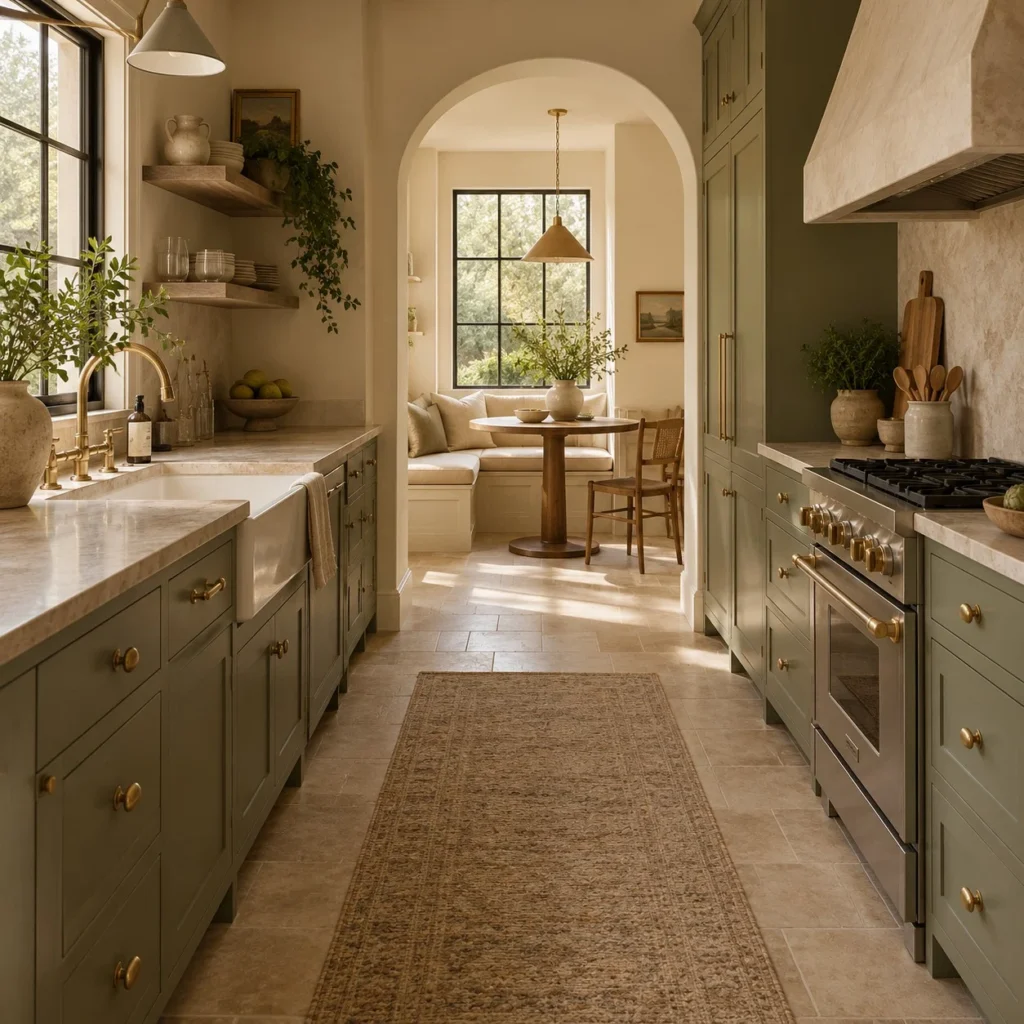
Sage Green Cabinets with Cream and Beige
Sage green doesn’t always need a white backdrop.
Cream, oatmeal, mushroom, and warm beige can make it feel especially restful. These colors soften the contrast and create the kind of kitchen that feels cozy even before you’ve added a rug or switched on a lamp.
Imagine dusty sage cabinets against plaster-colored walls, with a creamy stone countertop and natural wood flooring.
Nothing in the palette has to compete for attention. Instead, the interest comes from subtle shifts in color and texture.
This is a lovely direction for traditional kitchens, but it can work just as well in modern spaces with simple cabinet profiles.

9
Sage Green Cabinets with Marble Countertops
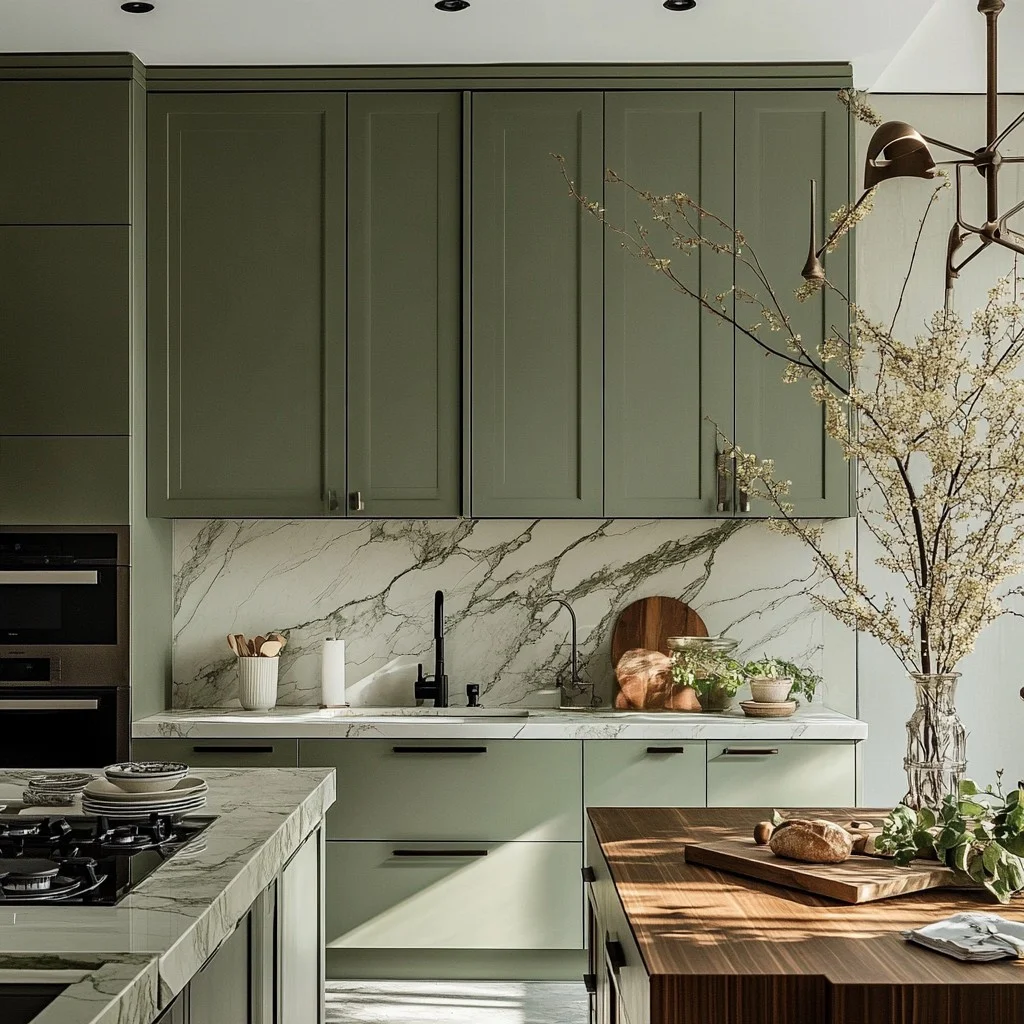
Sage green and marble make a beautiful pair, especially when the marble has soft, wandering veins rather than a busy, high-contrast pattern.
The smooth stone gives the painted cabinetry a sense of lightness, while the green keeps the room from feeling too formal.
White marble with subtle gray veining creates an elegant, understated look. For something warmer, consider a cream-based stone with beige or golden movement.
You can extend the countertop material a short way up the wall or create a full-height backsplash behind the range.
Just remember that a striking stone already has plenty of personality. Keeping the surrounding finishes simple often makes it look even better.

10
Sage Green Cabinets with Brass Hardware
Small details have a way of changing the mood of an entire kitchen.
On sage green cabinets, brass hardware can make the color feel warmer and a little more traditional. It catches the light gently and looks especially beautiful beside cream countertops and natural wood.
I particularly like brushed or unlacquered brass with Shaker-style doors. The softer finish has a relaxed quality that works beautifully with sage.
For a more contemporary kitchen, choose slim brass pulls with clean lines.
You don’t have to match every metal surface in the room. A stainless steel faucet or range can sit comfortably alongside brass cabinet handles, provided the mix feels intentional.

11
Sage Green Cabinets with Black Hardware
Brass isn’t the only finish that suits sage green.
Black handles create a sharper contrast, drawing attention to cabinet lines and adding a slightly more contemporary feel.
This combination looks particularly good with simple Shaker doors or flat-front cabinetry. Add white quartz countertops, pale wood flooring, and understated lighting to keep the room from feeling too stark.
If you’re using black hardware, consider repeating the finish somewhere else, perhaps in the window frames, pendant lights, or bar stools.
Only a small amount is needed. Too many black details can overwhelm the gentle quality that makes sage green so appealing in the first place.

12
Sage Green Cabinets with a Textured Tile Backsplash
A kitchen doesn’t need bold patterns to have character.
Sometimes a slightly uneven tile surface is enough.
Handmade-look ceramic tiles, zellige-inspired finishes, and subtle glazed textures can all work beautifully with sage green cabinetry. Their irregular surfaces catch the light throughout the day, bringing a little movement to the walls.
Cream, ivory, and warm white are easy choices. If you prefer more depth, consider a muted clay or soft gray-green tile.
I love the idea of pairing sage cabinets with small, glossy off-white tiles and simple brass details. It’s a combination that feels thoughtful without being overly polished.

13
Small Kitchen with Sage Green Cabinets
A small kitchen doesn’t have to be all white to feel open.
In fact, a little color can give a compact space more personality, especially when the rest of the design is kept light.
Pale sage green cabinets work beautifully with white countertops, a simple backsplash, and open shelving. The muted color adds interest without creating the heavy visual weight of a much darker cabinet finish.
If storage allows, replacing a section of upper cabinetry with shelves can make a narrow kitchen feel less enclosed.
Good lighting matters too. Under-cabinet lights can brighten work surfaces and bring out the subtle color of the cabinetry in the evening.
The aim isn’t necessarily to make a small kitchen look bigger. It’s to make every part of it feel considered.

14
Sage Green Kitchen Island Ideas
If you love sage green but aren’t ready to commit to an entire kitchen, the island is a wonderful place to use it.
Against a backdrop of warm white or natural wood cabinetry, a sage green island becomes a gentle focal point.
It adds just enough contrast to define the center of the room without making the overall palette feel busy.
A stone countertop, a pair of comfortable stools, and simple pendant lights can turn the island into the place where everyone naturally gathers.
For an especially cohesive look, repeat the green in something small elsewhere in the room, perhaps a piece of artwork or patterned kitchen textiles.

15
Floor-to-Ceiling Sage Green Kitchen Cabinets
Tall cabinets can bring a lovely sense of order to a kitchen, particularly when storage is built around the room’s architecture.
Finished in sage green, floor-to-ceiling cabinetry can feel almost like painted furniture rather than a wall of storage.
The trick is to keep the surrounding details restrained.
Simple cabinet fronts, discreet handles, and a consistent color help prevent tall units from looking too heavy. If the kitchen has generous natural light, a slightly deeper shade of sage can be particularly beautiful.
You could also break up the cabinetry with a small open niche or glass-fronted section to display favorite dishes.
It’s an opportunity to make practical storage feel like part of the room’s character.

16
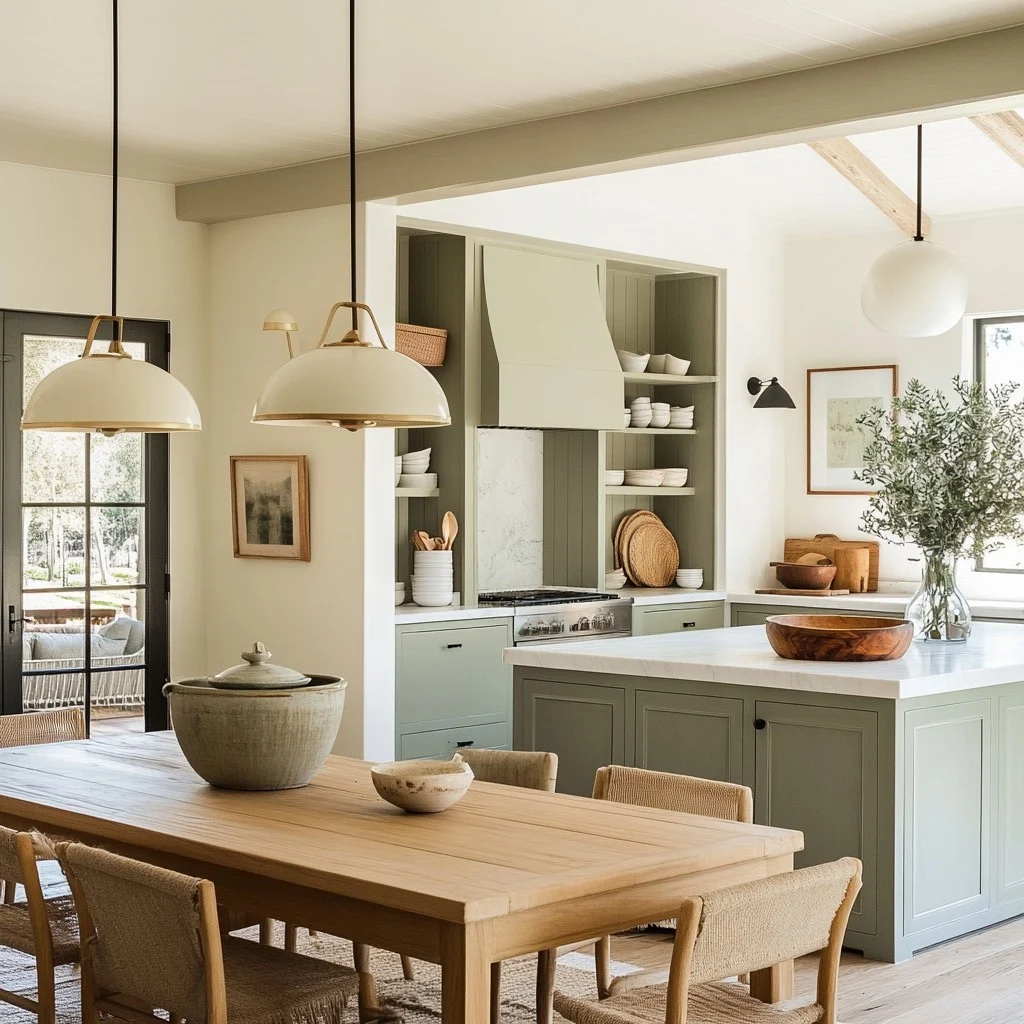
Sage Green Cabinets in an Open-Concept Kitchen
When a kitchen opens directly into the living or dining area, the cabinetry becomes part of a much larger visual story.
Sage green is particularly useful in these spaces because it can connect naturally with the colors and materials found in living rooms.
Think oak dining tables, linen upholstery, woven rugs, warm white walls, and artwork with soft earthy tones.
Rather than treating the kitchen as a separate zone, borrow one or two materials from the surrounding rooms. A wood finish repeated on the dining table and kitchen shelving, for example, can make the transition feel effortless.
Sage cabinetry adds personality while still allowing the entire space to feel connected.

17
Dark Sage Green Kitchen Cabinets with Black Accents
Not every sage green kitchen needs to be pale and airy.
Deeper, grayer shades can create a wonderfully intimate atmosphere, especially when paired with dark stone and rich wood.
Picture muted dark sage cabinets, charcoal countertops, aged brass hardware, and warm lighting spilling across the work surfaces.
This palette feels particularly beautiful in kitchens with traditional architecture, where decorative molding and framed cabinet doors add another layer of depth.
To keep the room from looking flat, introduce a few lighter materials or reflective finishes.
A pale stone backsplash or softly lit open shelf can provide just enough contrast.

18
Sage Green Kitchen Cabinets with Open Shelving
There is something welcoming about a kitchen where the things you use every day are within easy reach.
Open shelves introduce a little breathing room between painted cabinets, especially in smaller kitchens or layouts with long stretches of upper storage.
Natural wood shelves are particularly lovely against sage green. They create a warm contrast and give you space to display dishes, glassware, cookbooks, and a few favorite pieces.
The nicest shelves tend to look lived-in rather than carefully staged.
A stack of everyday plates, a ceramic bowl, and a trailing plant are often more charming than a collection of accessories bought purely for decoration.

19
Sage Green Cabinets with Glass-Front Doors
Glass-front cabinets can give sage green kitchens a lighter, more traditional feel.
They break up solid blocks of painted cabinetry and create an opportunity to show off beautiful dishes or glassware.
For a classic kitchen, try sage green Shaker cabinets with clear glass upper doors and aged brass hardware.
If you prefer a quieter look, reeded or softly textured glass can be a lovely alternative. It adds visual interest while keeping the contents less visible.
You could even add subtle interior cabinet lighting for a warm glow in the evenings.
It’s a small architectural detail that can make the kitchen feel more personal.

20
Sage Green Cabinets with Terracotta Accents
For a kitchen with a little Mediterranean warmth, try bringing terracotta into the palette.
The reddish-brown tones offer a gentle contrast to sage green, giving the room a richer, more sun-warmed character.
Terracotta floor tiles are an obvious choice, but you can introduce the color more subtly through pottery, a patterned runner, or handmade backsplash tiles.
Creamy plaster walls, natural wood, and aged metal finishes help pull everything together.
The result can feel wonderfully relaxed, especially in a kitchen with plenty of sunlight.
There’s no need to make everything perfectly coordinated. The beauty of this pairing lies in its slightly rustic, collected quality.

What Colors Go Best with Sage Green Kitchen Cabinets?
Part of sage green’s appeal is its ability to work with both cool and warm materials. Still, the most beautiful combinations usually have a consistent feeling running through them.
Here are a few color pairings worth considering:
| Color | The Look It Creates |
|---|---|
| Warm White | Fresh, gentle, and timeless |
| Cream | Cozy and welcoming |
| Natural Oak | Relaxed and organic |
| Soft Beige | Calm and understated |
| Charcoal | Modern and quietly dramatic |
| Dusty Pink | Romantic and slightly vintage |
| Terracotta | Earthy and full of warmth |
| Brushed Brass | Rich, warm, and traditional |
One thing I wouldn’t rush is choosing the wall color.
Sage green can lean gray, yellow, or even slightly blue depending on its undertones and the light in your home. A paint color that looks soft and earthy in one kitchen might feel surprisingly cool in another.
Bring your cabinet sample into the room and look at it beside the actual countertop, flooring, and wall color. You’ll learn far more from seeing those materials together than from looking at separate inspiration photos.
A Few Sage Green Kitchen Design Mistakes to Avoid
Sage green is forgiving, but some combinations need a little extra thought.
Choosing a Shade Without Seeing It in Your Kitchen
Lighting changes everything. A green that looks beautifully muted in a bright showroom may appear much darker in a north-facing kitchen.
Look at a large sample in several places and at different times of day before committing.
Mixing Undertones That Don't Feel Right Together
Not all sage greens are warm, and not all whites are neutral.
A cool, blue-leaning sage next to a very yellow cream may create an awkward contrast. Compare materials in the same light and pay attention to how their undertones relate.
Letting Too Many Finishes Compete
A strongly veined marble countertop, patterned backsplash, detailed cabinetry, and several metal finishes can all be beautiful individually. Together, they may make the room feel restless.
Choose one or two features to stand out and let the remaining materials provide a quieter backdrop.
Forgetting About the Rest of the Home
Your kitchen doesn't have to match every other room, but it should feel connected to the house.
Look at nearby flooring, wood finishes, wall colors, and furniture before settling on the final palette.
Often, the most successful kitchen designs feel as though they belong naturally to the home rather than following a particular trend.
Find More Sage Green Kitchen Ideas
We hope these sage green kitchen ideas have inspired you to create a space that feels calm, inviting, and uniquely yours. If you’re ready to bring your vision to life, the team at PA Home is here to help. From choosing the right colors to creating a custom kitchen that fits your home, we’ll guide you every step of the way.
Contact us today and let’s bring your dream kitchen to life!
FAQs About Sage Green Kitchen Cabinets
Yes! Sage green remains a popular choice for kitchens thanks to its soft, earthy look and versatility. Unlike brighter greens, it feels understated and works beautifully with both traditional and modern designs. Pairing it with natural materials and simple cabinet styles can help keep the look timeless.
White quartz, creamy marble, and light beige countertops are lovely choices for sage green cabinets. If you prefer a warmer, more relaxed look, butcher block countertops also work beautifully. For a bolder contrast, consider dark granite or charcoal-colored stone.
Sage green pairs beautifully with warm white, cream, beige, natural wood, and soft grey. For a bolder look, try charcoal, matte black, or brass accents.
White subway tiles, cream zellige tiles, and light grey stone-look tiles all work well. For a warmer, more rustic feel, consider terracotta or beige tiles.
Warm white, ivory, light beige, and soft greige are great choices. These shades complement sage green without overpowering it, keeping your kitchen feeling bright and welcoming.
Absolutely! Sage green and grey create a calm, balanced look. Light grey works well for a soft, modern feel, while charcoal adds contrast and depth. Warmer greys are especially lovely with earthy sage tones.
Yes! Sage green is a versatile, nature-inspired colour that suits both modern and traditional kitchens. It’s softer than darker greens and adds character without making the space feel overwhelming.