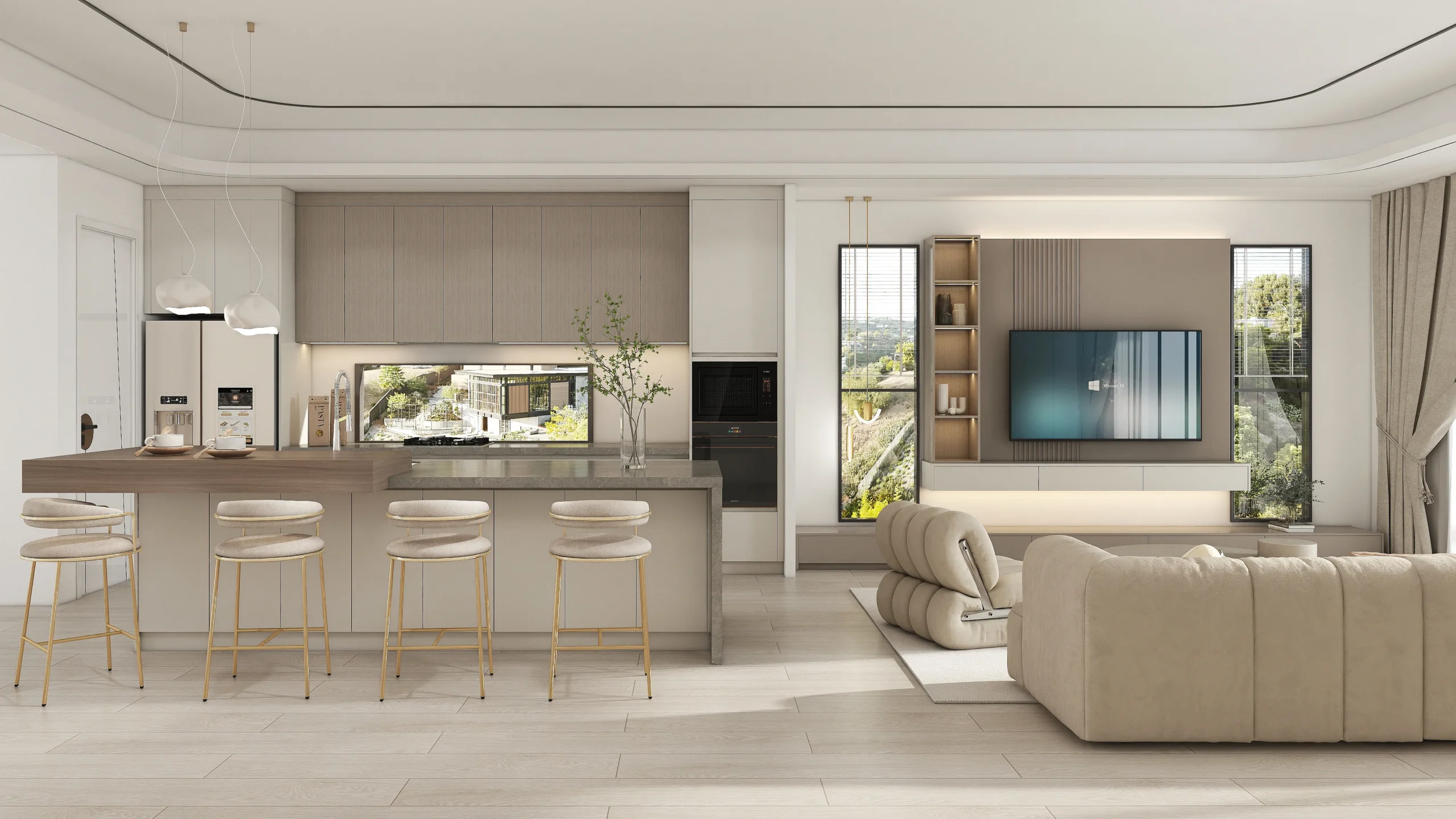
Kitchen interior design is about creating a space that is practical, comfortable, and visually balanced. From modern minimalism to warm rustic styles, different kitchen designs allow homeowners to express their lifestyle through colors, materials, and layouts.
1
Modern Kitchen Interior Design
Modern kitchen interior design focuses on clean lines, simple forms, and a clutter-free appearance. It usually features flat-panel cabinets, integrated appliances, neutral colors, and a combination of smooth and natural textures.
White, grey, black, and warm wood tones are common choices, while materials such as quartz, glass, and matte finishes help create a refined look. Instead of adding too many decorative elements, modern kitchens rely on smart storage, balanced proportions, and well-planned lighting.
To create a modern kitchen, start with a simple color palette and choose cabinets with minimal detailing. Add warmth through wooden accents, textured backsplashes, or statement lighting. This style works well for apartments and contemporary homes where a clean and organized space is preferred.


2
Scandinavian Kitchen Design
Scandinavian kitchen design is known for its bright atmosphere, natural materials, and functional approach. The style uses simplicity to create a warm and comfortable space rather than an empty or cold interior.
Light wood cabinets, white surfaces, soft neutral colors, and natural lighting are common features. Storage is carefully planned to keep the kitchen organized while maintaining an open feeling.
To create this style, combine simple cabinetry with wooden details, minimal decorations, and practical furniture. Small touches such as open shelves, handmade ceramics, and warm lighting can make the space feel more inviting.
This kitchen room style is especially suitable for small homes because the clean design approach helps maximize space while keeping the interior visually calm.

3
Contemporary Kitchen Design
Contemporary kitchen design reflects current trends by combining different materials, textures, and layouts. Unlike traditional modern kitchens, contemporary spaces are less strict and allow more personalization.
Popular elements include two-tone kitchen cabinets, natural stone surfaces, mixed metal finishes, and statement lighting. Designers often combine smooth surfaces with textured materials to create more visual interest.
To achieve a contemporary look, focus on balance rather than decoration. Choose one or two standout features, such as a unique backsplash, kitchen island, or lighting design, and keep the rest of the space simple.

4
Farmhouse Kitchen Design
Farmhouse kitchen design brings together rustic textures and modern comfort. The style is recognized by natural materials, warm colors, and a sense of craftsmanship rather than a perfectly polished appearance.
Wooden cabinets, farmhouse sinks, open shelving, and stone surfaces are common elements. Instead of using only smooth finishes, this style often highlights the texture of materials, such as visible wood grain, aged metals, and handmade tiles.
Modern farmhouse kitchens usually update the traditional look with cleaner layouts, simpler cabinets, and contemporary lighting. A combination of white cabinetry, natural wood accents, and dark hardware creates a balanced contrast.
When creating this look, avoid adding too many rustic decorations. The key is to combine traditional details with practical modern features, creating a kitchen that feels comfortable and lived-in.

5
Minimalist Kitchen Interior Design
Minimalist kitchen interior design focuses on simplicity, order, and reducing visual distractions. Every element has a clear purpose, from cabinet layouts to lighting choices.
The main features include handleless cabinets, hidden storage, simple surfaces, and a limited color palette. Neutral tones such as white, beige, grey, and natural wood help maintain a calm atmosphere.
A successful minimalist kitchen does not mean removing everything from the space. Instead, it uses smart planning to hide unnecessary items while keeping important functions accessible. Built-in appliances, seamless cabinets, and clean countertop surfaces are often used to create a refined appearance.
The challenge of minimalist design is adding enough warmth to prevent the kitchen from feeling empty. Natural materials, soft lighting, and subtle textures can make the space more comfortable without affecting the clean visual style.

6
Luxury Kitchen Interior Design
Luxury kitchen interior design is defined by quality, customization, and attention to detail. The difference between a regular kitchen and a luxury kitchen is often not the size of the space, but the level of design planning behind it.
Premium materials such as marble, natural stone, solid wood, and custom kitchen cabinetry are frequently used. Lighting also plays an important role, with layered lighting systems highlighting architectural details and creating different moods.
Many luxury kitchens include large islands, integrated appliances, hidden storage, and carefully selected hardware. However, luxury does not rely only on expensive finishes. Good proportions, craftsmanship, and a consistent design language create a more sophisticated result.
A well-designed luxury kitchen combines practical functions with strong visual identity, making materials, furniture, and architectural elements work together as one complete space.

7
Industrial Kitchen Design
Industrial kitchen design takes inspiration from factories, warehouses, and urban loft spaces. It uses raw materials and strong contrasts to create a bold interior character.
Common elements include exposed brick, concrete surfaces, metal details, dark cabinetry, and open shelving. Steel frames, pendant lights, and visible structural features often become part of the design instead of being hidden.
Modern industrial kitchens usually soften the rough appearance by adding natural wood, warm lighting, and comfortable textures. This balance prevents the space from feeling too cold or unfinished.
The style works best when materials are carefully controlled. Too many hard surfaces can make the kitchen feel harsh, while the combination of metal, wood, and neutral colors creates a more balanced atmosphere.

8
Traditional Kitchen Design
Traditional kitchen design focuses on timeless details, balanced layouts, and classic craftsmanship. Unlike modern kitchens that emphasize simplicity, traditional spaces often include more decorative elements and refined finishes.
Common features include raised-panel cabinets, detailed moldings, natural stone countertops, classic hardware, and symmetrical arrangements. Colors are usually warm and elegant, such as cream, beige, soft grey, and natural wood tones.
The key to a successful traditional kitchen is avoiding an outdated appearance. Modern versions often simplify decorative details while keeping the sense of quality and craftsmanship. Combining classic cabinetry with contemporary lighting or updated appliances can create a more current look.
Traditional design often places emphasis on proportion and long-lasting materials, allowing the kitchen to maintain its character over time.

9
Japandi Kitchen Design
Japandi kitchen design combines Japanese simplicity with Scandinavian warmth. The style focuses on balance, natural materials, and a calm atmosphere created through careful choices rather than excessive decoration.
Wood plays an important role in Japandi interiors, often appearing in cabinets, flooring, and furniture. Soft neutral colors, clean lines, and natural textures help create a relaxed visual experience. Elements inspired by Japanese design, such as simplicity and appreciation for natural imperfections, add depth to the space.
To create a Japandi kitchen, choose simple cabinetry, reduce unnecessary visual elements, and use materials with natural textures. Stone, wood, ceramic, and soft lighting can add warmth while maintaining the minimalist character.
The result is a kitchen that feels peaceful, functional, and connected to natural materials.

10
Mediterranean Kitchen Design
Mediterranean kitchen design creates a warm and inviting atmosphere through natural textures, earthy colors, and handcrafted details. Inspired by coastal homes in regions such as Southern Europe, this style emphasizes comfort and a connection with nature.
Typical features include terracotta tiles, stone surfaces, wooden beams, textured walls, and warm-toned cabinetry. Colors often include sand, olive green, cream, and deep blue, creating a relaxed yet distinctive appearance.
Modern Mediterranean kitchens usually combine traditional elements with cleaner layouts. Instead of heavily decorating the space, designers focus on authentic materials, architectural details, and natural finishes.
Arched openings, patterned tiles, rustic wood, and soft lighting can bring Mediterranean character into a contemporary kitchen interior design without making the space feel overly themed.

Conclusion
Kitchen cabinets are one of the most important elements in kitchen interior design, influencing both the appearance and functionality of the space. Choosing the right cabinet manufacturer is essential for creating a kitchen that matches your style and practical needs.
PA Home is a whole-house customization manufacturer offering a wide range of products, including kitchen cabinets, bathroom vanities, wall panels, and doors & windows. With one-stop customization services, you can simplify the design process while saving time and cost. Contact PA Home today to explore the latest designs and solutions for your home.
FAQs About Kitchen Interior Design
The most popular kitchen interior design styles include modern, contemporary, Scandinavian, minimalist, farmhouse, luxury, industrial, Japandi, traditional, and Mediterranean styles. Each style creates a different atmosphere through the choice of colors, materials, cabinetry, lighting, and layout.
Start by considering your home’s overall style, available space, daily habits, and preferred atmosphere. For example, modern and minimalist kitchens work well with clean and simple spaces, while farmhouse and Mediterranean designs create a warmer and more traditional feeling.
A small kitchen design should focus on maximizing space through smart storage, efficient layouts, and light colors. Features such as tall cabinets, built-in appliances, multifunctional furniture, and handleless cabinets can help create a more open and organized kitchen.
Modular kitchen interior design uses pre-made cabinet modules that can be combined according to the kitchen layout and storage requirements. It allows better space planning, easier installation, and more flexibility in choosing cabinet styles, finishes, and accessories.
Modern kitchen interiors often use neutral colors such as white, grey, beige, black, and natural wood tones. Many contemporary designs also introduce deeper colors like navy blue or green to create contrast while maintaining a sophisticated look.
A luxury kitchen interior design usually focuses on high-quality materials, refined details, and customized solutions. Elements such as premium countertops, elegant cabinet finishes, layered lighting, and well-designed storage can improve both the appearance and usability of the kitchen.
Kitchen cabinets should be selected based on durability, storage needs, design style, and material quality. Consider factors such as cabinet layout, finishes, hardware, internal storage solutions, and whether the design matches your overall kitchen interior style.
The cost of kitchen interior design depends on factors such as kitchen size, cabinet materials, customization level, appliances, and installation requirements. A detailed design plan and quotation from a professional cabinet manufacturer can help control the budget more effectively.