
If your child’s closet gets messy right after you clean it, you are not alone. Socks disappear, jackets fall off hangers, toys end up in drawers, and mornings become a search mission. A poorly planned closet can make the whole bedroom harder to manage.
That is why the right kids closet design matters. It can make mornings smoother, cleanup easier, and the whole bedroom safer for daily use. The right kids wardrobe does more than store clothes. It helps your child find things, build simple habits, and keep the room easier to tidy.
Safety matters too. Children climb, pull, and explore, so tall storage needs extra care. Safety guidance from CPSC and pediatric experts continues to highlight furniture anchoring as a simple way to help reduce tip-over risks in children’s rooms.
Below, you will find 10 practical ideas to create safer, cleaner, and easier storage for your child’s room.
1. Low-Hanging Closet for Daily Independence
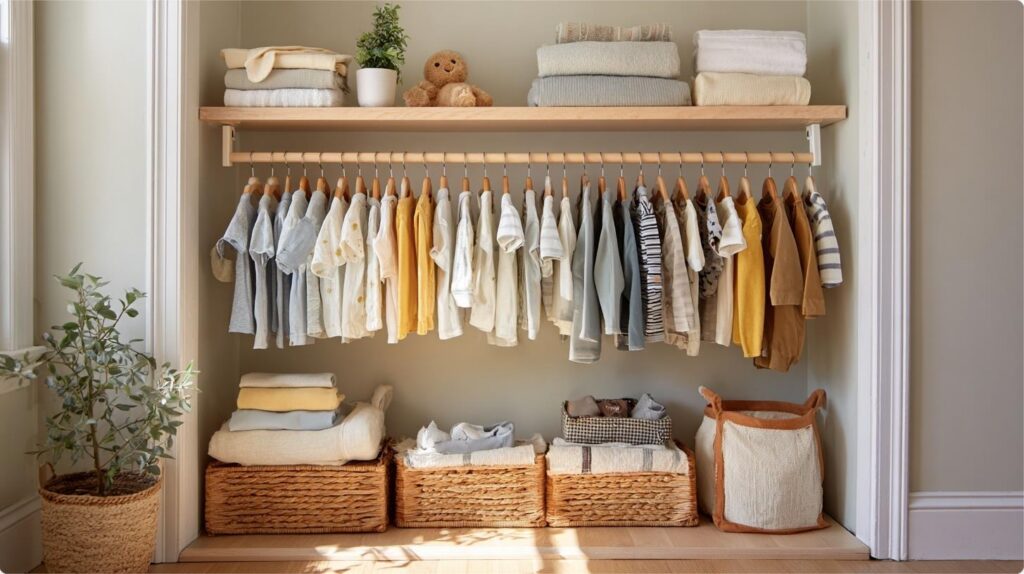
A low-hanging closet is perfect for younger children. Bring the main clothing rod down from adult height, so your child can reach shirts, jackets, and daily outfits without help.
This design works well for toddlers, preschoolers, and Montessori-inspired bedrooms. Kids love doing things by themselves. Reachable storage gives them that chance and makes mornings easier.
Best for:
- Toddlers and preschoolers
- Montessori-style rooms
- Small built-in closets
- Everyday outfit planning
Design tips:
- Use upper space for seasonal clothes.
- Keep outfits at child height.
- Add small bins for socks and pajamas.
- Use picture labels for early learners.
A simple low rod can change the whole routine. It turns “Where is my shirt?” into “I found it!”
2. Built-In Kids Wardrobe Ideas for a Clean Look

A built-in design gives the room a calm, polished look. It works like a storage wall, keeping clothes, toys, bedding, and school supplies behind doors.
Built-ins are useful in medium and large bedrooms. They also work in awkward corners, wall niches, or unused alcoves. Instead of wasting space, you turn those areas into practical storage.
For families planning a long-term children’s bedroom upgrade, a built-in layout can make the room more efficient and easier to maintain. With thoughtful planning, PA HOME helps create child-friendly storage zones that fit the room size, daily routine, and overall bedroom style.
Best for:
- Medium or large bedrooms
- Long-term home projects
- Custom children’s rooms
- Clean modern interiors
Design tips:
- Combine hanging rods, drawers, and shelves.
- Add upper cabinets for seasonal items.
- Choose soft-close doors and drawers.
- Use adjustable shelves.
A built-in wardrobe is like a quiet helper. It hides the mess, supports the routine, and keeps the room feeling calm.
3. Open Closet for Easy Visibility

An open closet keeps items in sight. There are no doors, hidden piles, or mystery drawers. Children can see what they own and return items more easily.
Open storage suits small rooms. With no swing doors, the room feels lighter. It also helps children who respond well to visual organization.
Best for:
- Small bedrooms
- Minimalist rooms
- Visual learners
- Easy-access storage
Design tips:
- Use matching baskets.
- Keep colors simple.
- Avoid overfilling shelves.
- Mix hanging space with bins.
The only catch is tidiness. When everything is visible, every item needs a clear home.
4. Kids Wardrobe with Drawers for Small Items
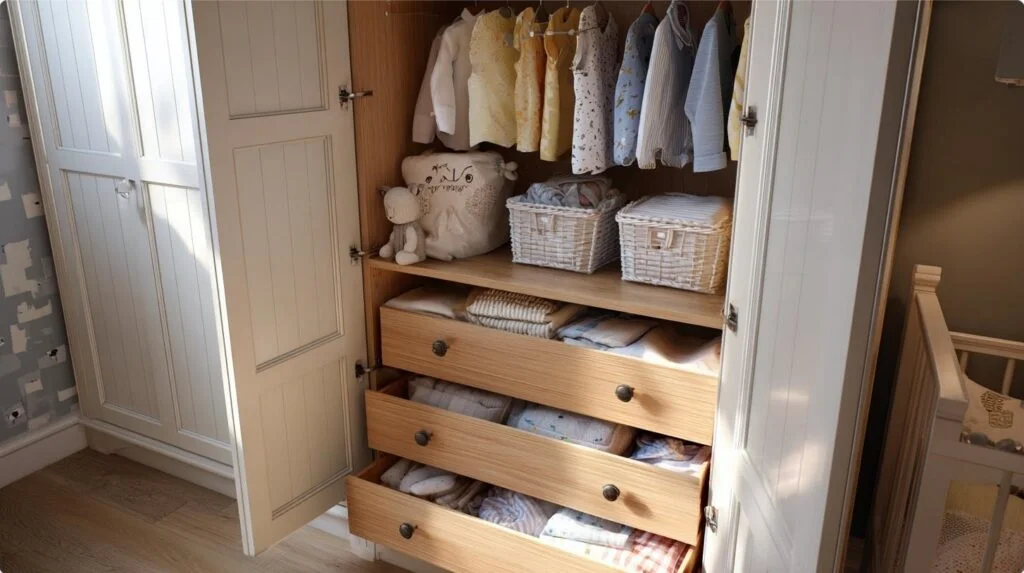
Small clothes create big clutter. A kids wardrobe with drawers gives socks, underwear, pajamas, swimsuits, and accessories their own place.
This design is useful when the room has no space for a separate dresser. It combines hanging space and folded storage in one piece, which makes cleanup easier.
Best for:
- Young children
- Shared rooms
- Rooms without dressers
- Folded clothing storage
Design tips:
- Choose shallow drawers.
- Add drawer dividers.
- Place heavier items in lower drawers.
- Use soft-close runners.
Deep drawers often become black holes. Shallow drawers make it easier to see everything at once.
5. Modular Kids Closet Ideas That Grow with Your Child

A flexible kids closet system grows with your child. Shelves, rods, baskets, and drawers can move as needs change.
For a toddler, you may need low rods and toy bins. For a school-age child, you may need space for uniforms, backpacks, and sports gear. For a teenager, you may need more hanging space and shoe storage.
This is where flexible planning matters. Instead of replacing the whole wardrobe, the internal layout can be adjusted as your child grows. PA HOME focuses on practical storage planning that supports changing routines, from toddler years to teen years.
Best for:
- Growing children
- Rental homes
- Flexible bedroom layouts
- Long-term storage planning
Design tips:
- Start with adjustable shelves.
- Use removable baskets and bins.
- Add more hanging space as clothes get longer.
- Keep the layout simple.
The biggest benefit is flexibility. You do not need to rebuild the whole closet every few years.
6. Sliding Door Kids Wardrobe for Small Rooms

A sliding door design saves floor space because the doors do not swing outward. It suits narrow bedrooms, apartments, or beds placed close to storage.
Sliding doors also create a clean, modern look. They hide clutter while keeping the room feeling tidy. For young children, choose lightweight doors, smooth tracks, and soft-close systems.
Best for:
- Small bedrooms
- Apartments
- Narrow rooms
- Modern interiors
Design tips:
- Choose smooth sliding tracks.
- Use soft-close hardware.
- Keep daily items in the easiest section.
- Use safety glass for mirrors.
Mirrored doors can make a small room feel larger. Just make sure safety comes first.
7. Shared Storage for Siblings

Shared rooms need boundaries. Shared storage works best when each child has a separate zone. Think of it like a tiny apartment building.
Divide the area by side, shelf, drawer, or color. Use labels or different baskets. This prevents mix-ups and teaches responsibility.
Best for:
- Siblings
- Twins
- Shared bedrooms
- Small homes
Design tips:
- Give each child a separate hanging section.
- Use different basket colors.
- Add name labels.
- Keep shared seasonal items on upper shelves.
Symmetry helps in shared rooms. Try to give each child equal hanging, drawer, and shelf space when possible.
8. Wardrobe with Open Shelves for Toys and Books

A wardrobe does not need to store only clothes. Open shelves can hold books, toys, bags, and keepsakes.
Closed cabinets hide mess, while open shelves show favorite things. Together, they create balance and can replace extra furniture.
Best for:
- Small bedrooms
- Multi-use rooms
- Toy storage
- Book storage
Design tips:
- Keep daily-use shelves at child height.
- Use baskets for toys.
- Place display items higher up.
- Leave some empty space.
Try not to fill every shelf. A little open space makes the whole room feel more intentional.
9. Color-Coded Kids Closet Organization
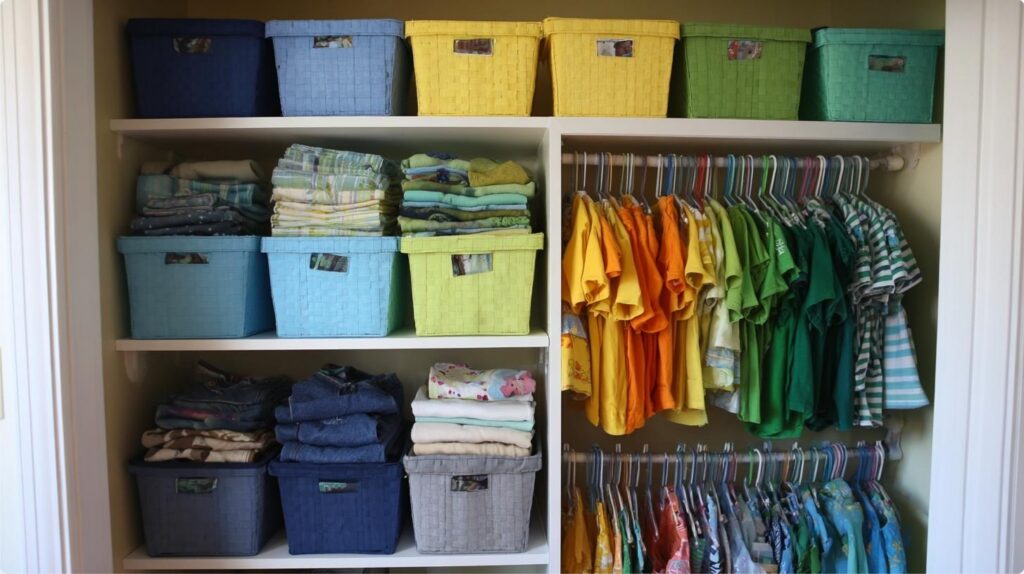
Kids understand color quickly, which makes color-coded storage a simple win. You can use colored bins, labels, drawer fronts, or hangers to sort categories.
Good kids closet organization should feel easy. Blue might mean school clothes. Green might mean sports gear. Yellow might mean pajamas. In a shared room, each child can have one color.
Best for:
- Preschoolers
- School-age children
- Shared storage
- Visual organization
Design tips:
- Use one color per category.
- Keep the system simple.
- Add picture labels for younger kids.
- Use matching bins.
Do not use too many colors. Three to five categories are usually enough.
10. Floor-to-Ceiling Kids Wardrobe for Maximum Storage

A floor-to-ceiling design uses the full wall. It can hold clothes, bedding, toys, luggage, and seasonal items.
The key is smart placement. Keep daily items low. Place parent-access items in upper cabinets.
Best for:
- Larger bedrooms
- Families with limited storage
- Long-term planning
- Seasonal storage
Design tips:
- Store daily clothes low.
- Use upper cabinets for seasonal items.
- Anchor tall furniture to the wall.
- Choose easy-grip handles.
This design works well in larger bedrooms. It can also help smaller rooms if planned carefully.
How to Choose the Best Kids Bedroom Storage Ideas
Not every idea fits every room. The best choice depends on your child’s age, bedroom size, and daily routine. Before choosing a design, ask yourself: What gets used every day? What always ends up on the floor?
| Need or Situation | Best Storage Choice | Why It Works |
|---|---|---|
| Small bedroom | Sliding doors, open layouts, modular storage, or drawers | These options save floor space and keep the room easier to move through. |
| Toddler room | Low rods, open bins, rounded handles, and soft-close drawers | Toddlers need safe access, simple zones, and storage they can reach. |
| School-age child | Labeled zones, color-coded bins, shelves, and drawer storage | These help organize clothes, shoes, sports gear, books, and bags. |
| Older child or teen | More hanging space, shoe storage, shelves, and closed cabinets | Older children need more privacy, flexibility, and room for changing routines. |
| Shared bedroom | Divided sections, name labels, and color-coded baskets | Clear zones reduce mix-ups and help each child manage their own things. |
| Long-term use | Adjustable shelves, movable rods, and a modular layout | Flexible storage can change as your child grows. |
A simple table like this can make the decision easier. Start with your biggest problem first. Is the room too small? Are mornings too messy? Is the storage shared by two children? Once you know the main challenge, the right design becomes much easier to choose.
Common Mistakes to Avoid
A beautiful closet can fail if it ignores daily life. Good storage should be easy to use, easy to clean, and safe.
Avoid these common mistakes:
- Designing only for your child’s current age
- Placing daily items too high
- Choosing style over safety
- Using too many bins or labels
- Forgetting to leave empty space
- Ignoring your child’s daily routine
A full closet may look efficient, but it is often hard to maintain. A little extra space makes everyday organization much easier.
Conclusion
The best kids bedroom storage ideas are not always the biggest. They are the ones your child can actually use every day. A well-planned kids closet can make mornings easier, while a smart kids wardrobe can help the room feel safer, calmer, and easier to organize.
Start with your child’s real habits. What do they reach for every day? What always ends up on the floor? What needs to be hung, folded, hidden, or displayed? Once you understand those needs, the right design becomes much clearer.
A good children’s storage plan should fit the room, support daily routines, and grow with your child over time. That is where thoughtful design makes all the difference.
At PA HOME, we help families create practical, child-friendly spaces that feel organized, comfortable, and easy to live in.
Ready to plan a safer and smarter room for your child? Contact us today to start your design conversation.
FAQs
A built-in closet works well if the room already has closet space. A freestanding wardrobe is better for rooms without built-in storage or for families who want flexibility.
Anchor it to the wall, choose soft-close hardware, store heavy items low, and avoid sharp corners. Keep tempting items away from the top to reduce climbing risk.
Place daily clothes at child height. Use simple labels, baskets, and clear categories. The easier the system is, the more likely your child will use it.
A sliding door wardrobe, open layout, or modular design works best. They save space and keep items easy to reach.