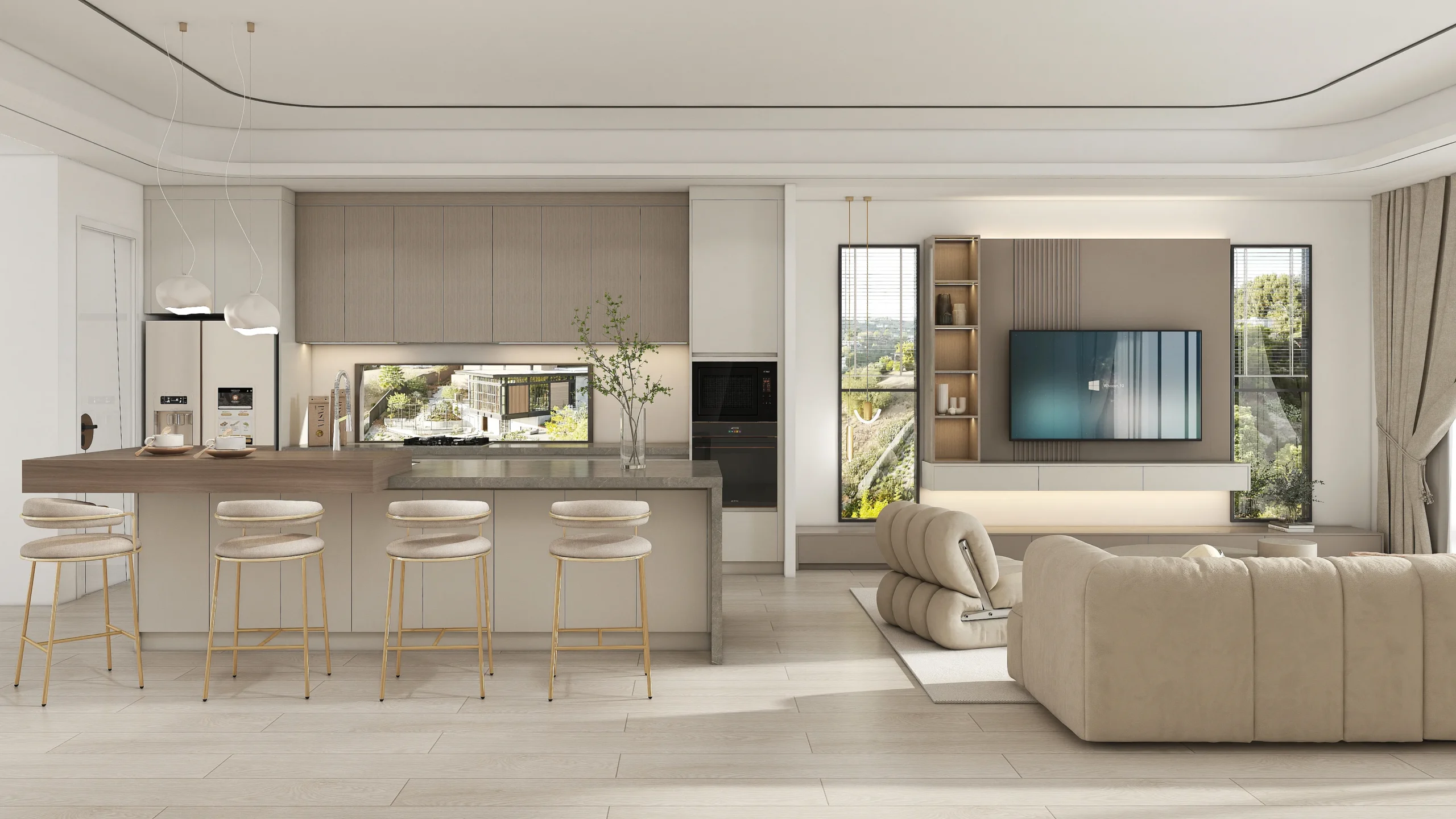
Hotel interior design is all about improving existing spaces to create a better guest experience. When it comes to hotel room design, small yet impactful changes can make a big difference. The goal is not just to update the look, but to enhance functionality and comfort.
In this article, we’ll explore 10 thoughtful interior design ideas that are perfect for hotel renovations, aiming to transform spaces into more inviting, comfortable, and memorable areas for guests.
1. Rethinking the Guest Room Layout
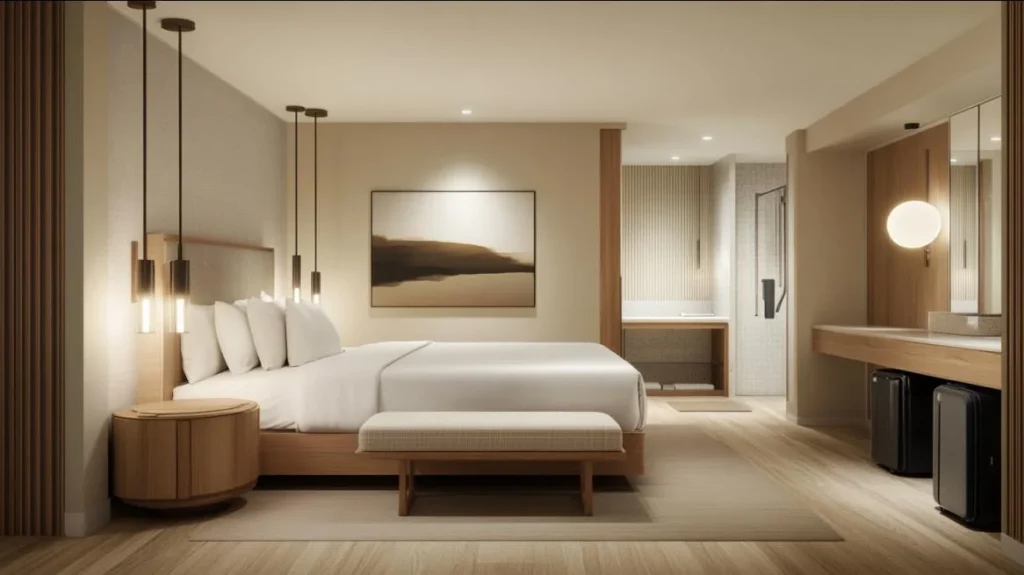
A good layout can make a room feel larger and more functional. The key to hotel room interior design is ensuring that the space flows naturally. Simple changes, like moving the bed to create more open space or adding a designated area for luggage, can make a room feel more organized and spacious. These small layout adjustments are perfect for a hotel renovation as they improve the guest experience without changing the overall structure.
2. Creating a Clear Visual Focus
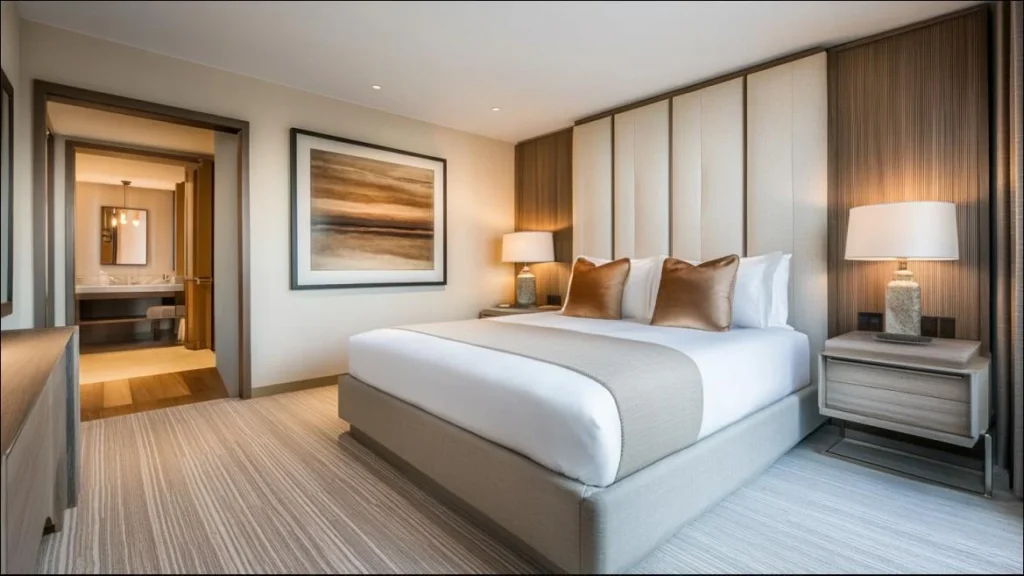
Every hotel room renovation benefits from a strong visual anchor. For hotel interior design, the bed wall is often the perfect focal point. A clean, well-designed bed wall with soft lighting and simple textures can create an elegant and inviting atmosphere. This approach helps organize the space while also adding a sense of luxury, especially in luxury hotel interior design projects.
3. Elevating the Bathroom Experience

Bathrooms play a huge role in how guests perceive the quality of a hotel room. Renovating the bathroom with modern features such as walk-in showers and high-end fixtures can have a significant impact. Small but thoughtful changes, like better lighting and durable finishes, can elevate the overall hotel room interior design without breaking the budget.
4. Refreshing Spaces Through Lighting

Lighting has the power to transform a room without major renovations. In hotel room design interior, layered lighting can help create ambiance and define different spaces within the room. Whether you are adding accent lights to highlight artwork or task lighting for reading, proper lighting can make the room feel welcoming and comfortable, enhancing both functionality and aesthetics.
5. Integrating Invisible Storage

A clean and organized space is crucial for guest satisfaction. Hidden or integrated storage solutions can help reduce clutter in hotel rooms. Built-in wardrobes, under-bed storage, and hidden compartments can make a room feel larger and more luxurious, especially in smaller spaces. This approach works well in best hotel interior design projects, where maximizing space while maintaining a clean aesthetic is essential.
6. Updating Corridors and Transitions

Often overlooked in renovation projects, hotel corridors set the tone for the entire property. Outdated hallways can make even newly renovated rooms feel old. When updating corridors, it’s important to refresh finishes, lighting, and color schemes to ensure a cohesive look throughout the hotel. A well-lit and welcoming corridor improves the guest experience and enhances the overall hotel interior design.
7. Redesigning the Lobby for Everyday Use

The lobby is no longer just an arrival space. It is where guests relax, work, and socialize. Renovating the lobby with multiple functional zones, such as areas for quick coffee, casual meetings, or a place to work, can make the space more versatile and inviting. Whether you are upgrading to a luxury hotel interior design or making functional improvements, the lobby should reflect the daily needs of your guests.
8. Choosing Materials That Age Well

In best hotel interior design, material choices can make a huge difference in the longevity and look of a space. Materials that age gracefully, like matte finishes and durable fabrics, help maintain the hotel’s appearance over time. For a luxury hotel interior design, selecting high-quality, timeless materials ensures that the space looks fresh and elegant for years to come.
9. Maintaining a Consistent Design Language

Consistency is key in hotel renovations. When every space within the hotel follows a cohesive design language, the overall experience feels intentional and well-executed. Whether it’s a hotel room design interior or a public area upgrade, maintaining consistent colors, materials, and textures ensures that the hotel feels complete. This consistency is especially important in luxury hotel interior design where every detail matters.
10. Designing Around Existing Building Constraints

Unlike new construction, hotel renovation works within existing building constraints. This may include ceiling heights, column positions, and window sizes. The key to successful hotel interior design lies in creatively responding to these existing conditions. By adapting design solutions to the building’s architecture, the space will feel natural and cohesive.
Conclusion
Renovating a hotel is about improving the space to create a memorable experience for guests. By focusing on smart hotel room interior design and incorporating thoughtful details, you can elevate the guest experience, regardless of your budget. Whether you’re aiming for a luxury hotel interior design or simply looking to refresh the hotel’s look, these ten ideas will help you transform your space into a welcoming and functional environment.
Related Post
FAQs About Hotel Interior Design
To update the hotel lobby during a renovation, focus on creating functional spaces that cater to modern guest needs. Add comfortable seating areas, improve lighting, and introduce design elements that align with the hotel’s brand identity. A well-designed lobby should serve as a welcoming space for guests to relax, work, or socialize. Consider incorporating technology for convenience, such as self-check-in kiosks or charging stations.
Using durable materials in hotel renovation ensures that the space retains its appeal over time and reduces maintenance costs. High-quality materials such as sturdy flooring, scratch-resistant countertops, and durable fabrics can withstand heavy use and continue to look fresh for years. This is particularly important for areas that experience high traffic, such as guest rooms, corridors, and bathrooms.
To make hotel renovations feel luxurious on a budget, focus on small, high-impact design changes. Upgrade key elements like lighting, bedding, and textiles, and opt for timeless materials such as wood, leather, and marble. By improving the quality of the room’s features without changing its structure, you can elevate the space’s feel without overspending.
Sustainability is becoming increasingly important in hotel renovations. Opt for eco-friendly materials like bamboo flooring, recycled fabrics, and low-VOC paints. Installing energy-efficient lighting and appliances, as well as water-saving fixtures in bathrooms, can significantly reduce energy consumption and costs. Not only does this appeal to environmentally conscious guests, but it also contributes to the hotel’s long-term cost savings.