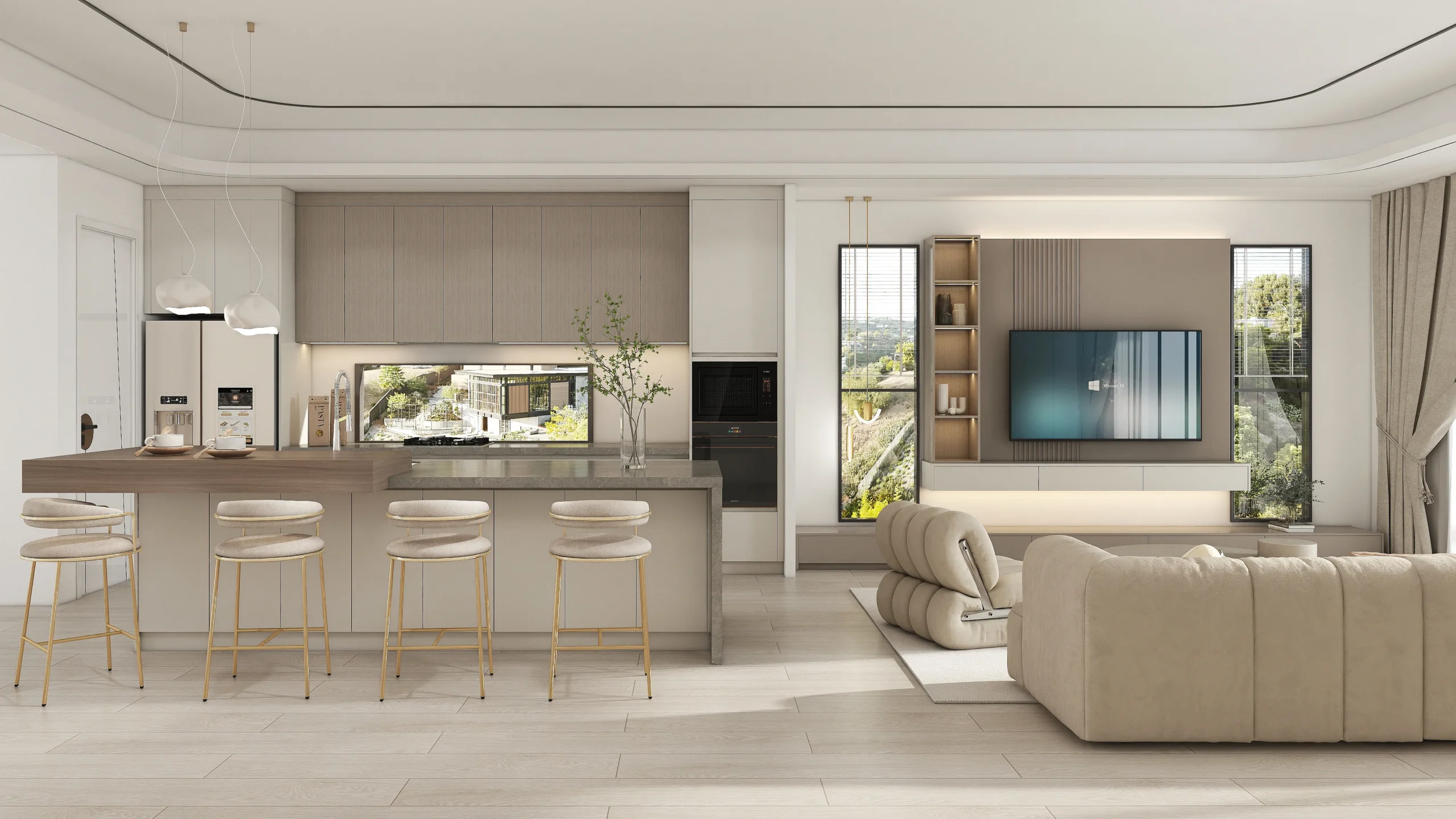
Modern interiors are increasingly refined, yet often visually repetitive. Smooth walls, flat doors, and neutral finishes create calm environments but often lack architectural depth and hierarchy. Without texture or vertical articulation, spaces can feel visually controlled yet emotionally flat.
A thoughtfully executed fluted panel door reintroduces rhythm, proportion, and shadow without disrupting minimalist balance. Today, fluted door design for home applications have evolved into architectural features rather than simple partitions. The following ten fluted panel door design concepts explore material trends, style pairing, color direction, and spatial performance across contemporary interiors.
1. Matte Black Fluted Door for Bold Minimalism

A matte black fluted door panel creates strong architectural contrast in minimalist interiors, using vertical grooves to add depth and shadow variation. This fluted panel door design works particularly well in modern apartments and office environments where spatial clarity is essential. MDF with matte lacquer or dark veneer enhances durability and refined texture. As a confident fluted door design for home, it strengthens hierarchy while maintaining visual discipline.
2. Natural Oak Vertical Fluted Door for Warm Contemporary Spaces

A natural oak fluted panel door introduces warmth while preserving contemporary geometry, allowing the ribbed surface to highlight grain direction and tactile depth. This type of fluted door panel integrates seamlessly into Scandinavian and Japandi interiors where material authenticity matters. Solid wood or veneer aligns with sustainable design trends and longevity. Light tones enhance daylight reflection and support a balanced fluted door design for home.
3. Hidden Fluted Door for Seamless Architectural Walls

A fluted panel hidden door aligns with surrounding wall panels to maintain a continuous vertical rhythm while preserving subtle texture. This approach transforms the fluted panel door into an architectural surface rather than a visible partition. Matching paint or veneer ensures cohesion across luxury or gallery-inspired interiors. The fluted panel hidden door supports clean transitions and uninterrupted spatial flow.
4. Sliding Fluted Panel Door for Flexible Layouts
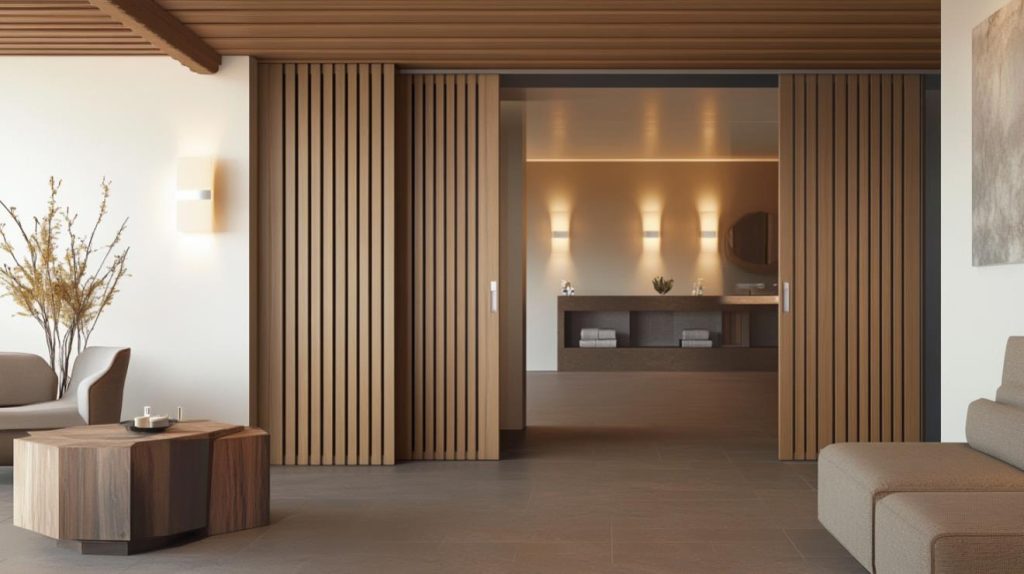
A fluted panel sliding door maximizes usable floor area by eliminating swing clearance while maintaining strong vertical articulation. This form of fluted panel door design is ideal for apartments, studios, and open-plan homes that require adaptable zoning. Lightweight core construction ensures smooth operation and durability. Neutral finishes allow the fluted door design for home to integrate across diverse material palettes.
5. Two-Tone Fluted Panel Door for Layered Contrast

A two-tone fluted panel door design introduces contrast by combining natural veneer grooves with painted framing elements. The layered fluted door panel enhances depth without overwhelming minimalist architecture. This style suits contemporary luxury interiors where detailing remains controlled and intentional. Matte finishes and muted neutrals dominate current color trends.
6. Fluted Glass Interior Door for Light-Enhanced Spaces

A fluted glass interior door diffuses natural light while maintaining privacy, extending the concept of fluted panel door design into semi-transparent applications. Ribbed glass echoes vertical rhythm and enhances spatial continuity. Tempered safety glass ensures durability, while black or wood frames align with contemporary finishes. It balances separation and openness effectively.
7. Fluted Panel Double Door System for Grand Proportion

A double fluted panel door emphasizes symmetry and architectural scale, using aligned fluted door panels to frame major transitions such as living areas or master suites. This configuration strengthens spatial hierarchy and ceremonial presence. Consistent finishes maintain visual cohesion across surfaces. Neutral tones reinforce contemporary elegance and structural balance.
8. Arched Fluted Panel Door for Soft Contemporary Flow
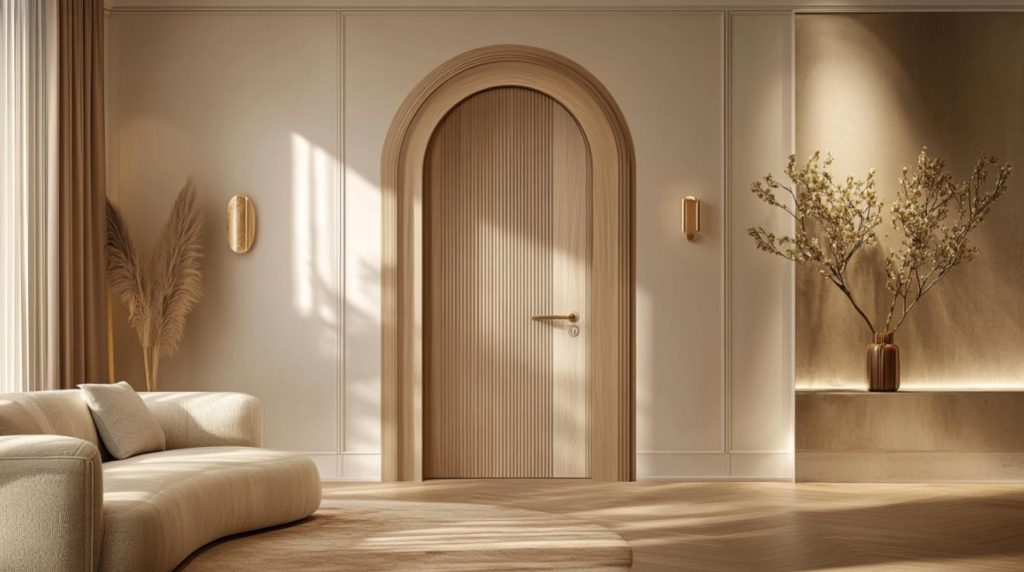
An arched fluted panel door design balances vertical grooves with curved geometry, softening rigid layouts while maintaining architectural clarity. This sculptural variation enhances transitional areas and introduces expressive flow. Veneer or painted finishes preserve material continuity. It expands the language of fluted door design for home beyond straight-lined forms.
9. Fluted Panel Door with Mixed Material Expression
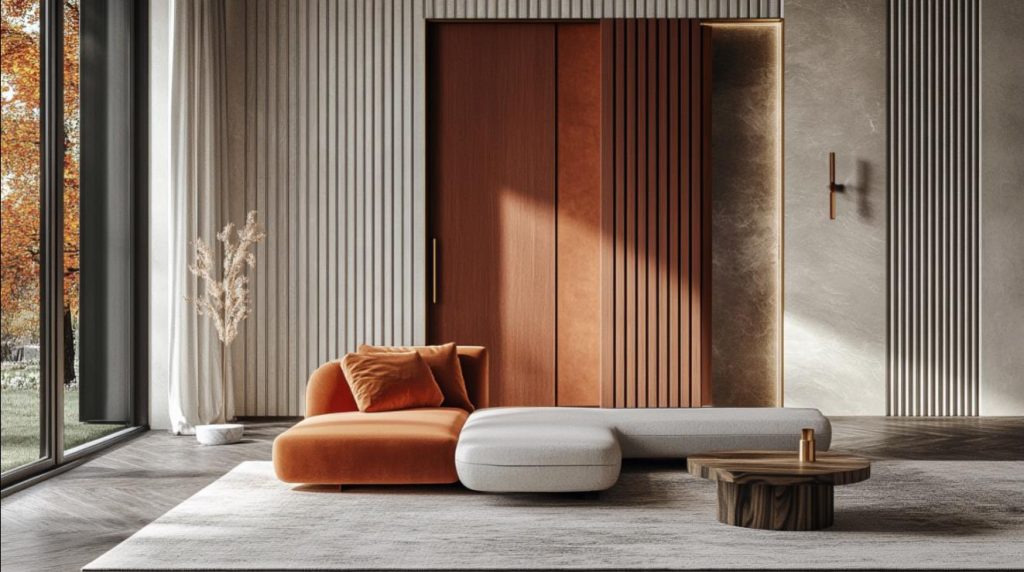
A fluted door panel can integrate smooth inserts or contrasting finishes to introduce subtle variation within a single surface. This refined fluted panel door design reflects evolving material layering trends in contemporary interiors. Similar tonal palettes maintain cohesion while enhancing texture depth. It strengthens focal emphasis without disturbing minimalist balance.
10. Fluted Panel Door with Inset Metal Detailing
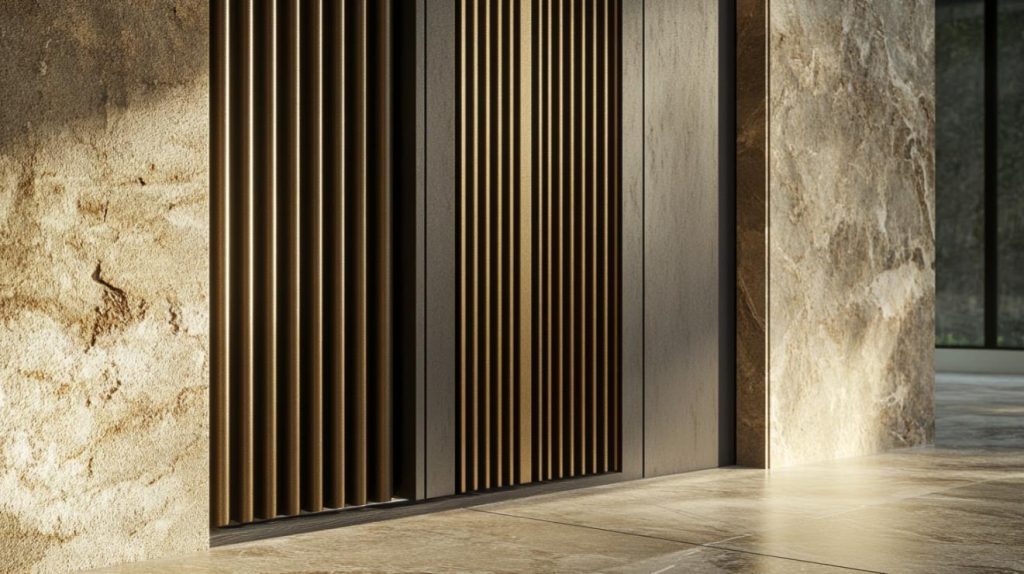
A refined fluted panel door may include slim metal strips embedded between grooves to elevate craftsmanship and highlight surface rhythm. Brass or matte black accents introduce understated luxury within the fluted panel door design. This variation complements marble and stone finishes in high-end interiors. It transforms a standard fluted door design for home into a defined architectural feature.
Conclusion
A well-executed fluted panel door is more than a surface detail. A refined fluted panel door design enhances proportion, introduces vertical rhythm, and strengthens architectural clarity in contemporary interiors.
For those considering a tailored fluted door design for home, thoughtful planning ensures material consistency and seamless integration. At PA Home, we provide custom fluted door panel solutions aligned with modern architectural standards and long-term performance.
FAQs About Fluted Panel Door
A fluted panel door features vertical grooves carved into the surface, creating texture, depth, and shadow. Unlike flat doors, a fluted door panel introduces architectural rhythm and visual hierarchy. It is commonly used in contemporary interiors to enhance proportion without adding heavy ornamentation.
Yes, fluted door design for home applications works especially well in modern and minimalist interiors. The vertical articulation adds depth while maintaining clean lines. A fluted panel door design can complement neutral palettes, wood finishes, and even bold contrasts like matte black.
Common materials include MDF with lacquer finishes, natural wood veneer, solid wood, and tempered ribbed glass for fluted glass interior door applications. The choice depends on durability, budget, and design goals. Matte finishes and veneer textures are currently popular in contemporary interiors.
Yes. A fluted panel sliding door is ideal for compact layouts because it saves swing clearance while maintaining vertical texture. A fluted panel hidden door can also reduce visual clutter, making small spaces feel more cohesive and organized.