Fire rated doors may look like ordinary doors, but they play a key role in a building’s fire safety plan. When installed and maintained properly, they help slow the spread of fire and smoke, protect escape routes, and give people more time to leave the building safely.
In this guide, we’ll cover the basics: what fire rated doors are, how they work, what fire ratings mean, and what to consider when choosing one for your project.
What Are Fire Rated Doors?
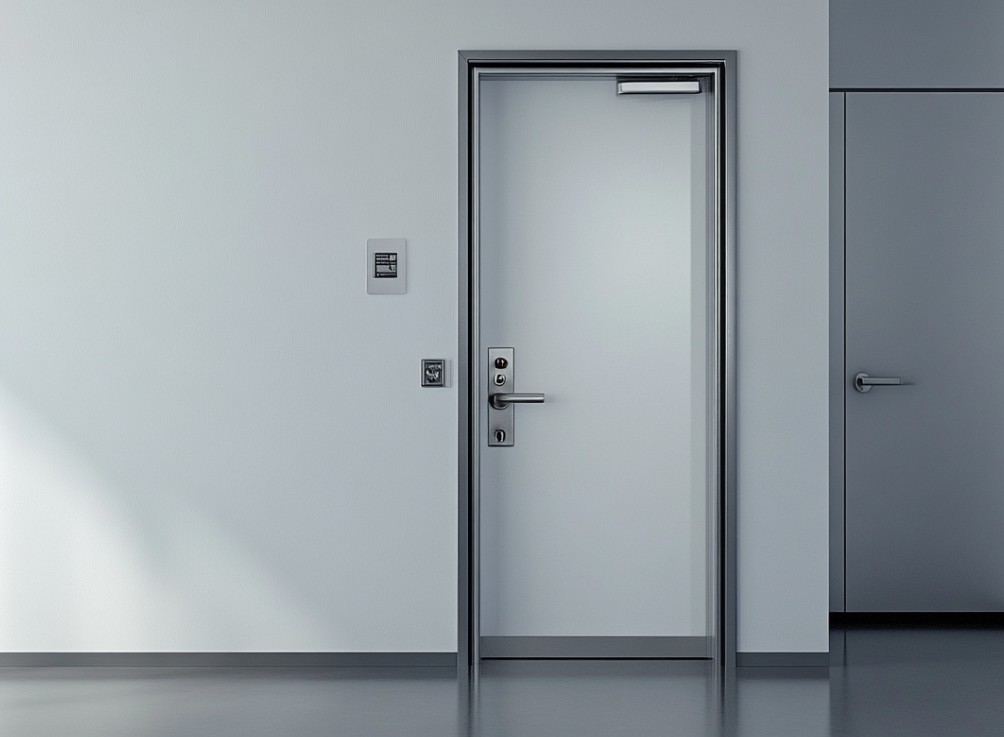
Fire rated doors are specially designed and tested door assemblies that help resist the spread of fire and smoke for a specific period of time. The required rating depends on the building code, the wall or opening type, and where the door is installed.
A fire rated door is more than just a door slab. It works as part of a complete fire door assembly, which may include:
It is also important to understand that “fire rated” does not mean “fireproof.” No door can make a building completely fireproof. Instead, a fire rated door is designed to help contain fire and smoke for a tested amount of time, giving occupants a safer path to exit and helping protect other areas of the building.
How Do Fire Rated Doors Work?

Fire rated doors work by helping compartmentalize a building. In simple terms, they help slow fire and smoke from spreading quickly from one area to another.
When a fire occurs, a properly installed and closed fire rated door can help protect escape routes such as stairwells and corridors, separate higher-risk rooms from occupied spaces, and support the building’s overall fire protection strategy.
However, a fire rated door can only do its job if it is closed, latched, and in good condition. A rated door that is propped open, damaged, missing its closer, or paired with the wrong hardware may not provide the intended level of protection.
Understanding Fire Door Ratings
Fire door ratings show how long a door assembly has been tested to resist fire under standard test conditions. The required rating depends on the door location, wall rating, building code, and project requirements.
These examples are general references only. Always confirm the required rating with local codes, project specifications, or the authority having jurisdiction.
Fire Rated Door vs. Fire Door vs. Fire Resistant Door
These terms are closely related, but they are not always used in the same way. In most building and compliance contexts, fire rated door is the most precise term because it refers to a door assembly that has been tested and rated for a specific level of fire protection.
| Term | What It Means | Best Use |
|---|---|---|
| Fire Rated Door | A tested and certified door assembly designed to resist fire for a specific period of time. | Best for technical, code-related, and product specification contexts. |
| Fire Door | A general term often used to describe doors that help prevent the spread of fire and smoke. | Good for everyday language, but less specific than “fire rated door.” |
| Fire Resistant Door | A broader term that describes a door’s ability to resist fire, but it may not always confirm a tested rating or certification. | Useful in general descriptions, but should be supported by a rating or certification when used for projects. |
In short, fire door is the simpler everyday term, while fire rated door is more specific and reliable for building projects. If you are choosing a door for a commercial, residential, or industrial application, always check the product’s fire rating, certification label, and compatibility with the required door frame and hardware.
How Much Does a Fire Rated Door Cost?

The cost of a fire rated door depends on the material, fire rating, size, hardware, frame, glazing, finish, and installation requirements. A basic residential fire door installation may cost around $400 to $900 in many cases, while premium options can be higher. Commercial fire rated doors usually vary more because they often require rated frames, closers, panic hardware, access control, or custom sizes.
For product-only pricing, some commercial hollow metal fire rated doors start at around $350–$430 before adding the frame, hardware, delivery, or installation. For installed commercial projects, the final cost can be much higher depending on the opening condition and project specifications.
Common cost factors include:
- Fire rating required for the opening
- Door material, such as steel, wood, glass, or fiberglass
- Single door or double door configuration
- Fire-rated frame and hardware
- Door closer, latch, panic bar, or access control system
- Fire-rated glass or vision panel
- Custom size, finish, or design
- Installation labor and site conditions
Common Types of Fire Rated Doors
Fire rated doors come in different materials and designs. The right type depends on where the door will be used, the required fire rating, traffic level, appearance needs, and project budget.
| Type | Best For | Key Features |
|---|---|---|
| Steel Fire Rated Doors | Commercial buildings, stairwells, mechanical rooms, warehouses | Durable, strong, and widely used in high-traffic or high-risk areas |
| Wood Fire Rated Doors | Offices, hotels, apartments, schools | Offers a warmer appearance while still providing rated fire protection when properly certified |
| Glass Fire Rated Doors | Lobbies, corridors, offices, storefronts | Allows visibility and natural light while meeting fire safety requirements when fire-rated glazing is used |
| Hollow Metal Fire Doors | Industrial buildings, service areas, commercial facilities | Strong, low-maintenance, and suitable for heavy-duty applications |
| Fiberglass Fire Rated Doors | Exterior openings, residential or light commercial applications | Resistant to moisture, dents, and corrosion, depending on the product design |
| Rolling Fire Doors | Warehouses, loading areas, retail back-of-house spaces | Designed to close off larger openings and help separate fire zones |
| Sliding Fire Doors | Large commercial or industrial spaces | Useful where a swinging door is not practical, especially for wide openings |
No matter which type you choose, the door must be used with compatible rated components, including the frame, hardware, seals, and glazing if applicable. A good-looking door is not enough—it needs to be properly tested, labeled, installed, and maintained to perform as intended.
Where Are Fire Rated Doors Used?
Fire rated doors are used in areas where fire and smoke need to be contained, escape routes need to be protected, or one part of a building needs to be separated from another. They are common in both commercial and residential buildings, depending on local code requirements and project design.
The exact locations and required ratings vary by building type, local code, wall rating, and the authority having jurisdiction. For any project, fire rated doors should be selected based on the approved building plans and code requirements, not just general assumptions.
Installation Requirements and Common Mistakes
A fire rated door can only perform as intended when it is installed as a complete, compatible assembly. The door, frame, hardware, seals, glazing, and closer all need to match the required rating and be installed according to the manufacturer’s instructions and local code requirements.
During installation, make sure the door is paired with a compatible fire-rated frame and approved hardware. The hinges, locks, latches, closers, panic hardware, seals, and glazing should all be suitable for the rated assembly. The certification label should also remain visible so inspectors can confirm the door’s rating and compliance.
It is also important to check that the door closes and latches properly. A fire rated door that does not close fully, has damaged seals, or has gaps beyond the approved limits may not provide the expected level of protection.
Common mistakes to avoid
- Propping the door open with wedges or door stops
- Using non-rated or incompatible hardware
- Removing, covering, or painting over the certification label
- Installing a rated door in a non-rated or incorrect frame
- Cutting, trimming, drilling, or modifying the door without approval
- Ignoring damaged smoke seals or intumescent seals
- Leaving the door closer broken or poorly adjusted
- Adding glass, louvers, or hardware that is not approved for the rating
Want to Buy Fire Rated Doors?
Fire rated doors are an important part of a building’s fire safety system. By understanding their ratings, materials, components, and installation requirements, you can choose doors that support both safety and code compliance.
At PA Home, we provide fire rated door solutions for residential and commercial projects. To get a quote for your project, please contact us today.
No. Fire rated doors are not completely fireproof. They are designed and tested to resist fire for a specific period of time, helping slow the spread of fire and smoke during an emergency.
Fire rated doors are tested and certified to resist fire for a specific period of time, such as 20, 60, 90, or 180 minutes. They are commonly used in buildings to help slow the spread of fire and smoke.
Fireproof doors is a more general or marketing term. It can be misleading because no door is completely fireproof or able to withstand fire forever. In professional and code-related contexts, fire rated doors is the more accurate term.
It depends on the door location, wall rating, building type, and local code requirements. For projects, always confirm the required rating with your architect, contractor, or local authority.
They may be required in certain residential areas, such as between a garage and living space, apartment entrances, or shared corridors. Requirements vary by local code.
Fire rated doors can last for many years if they are properly installed and maintained. Their condition, hardware, seals, label, and closing function should be checked regularly.