
Replacing or framing a door starts with one key measurement: the rough opening. It is the unfinished space in the wall that must be slightly larger than the door itself, leaving room for the frame, shims, and proper alignment.
Getting this measurement right helps the door sit level, swing smoothly, and close correctly. In this guide, we’ll explain standard door rough opening sizes, show easy-to-use charts, and cover the exceptions that matter for interior and exterior doors.
What Is a Door Rough Opening Size?
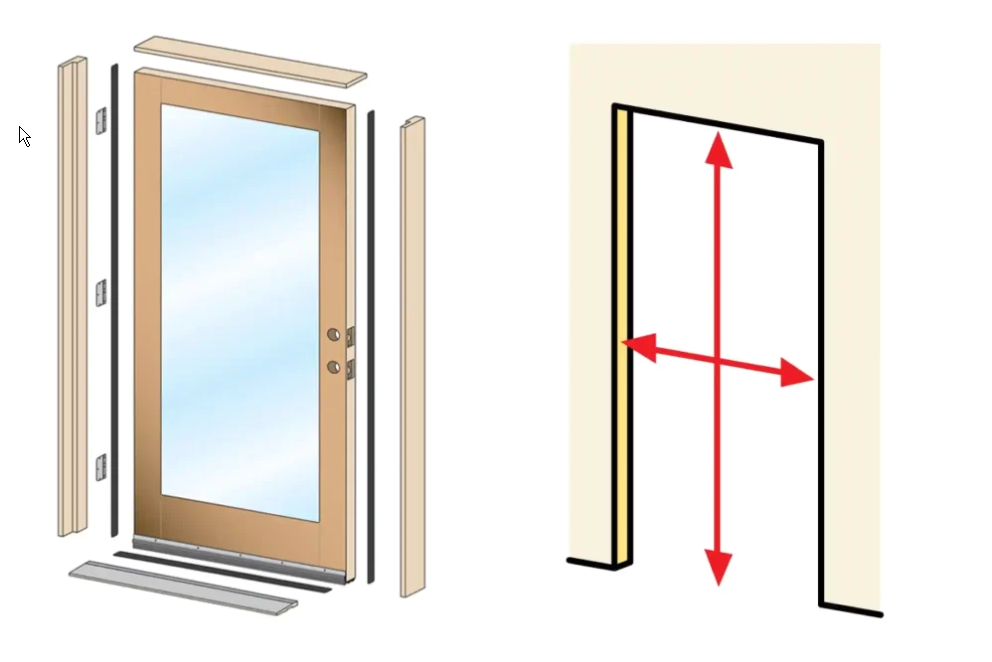
A door rough opening size is the framed, unfinished space where a door unit will be installed. It is measured from stud to stud for width, and from the floor or subfloor to the bottom of the header for height.
It is not the same as the actual door slab size. The rough opening needs extra space for the jamb, shims, leveling, and small adjustments during installation.
For many standard interior prehung doors, a simple rule of thumb is:
Rough opening width = door width + 2″
Rough opening height = door height + 2.5″
For example, a 30″ x 80″ interior prehung door usually needs a rough opening of about 32″ x 82.5″.
In simple terms:
- Door size is the nominal size of the door slab.
- Rough opening size is the unfinished framed space needed for installation.
- Finished opening size is what remains visible after the door, trim, and finishes are installed.
Standard Residential Door Rough Opening Size Chart
Use the chart below as a quick reference for common residential door sizes. For many standard interior prehung doors, the rough opening is usually 2 inches wider and 2.5 inches taller than the door slab.
Note: These measurements are common references for standard residential prehung doors. Always check the manufacturer’s recommended rough opening size before framing or ordering.
Interior vs. Exterior Door Rough Opening Sizes

Interior and exterior doors may look similar in size, but their rough opening requirements are not always the same.
Interior doors are usually more predictable because they do not include exterior components such as a sill, threshold, weatherstripping, or brickmould. For most standard interior prehung doors, the chart above is a reliable starting point.
Exterior doors need more attention. A 36″ x 80″ entry door, for example, may not follow the same rough opening size as a 36″ x 80″ bedroom door. The final opening can depend on the full prehung unit, including the jamb, sill, threshold, weatherstripping, and exterior trim.
The rough opening may also change if the door includes:
- One or two sidelites
- A transom above the door
- An inswing or outswing configuration
- A thicker exterior jamb
- Brickmould or casing
- A custom frame or manufacturer-specific unit size
In simple terms, interior door rough opening sizes are more predictable, while exterior door rough opening sizes should always be checked against the manufacturer’s specifications.
How to Measure Door Rough Opening Size?
Before ordering or installing a door, measure the rough opening carefully. A small mistake in width, height, or wall depth can cause the door frame to sit unevenly or leave too much gap around the unit.
Measure the Rough Opening Width
Measure from one side stud to the other across the top, middle, and bottom of the opening. Use the smallest measurement as your rough opening width.
Measure the Rough Opening Height
Measure from the floor or subfloor to the bottom of the header on both the left and right sides. Use the smaller number, especially if flooring has not been installed yet.
Check Whether the Opening Is Square
Measure diagonally from corner to corner in both directions. If the two diagonal measurements are different, the opening may be out of square.
Check Whether the Studs Are Plumb
Use a level to check both side studs. Even if the width is correct, leaning studs can prevent the door frame from sitting properly.
Measure the Wall Depth
Measure the wall thickness so the door jamb matches the opening. This is important for both standard 2x4 walls and thicker 2x6 wall framing.
Compare Measurements with Door Specs
Compare your width, height, diagonal, and wall-depth measurements with the manufacturer’s recommended rough opening size before ordering or installing the door.
Door Size for an Existing Rough Opening
If you already have an existing rough opening, work backward from the opening size instead of starting with the door size. For most standard interior prehung doors, the door slab is usually about 2 inches narrower and 2.5 inches shorter than the rough opening.
Use this quick reverse chart as a starting point:
If your opening is slightly larger, the installer may be able to use shims or minor build-out framing. If it is too small, the framing may need to be adjusted before the door can fit properly.
For exterior doors, double doors, or custom prehung units, do not rely only on this reverse chart. Always compare your existing opening with the manufacturer’s required rough opening size.
Conclusion
Choosing the right door rough opening size helps ensure your door fits properly, operates smoothly, and avoids costly installation issues. For many standard interior prehung doors, the rough opening is typically 2 inches wider and 2.5 inches taller than the door slab, but exterior doors, custom units, sidelites, and transoms may require different measurements.
Before framing or ordering, always measure carefully and check the manufacturer’s specifications. If you are unsure which door size fits your opening, contact PA Home for professional guidance and customized door solutions.
For a standard 32″ x 80″ interior prehung door, the rough opening is usually about 34″ x 82.5″. This allows space for the door jamb, shims, and proper alignment during installation.
A standard 36″ x 80″ prehung door typically needs a rough opening of about 38″ x 82.5″. If it is an exterior prehung door, check the manufacturer’s specifications because the sill, threshold, and weatherstripping may affect the required opening size.
If you mean a standard 24″ x 80″ interior door, the rough opening is usually about 26″ x 82.5″. This size is commonly used for closets, utility rooms, or small interior spaces.
For a standard 30″ x 80″ prehung door, the rough opening is usually about 32″ x 82.5″. This is a common size for bedrooms, bathrooms, and interior passage doors.
If the rough opening is slightly too big, installers can usually correct it with shims or small build-out framing. However, if the opening is much larger than the recommended size, the door frame may not be properly supported, which can cause the door to feel loose, sit out of square, or fail to latch correctly.
If the rough opening is too small, the door unit may not fit into the wall opening. Forcing it into place can cause the frame to twist, making the door hard to open, close, or latch. In this case, the framing may need to be trimmed, adjusted, or rebuilt before installation.