Interior doors are no longer just functional dividers. In 2026, they play a critical role in space planning, light control, acoustic comfort, and interior style definition. From minimalist apartments to high-end homes and hospitality interiors, choosing the right interior door type can dramatically change how a space feels and functions.
Below are 15 interior door types are actively using in 2026, let us have a look!
1
Hinged (Swing) Interior Doors
Hinged doors are the most widely used interior doors, largely because they align perfectly with standard residential construction. Typical interior door sizes—such as 30 to 36 inches wide and 80 inches high—are designed around hinged operation, making installation, replacement, and future upgrades straightforward and cost-efficient.
From a performance standpoint, hinged doors still offer the best balance of privacy, sound control, and sealing. This is why they remain the default choice for bedrooms and bathrooms, where acoustic separation and door closure reliability matter more than spatial flexibility.
Design-wise, modern hinged doors are becoming quieter visually. Flat profiles, concealed hinges, slimmer frames, and neutral finishes allow them to integrate seamlessly into contemporary interiors without dominating the space.

2
Sliding Interior Doors
Sliding doors move horizontally along a track, eliminating the need for swing clearance. This makes them a practical solution for tight layouts, open-plan spaces, and flexible room divisions, especially in apartments and modern homes.
Contemporary sliding interior doors tend to prioritize soft-close systems, slim tracks, and large panels, allowing the door to feel more architectural and less mechanical. Because their performance depends heavily on hardware quality, sliding doors often show the widest price range among interior door types.

3
Pocket Doors
Pocket doors slide fully into the wall cavity, leaving the opening completely clear when open. Their main advantage is not just space saving, but visual simplicity—the door disappears entirely rather than remaining as a visible panel.
They are commonly used in bathrooms, closets, and narrow passageways, but require early planning. Wall framing, plumbing, and electrical routing must be coordinated in advance, which is why pocket doors are easier to implement in new builds than in renovations.
4
French Interior Doors
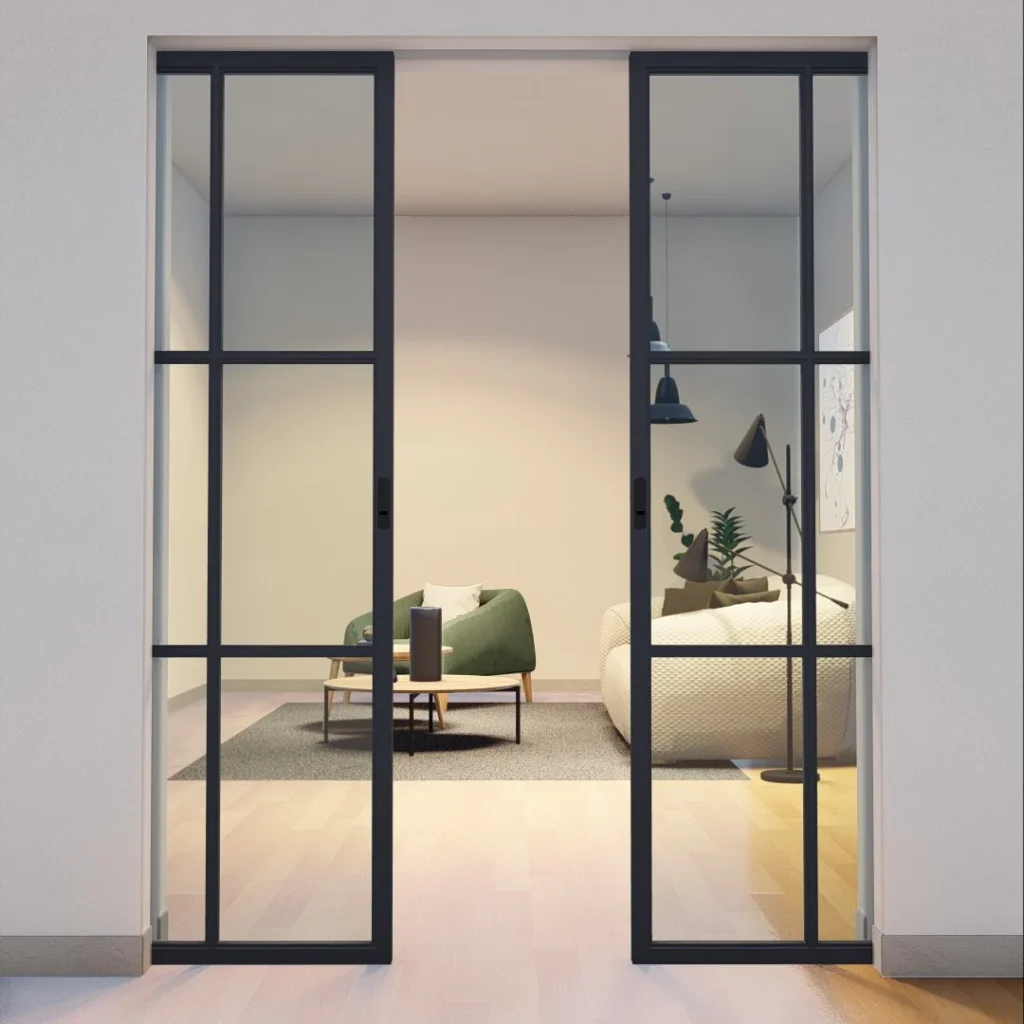
French interior doors are defined by multiple glass panes set within a framed structure, allowing light to flow freely between rooms. Traditionally associated with European residential architecture, they have become increasingly popular in modern homes seeking brightness without full openness.
They are commonly used between living rooms and dining areas, or to enclose home offices while maintaining a visual connection to shared spaces. Compared to solid doors, French doors feel lighter and more inviting, especially in homes with limited natural light.
Today’s French doors often feature simplified frames, larger glass panels, and subtle finishes, helping them adapt easily to both classic and contemporary interiors.
5
Barn Doors
Barn doors slide along an exposed wall-mounted track, making both the door panel and hardware part of the interior design. While they were once strongly associated with rustic and farmhouse styles, modern barn doors have shifted toward cleaner lines, minimalist hardware, and neutral color palettes.
They work best in spaces with ample wall area, such as bedrooms, studies, or transitional zones, where the door can slide freely without obstruction. Because they do not seal tightly, barn doors are better suited to areas where privacy and sound insulation are not top priorities.
In contemporary and industrial interiors, barn doors are often chosen as a design statement, balancing practicality with strong visual character.

6
Flush Interior Doors
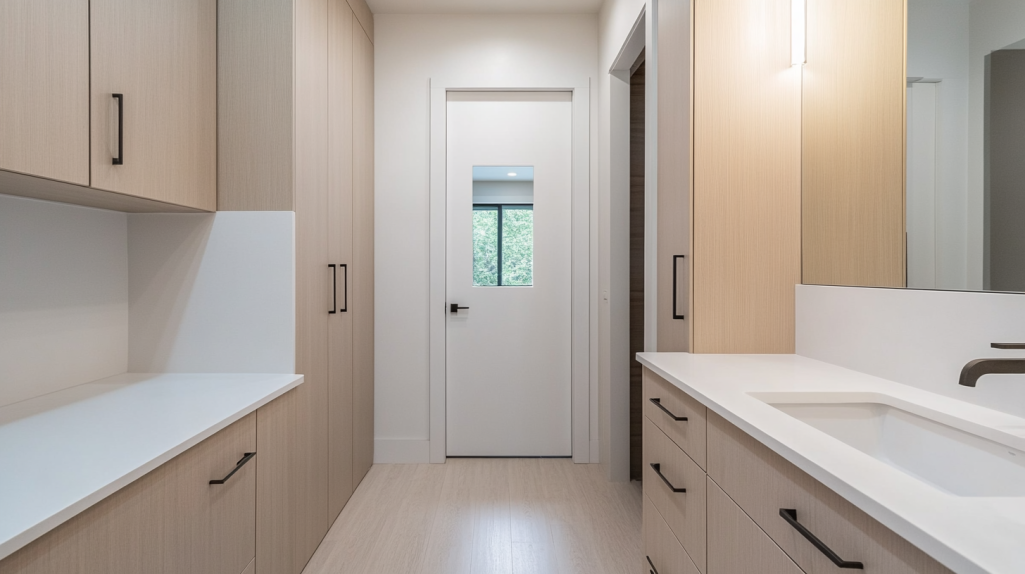
Flush doors are defined by a flat, uninterrupted surface, making them a natural fit for modern and minimalist interiors. Their appeal lies less in form and more in how they interact with walls—often finished in the same color or material to reduce visual breaks.
In many contemporary homes and hotels, flush doors are chosen to create calm, continuous surfaces rather than highlight doorways. Details like edge thickness, shadow gaps, and concealed frames tend to matter more than the door panel itself, which is why flush doors are frequently specified early in the design process.
7
Panel Doors
Panel doors introduce depth and rhythm through raised or recessed sections. The number of panels, their proportions, and edge detailing directly influence how traditional or transitional the door feels.
Interior panel doors are commonly used in homes that favor architectural detail over minimalism, especially in living spaces and bedrooms. While the basic structure has remained unchanged for decades, modern panel doors often simplify profiles and reduce ornamentation to better suit contemporary interiors.

8
Glass Interior Doors
Glass interior doors are primarily used to share natural light between rooms, especially in spaces that lack direct window access. Depending on the level of privacy required, options range from clear glass to frosted, reeded, or textured finishes.
They are commonly installed in home offices, kitchens, and interior corridors, where visual connection is desirable without fully opening the space. In recent years, larger glass panels and slimmer frames have made glass doors feel lighter and more architectural.

9
Bifold Doors
Bifold doors consist of panels that fold inward, allowing wider access than a single swing door. They are most often used for closets, laundry rooms, and storage spaces, where full opening access is more important than visual presence.
Modern bifold doors focus on lighter materials and improved track systems, reducing the bulky appearance and uneven operation associated with older designs. As a result, they function more smoothly while remaining visually understated.

10
Pivot Doors
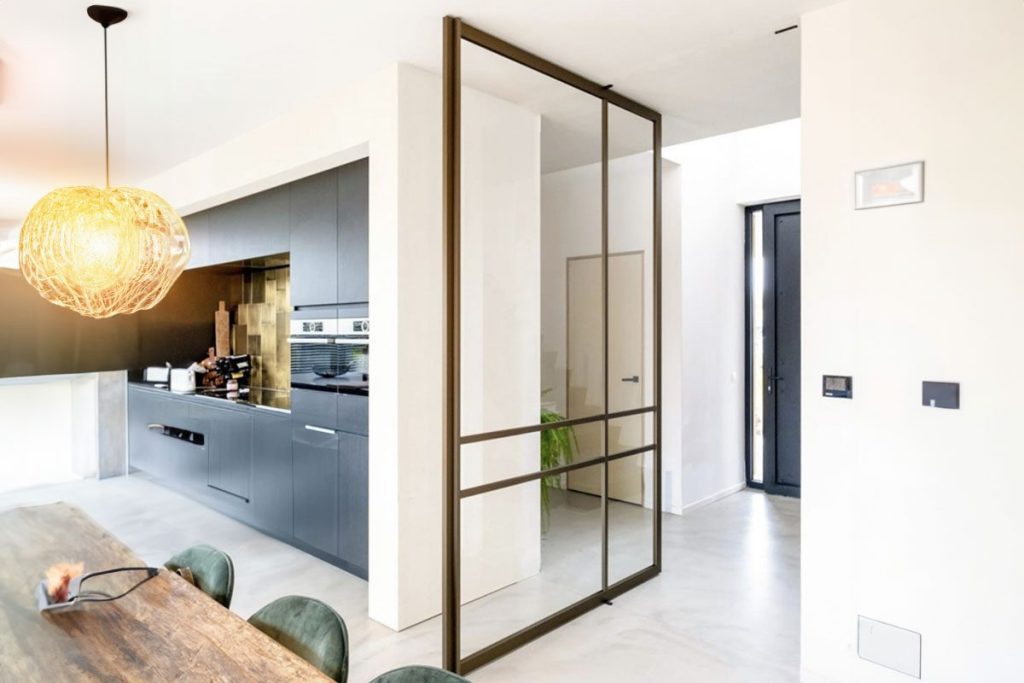
Pivot doors rotate on a central or offset pivot rather than traditional side hinges, allowing for larger and heavier door panels. This makes them suitable for wide openings and spaces where scale plays an important role.
Because pivot hardware requires precise installation and structural support, these doors are usually reserved for custom homes or high-end interior projects. Their presence tends to define an entry point rather than simply close it off.
11
Louvered Interior Doors
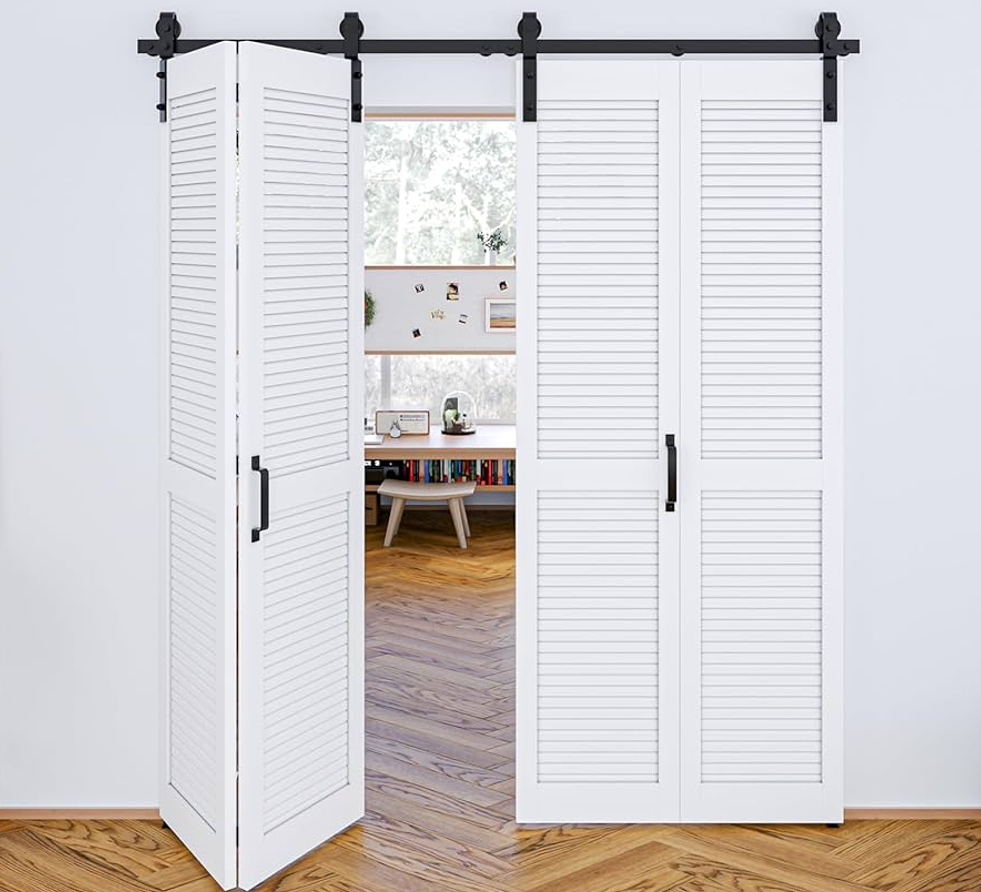
Louvered doors are defined by angled slats that allow air to circulate even when the door is closed. Their primary value is ventilation, which is why they are commonly used for closets, laundry rooms, and mechanical spaces.
Interior louvered doors are especially common in warm or humid climates, where airflow helps prevent moisture buildup. While not typically chosen for sound control or privacy, louvered doors remain a practical solution where function outweighs visual presence.
12
Dutch Interior Doors
Dutch doors are split horizontally, allowing the top and bottom sections to operate independently. This format was historically used to balance separation and interaction, especially in kitchens and service areas.
In modern interiors, Dutch doors are often used in family homes to maintain visual connection while controlling access—such as between kitchens and dining areas or play spaces. Their appeal lies more in everyday usability than in formal aesthetics.

13
Accordion Doors
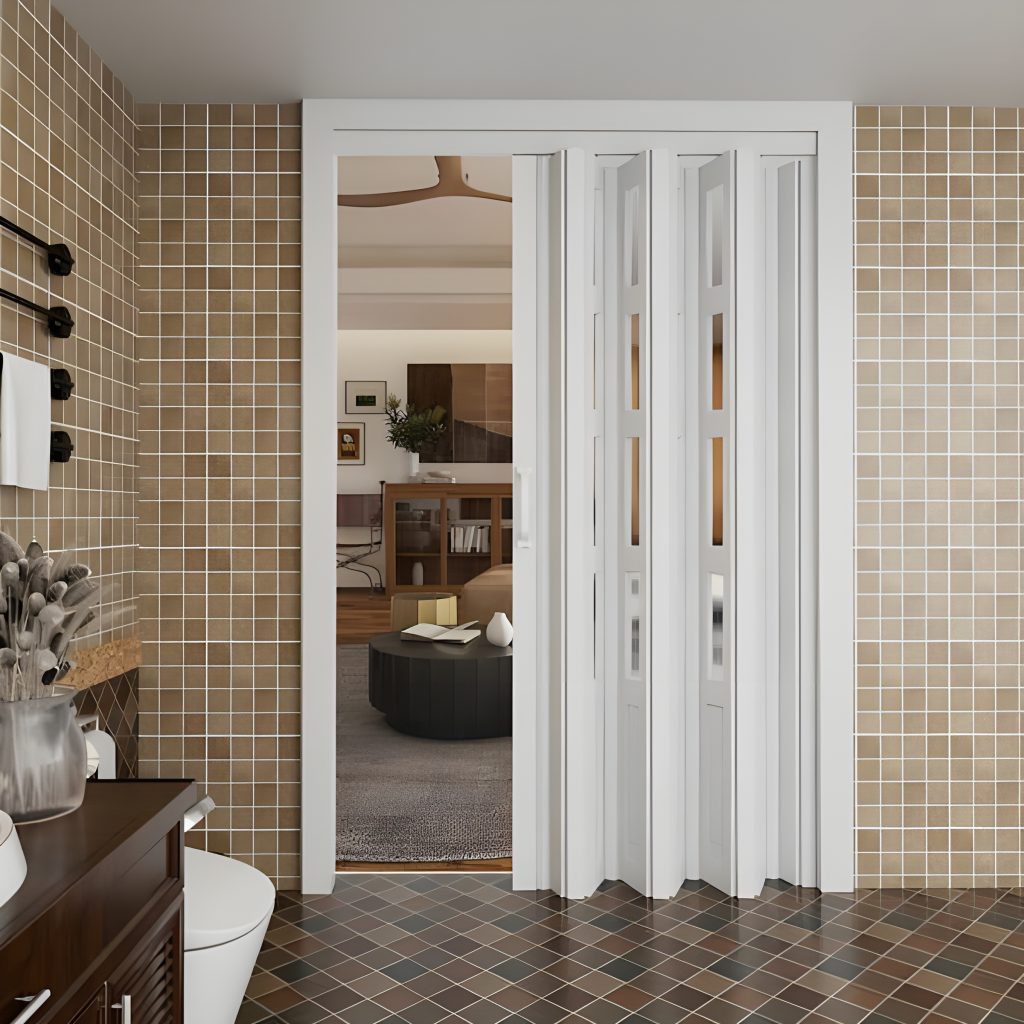
Accordion doors fold into narrow stacks, making them useful for temporary or flexible space division. They are often installed in multipurpose rooms, shared living areas, or locations where a full wall is unnecessary.
Compared to solid doors, accordion doors offer limited sound insulation, but their ability to open wide with minimal structural requirements makes them a practical option for adaptable layouts rather than permanent separation.
14
Fire-Rated Interior Door
Fire-rated interior doors are designed to slow the spread of fire and smoke for a specified time period. They are commonly required by building codes in multi-unit residential buildings, hotels, and commercial interiors.
What has changed in recent years is appearance. Modern fire-rated doors are now available in finishes and styles that closely resemble standard interior doors, making them easier to integrate into design-driven projects without drawing attention to their safety function.
15
Acoustic Interior Doors
Acoustic doors are built to reduce sound transmission through dense cores, perimeter seals, and specialized construction. They are increasingly specified in home offices, media rooms, bedrooms, and hotel guest rooms, where noise control directly affects comfort.
Rather than relying on thickness alone, modern acoustic doors focus on balanced construction and proper sealing. Their effectiveness depends as much on installation quality as on the door itself.

Conclusion
Choosing the right interior door is about more than style—it affects how your space functions, feels, and connects. From classic hinged doors to modern sliding, glass, and concealed solutions, understanding the differences helps you make smarter design decisions.
At PA Home, we also manufacture a full range of interior door solutions, including WPC interior doors, eco-friendly invisible doors, glass interior doors, and other customized designs for residential and commercial projects.
If you’re exploring new interior door ideas or need a clear quotation for your project, feel free to contact PA Home for tailored design support and competitive pricing.
FAQs about Interior Doors
Hinged (swing) doors are still the most popular interior door type. They fit standard wall openings, seal well, and work reliably in bedrooms and bathrooms.
Pocket doors create a cleaner look because the door disappears into the wall, but they require early planning. Sliding doors are easier to install and more flexible in renovations.
Common modern options include engineered wood, WPC (wood-plastic composite), and glass. The best choice depends on moisture resistance, budget, and design style.
Sliding doors and pocket doors are ideal for small spaces. They eliminate swing clearance and help keep layouts flexible in apartments and compact homes.
Interior door prices vary by type and material. Hinged doors are usually the most affordable, while pivot, acoustic, and custom glass doors sit at the higher end.
With proper installation and normal use, quality interior doors can last decades. Hardware quality and environmental conditions play a major role in longevity.
Hollow-core doors are lighter and cheaper but offer limited sound control. Solid-core doors are heavier, quieter, and feel more substantial in daily use.