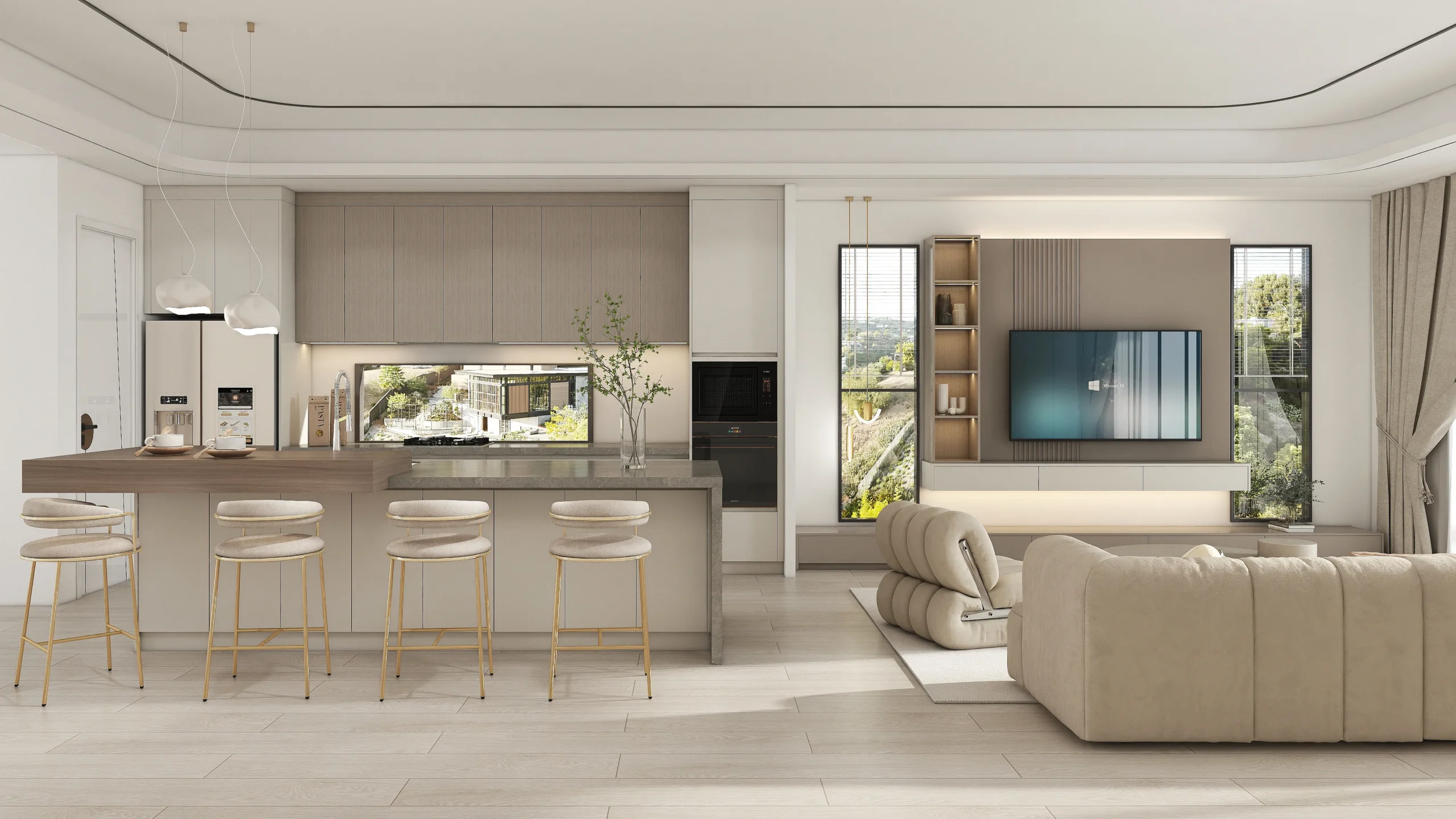
Replacing your kitchen units does not have to mean paying for a bespoke kitchen. By choosing standard products, avoiding unnecessary extras and comparing complete quotations, you can reduce costs without sacrificing the features that matter most.
Here are seven practical ways to save money when buying cheap kitchen units.

1. Choose Flat-Pack Kitchen Units
Flat-pack kitchen units are usually cheaper than ready-assembled cabinets because they take up less storage and delivery space. They can be a good option if you are comfortable assembling furniture or already have an installer who works with flat-pack kitchens.
Before ordering, check:
- How clearly the components are labelled
- Whether assembly instructions are included
- Which tools are required
- Whether replacement parts are available
- How much professional assembly would cost
A flat-pack cabinet is not automatically the cheapest option if you need to pay someone to assemble every unit. Compare the combined purchase and assembly cost with the price of ready-assembled cabinets.
2. Stick to Standard Unit Sizes

Standard kitchen units are generally cheaper than made-to-measure cabinets. They are also easier to replace because doors, shelves and fittings are more likely to remain available.
Most budget kitchen ranges offer standard:
- Base units
- Wall units
- Drawer units
- Tall or larder units
- Appliance housing units
Small gaps can usually be covered with filler or end panels rather than custom-built cabinets. Avoiding unusual widths and complex shapes can also reduce installation time.
Measure the room carefully before ordering, including the locations of windows, doors, sockets, pipes and appliances. Allow for walls and floors that may not be perfectly straight.
3. Check What the Price Includes

Kitchen unit prices are not always directly comparable. Some suppliers advertise complete cabinets, while others show the price of the carcass only.
Check whether the listed price includes:
- Cabinet carcass
- Door or drawer front
- Hinges
- Drawer runners
- Shelves
- Cabinet legs
- Wall brackets
- Soft-close fittings
- Handles
Pay particular attention to drawer units, as drawer boxes, runners and fronts may be priced separately.
Use the same checklist for every supplier. This prevents an apparently cheap cabinet from becoming more expensive once the missing components are added.
4. Calculate the True Cost

Once you know what each unit includes, calculate the cost of the complete order rather than comparing one cabinet at a time.
Your total may include:
- Kitchen units
- Doors and drawer fronts
- Hinges and runners
- Handles
- Plinths
- End panels
- Filler panels
- Cornices or pelmets
- Delivery
- Assembly
- Installation
A simple calculation is:
True cost = units + fittings + finishing panels + delivery + assembly or installation
Create a list of every unit required for your layout and ask each supplier to quote for the same combination. This gives you a more accurate comparison than looking at individual product prices.
Allow a small amount for unexpected items such as an extra filler panel, replacement hinge or additional length of plinth. Ordering a missing part later may also create another delivery charge.
5. Limit Expensive Drawer and Corner Units

Standard cupboards with hinged doors are usually cheaper than drawer packs, pull-out larders and specialist corner storage.
Drawers are convenient, but they require more components and more complex fittings. Corner carousels, pull-out baskets and internal storage mechanisms can also increase the cost of a single cabinet considerably.
To control your budget:
- Use drawers where they offer the greatest everyday benefit
- Choose standard cupboards for less frequently used storage
- Avoid adding pull-out mechanisms to every unit
- Compare specialist fittings with adjustable shelves
- Use open shelving where suitable
A few well-positioned drawer units may improve the kitchen more than several expensive internal accessories.
6. Look for Clearance, Ex-Display and Used Units
Clearance and ex-display kitchen units can offer significant savings. Retailers may reduce them because a colour has been discontinued, a display is being replaced or the packaging has been damaged.
Before buying, check:
- Whether all required units are available
- Whether matching doors and panels can still be ordered
- The condition of corners, doors and fittings
- Whether any parts are missing
- The warranty terms
- Collection or delivery costs
Used kitchens can also provide good value, particularly when the original cabinets were well made. However, they require accurate measurement and careful planning.
Inspect used units for water damage, swelling, broken hinges and damaged cabinet bases. You should also include dismantling, collection and reinstallation in your cost calculation.
7. Spend More on the Parts That Matter

A budget kitchen does not require the cheapest version of every component. Some parts have a greater effect on durability and daily use.
Hinges
Poor-quality hinges can cause doors to drop or move out of alignment. Adjustable, durable hinges are usually worth the additional cost.
Drawer runners
Kitchen drawers are opened frequently and may carry heavy items. Reliable runners improve stability and movement.
Sink-unit protection
The cabinet below the sink is particularly vulnerable to leaks. Good edge sealing, moisture-resistant materials or a protective base mat can help prevent swelling.
Cabinet fixings
Wall brackets, legs and connectors must support the units securely and keep them level.
Spend more on frequently used drawers, sink cabinets and structural fittings before paying for decorative accessories that provide little practical benefit.
Are Cheap Kitchen Units Worth Buying?
Cheap kitchen units can offer good value when the lower price comes from standard sizing, flat-pack delivery, simple finishes or limited product options.
Before buying, consider:
- Cabinet construction
- Included components
- Hinges and drawer runners
- Assembly requirements
- Delivery charges
- Warranty terms
- Replacement-part availability
The best option is not necessarily the cabinet with the lowest advertised price. It is the range that provides the right combination of affordability, durability and compatibility with your kitchen layout.
Conclusion
Cheap kitchen units can offer good value when you choose the right sizes, check what is included and compare the full cost rather than the advertised unit price alone.
PA Home provides a range of kitchen cabinet solutions for different layouts and budgets. Contact PA Home to request a tailored quotation for your project.
FAQs About Cheap Kitchen Units
Flat-pack units are often cheaper to manufacture, store and deliver. However, you should include assembly costs when comparing them with ready-assembled cabinets.
Cheap kitchen units are available from online kitchen specialists, DIY retailers, direct manufacturers and local kitchen suppliers. Clearance outlets and second-hand marketplaces may offer lower prices, but check the condition and availability of matching parts. Always compare the total cost, including doors, fittings, panels and delivery.
Not always. Some suppliers sell complete units, while others price the carcass, doors, hinges, shelves, legs and handles separately. Always check what is included in the advertised price.
The true cost may include the cabinets, doors, fittings, plinths, end panels, filler panels, delivery, assembly and installation. Comparing the cost of a complete layout is more reliable than comparing individual cabinet prices.
Choose standard sizes, limit specialist drawer and corner mechanisms, compare what each quotation includes and calculate the total cost before ordering.
In the UK, a new kitchen can cost around £3,300–£9,100 for a standard small-to-large kitchen, while installation, appliances and additional building work can increase the total considerably.
Replacing kitchen cabinets costs around £3,000 on average. Kitchen worktops typically cost £500–£850 per five metres for materials only, or approximately £750–£1,900 when professionally supplied and fitted.
Yes. Standard sizes are usually more affordable than made-to-measure cabinets and are easier to replace or expand later.