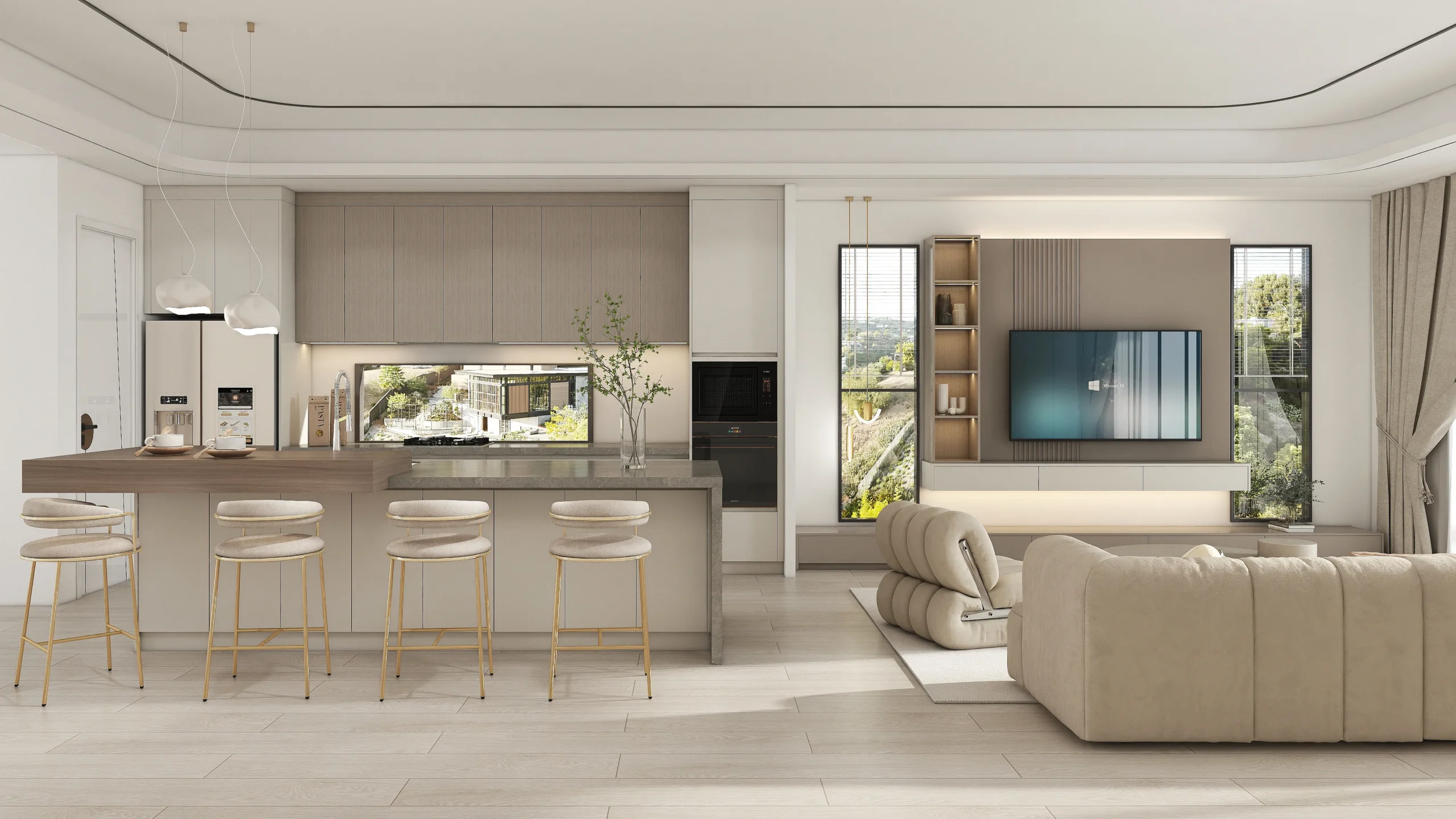
Choosing the right kitchen cabinet style is one of the most impactful decisions in a kitchen remodel—it sets the tone for the entire space and influences how the room feels for years to come. While many articles cover the basics, the world of cabinetry is constantly evolving. To help you make a confident choice, we’ve gathered the 10 most popular types of kitchen cabinet styles, blending timeless classics with the trends shaping kitchens in 2026.
Kitchen Cabinet Styles at a Glance
Not sure where to start? This quick table compares the key features of each cabinet style at a glance.
| Cabinet Style | Overall Appearance | Works Especially Well In | Cleaning Level | Relative Cost |
|---|---|---|---|---|
| Shaker | Simple, balanced and timeless | Transitional, farmhouse and contemporary kitchens | Easy to moderate | Low to medium |
| Slim Shaker | Refined and streamlined | Modern and transitional kitchens | Easy to moderate | Medium |
| Slab | Smooth and minimal | Modern, Scandinavian and industrial kitchens | Easy | Low to high |
| Raised-Panel | Detailed and traditional | Classic and formal kitchens | Moderate | Medium to high |
| Mitered | Furniture-like and decorative | Traditional and luxury kitchens | Moderate | Medium to high |
| Beadboard | Textured and welcoming | Cottage, coastal and farmhouse kitchens | Moderate to high | Medium |
| Beaded Shaker | Refined with subtle detailing | Transitional and updated traditional kitchens | Moderate | Medium to high |
| Fluted or Reeded Wood | Textured and design-focused | Contemporary and custom kitchens | Moderate to high | Medium to high |
| V-Groove | Clean with subtle linear detail | Contemporary, coastal and farmhouse kitchens | Moderate | Medium to high |
1
Shaker Cabinets
Few cabinet doors are as easy to live with as Shaker. The design is straightforward: a flat recessed center panel surrounded by four clean rails and stiles. It has enough structure to keep a kitchen from looking plain, yet not so much detail that the room feels formal or dated.
Much of Shaker’s flexibility comes from what surrounds it. Painted white doors with cup pulls lean toward farmhouse style. Natural oak with slim black handles feels warmer and more contemporary. Deep green or navy can give the same familiar profile a richer, more tailored look.
Standard Shaker doors also sit comfortably between decorative and minimal styles. They are easier to combine with changing countertops, hardware, and wall colors than highly ornate doors, which is useful if you expect to refresh the kitchen later without replacing the cabinetry.
The recessed panel does create a few inner edges where dust and cooking residue may settle, but routine cleaning is generally simple. For homeowners who are still deciding between traditional and modern design, Shaker is often the safest place to begin—not because it is neutral, but because it adapts so well.

2
Slim Shaker Cabinets
At first glance, slim Shaker doors may not seem very different from the standard version. The change is in the frame: narrower rails and stiles create a lighter outline and allow the center panel to take up more of the door.
Across a full kitchen, that small adjustment has a noticeable effect. Conventional Shaker cabinetry can feel grounded and substantial, while slim Shaker fronts appear sharper and more streamlined. They are especially useful when slab doors seem too stark but standard Shaker doors feel heavier than the room needs.
Pale wood, muted paint colors, simple stone, and understated hardware tend to suit the profile particularly well. The reduced frame width also makes it easier to achieve a modern look without giving up the craftsmanship associated with a five-piece door.
Proportion deserves close attention. A frame that looks elegant on a large pantry door may feel too delicate on a narrow drawer front. Manufacturers also use different widths under the same “slim Shaker” label, so compare full-size samples whenever possible.

3
Slab or Flat-Front Cabinets
Slab cabinets remove nearly all visible ornament from the door. There is no surrounding frame and no raised or recessed panel—just one uninterrupted surface.
That simplicity puts greater emphasis on material and finish. A matte painted slab can feel calm and architectural. High-gloss fronts reflect light and create a sharper, more polished effect. Wood veneer adds warmth, while continuous grain matching across several doors can turn a wall of cabinetry into a major design feature.
Flat fronts are also practical. With no grooves or molded edges, they are quick to wipe down and well suited to households that prefer low-maintenance surfaces. The trade-off is that fingerprints, uneven gaps, poor edge finishing, and misaligned doors are harder to hide.
Handle choice matters more than it might on a detailed door. Long bar pulls can emphasize the horizontal or vertical lines of the cabinetry, while integrated channels and push-to-open hardware produce a nearly seamless appearance. These opening systems should be tested in person, especially in a busy family kitchen where convenience matters as much as appearance.
Minimal does not have to mean cold. Warm wood, textured tile, soft lighting, natural stone, and open shelving can give slab cabinetry plenty of personality.

4
Raised-Panel Cabinets
Raised-panel doors are designed to be noticed. Their center panel projects forward from the surrounding frame, often with shaped or molded edges that create visible depth and shadow.
They feel most at home in kitchens with a sense of architectural weight: substantial range hoods, traditional trim, furniture-style islands, stone surfaces, and decorative lighting. In those surroundings, the cabinetry becomes part of a larger, carefully detailed composition.
Not every raised-panel door is elaborate. Some have a relatively simple profile and look warm rather than formal, particularly in natural wood. Others include multiple steps, glazing, applied molding, or arched details and make a much stronger traditional statement.
Room size is worth considering. In a large kitchen, the added dimension can look rich and balanced. In a compact room, repeating a heavy profile across every door may make the space feel crowded. A lighter color or a simpler version of the panel can soften the effect.
Cleaning takes a little more effort because residue can collect along the shaped edges. Manufacturing costs may also be higher than for Shaker or slab doors. In return, raised-panel cabinetry offers a level of depth and permanence that simpler fronts cannot easily reproduce.

5
Mitered Cabinet Doors
Look closely at the corners of a mitered door and you will see diagonal joints, much like the corners of a picture frame. This construction allows a decorative profile to continue around all four sides without interruption.
The result often feels closer to fine furniture than standard kitchen cabinetry. Some mitered doors are ornate, but others are surprisingly restrained, using a narrow molded frame around a flat or gently recessed center panel.
They are a useful option when Shaker feels too plain and a raised panel feels too formal. The frame adds refinement while the center can remain visually calm.
Quality is especially important here. Wood responds to changes in temperature and humidity, and corner joints may become more visible if the door is poorly constructed or the material is unstable. Ask how the joints are made, what material is used, and how the finish is applied rather than judging the door by profile alone.
Because the frame already contains detail, simple hardware often provides the best balance. Overly decorative handles can make the front feel busier than necessary.
6
Beadboard Cabinets
Beadboard brings the texture of traditional wall paneling onto the cabinet door. Narrow vertical grooves break up the surface and give the kitchen a relaxed, handcrafted character.
It is often linked with cottage, coastal, and farmhouse interiors, though it does not need to define the entire room. A beadboard island, pantry, breakfast station, or small run of upper cabinets can introduce warmth without turning the kitchen into a themed space.
Color changes the mood considerably. White beadboard looks crisp and familiar. Sage green or dusty blue feels softer and more personal. Natural wood shifts the design away from classic cottage style and toward something warmer and more rustic.
The grooves are the feature people love—and the part that needs the most attention during cleaning. Dust, flour, and grease can settle inside them, particularly near preparation areas and the cooktop. For that reason, beadboard may be easier to live with on an island or feature cabinet than beside a busy range.
Used in moderation, it can make a new kitchen feel as though it has evolved over time rather than arriving as one perfectly matched installation.

7
Glass-Front Cabinets
A row of solid upper cabinets can sometimes feel heavy, especially in a small kitchen. Replacing a few center panels with glass introduces depth and gives the eye somewhere to travel beyond the door surface.
Clear glass creates the most open effect, but it also places everything inside on display. Reeded, fluted, frosted, and seeded glass offer varying degrees of privacy while still reflecting light. Mullions can divide the glass into smaller panes for a more architectural or traditional appearance.
These cabinets work best when their contents are considered part of the design. Everyday plates, glassware, serving pieces, and cookbooks can look attractive without being overly styled. Food packaging and crowded shelves are less forgiving behind clear glass.
The interior finish matters too. Once the door becomes transparent, shelf edges, back panels, hinges, and lighting are visible. A contrasting cabinet interior or warm integrated light can make the display feel intentional rather than simply exposed.
There is no need to use glass everywhere. A pair of doors beside the range hood, a tall display cabinet, or a short run near the dining area may be enough to lighten the room.

8
Beaded Shaker Cabinets
Beaded Shaker cabinets add a narrow decorative molding along the inside edge of a traditional Shaker frame. The extra detail is subtle, but it gives the door a more refined, furniture-like appearance.
They are a good fit for transitional and updated traditional kitchens where standard Shaker doors may feel too plain, but raised-panel cabinets would be too formal. Warm white, muted green, blue, and natural wood all work well with the profile.
The added molding takes slightly more effort to clean and may increase the cost, but it offers an easy way to introduce craftsmanship without making the cabinetry look ornate.

9
Fluted or Reeded Wood Cabinets
Fluted and reeded cabinets use repeated vertical lines to create a strongly textured surface. Fluting usually forms recessed grooves, while reeding creates rounded raised strips, although the terms are sometimes used interchangeably.
These fronts are especially effective on islands, pantry doors, and tall feature cabinets. Natural oak, walnut, and ash highlight both the texture and the grain, giving the kitchen a warm, custom-made quality.
Because deep grooves collect more dust and can dominate a room when overused, fluted or reeded cabinetry is usually most successful as a focal point rather than on every cabinet.

10
V-Groove Cabinets
V-groove cabinets feature narrow, sharply cut lines across an otherwise flat door. They provide more detail than a slab front while remaining cleaner and less sculptural than fluted or reeded cabinetry.
Closely spaced grooves feel contemporary, while wider spacing can resemble traditional tongue-and-groove paneling and suit coastal, cottage, or farmhouse kitchens. The pattern is particularly useful on wide drawers and tall pantry doors, where it breaks up a large flat surface.
Accurate alignment is important when grooves continue across several doors or drawer fronts. They are relatively easy to maintain, although the carved lines still need occasional cleaning.

Conclusion
Choosing a cabinet style is really about choosing the backdrop for your everyday life. Whether you prefer the timeless appeal of Shaker cabinets, the clean simplicity of slab fronts, or the refined texture of fluted designs, the best choice is the one that fits your daily habits and personal taste. We hope this guide has helped clarify your options and made the decision-making process easier and more enjoyable.
For more cabinet styles and personalized kitchen design ideas, PA Home is ready to offer expert guidance and a wide range of options. Contact PA Home and turn your dream kitchen from inspiration into reality.
FAQs About Kitchen Cabinet Styles
Shaker cabinets remain one of the most widely chosen options because their simple framed design works with traditional, transitional, farmhouse, and contemporary kitchens. Slab cabinets are also popular among homeowners who prefer a cleaner, more modern look.
Simple profiles such as slab, slim Shaker, and standard Shaker can help a small kitchen feel less crowded. Light finishes, minimal hardware, and consistent cabinet colors can also make the room appear more open.
Both have a recessed center panel and a rectangular frame. Beaded Shaker doors add a narrow decorative molding around the inside of the frame, giving them a slightly more detailed and furniture-like appearance.
Shaker cabinets are unlikely to disappear because their balanced design is easy to adapt. Paint color, wood finish, frame width, and hardware can make them feel traditional or modern. Slim Shaker doors are a more streamlined variation for homeowners who want a fresher look.
Yes. A second style can help define an island, pantry wall, beverage station, or other focal area. The combination usually looks most cohesive when the cabinets share a color, wood species, hardware finish, or another common design element.
Detailed doors such as raised-panel, mitered, beaded Shaker, and fluted designs often cost more because they require additional materials or manufacturing steps. However, the final price also depends on the cabinet material, finish, construction, customization, and installation.
Modern kitchen cabinets feature clean lines, simple door profiles, and minimal ornament. Slab fronts, slim Shaker doors, neutral colors, wood finishes, and understated hardware are common choices.