Choosing an interior door sounds easy until you start comparing styles. Will it look dated? Will it fit the house? Will it stay within budget? That is why 6 panel doors are still so popular. They feel familiar, practical, and easy to work into many homes. Like a white button-down shirt, they are simple, reliable, and hard to get wrong.
What Is a 6 Panel Door?
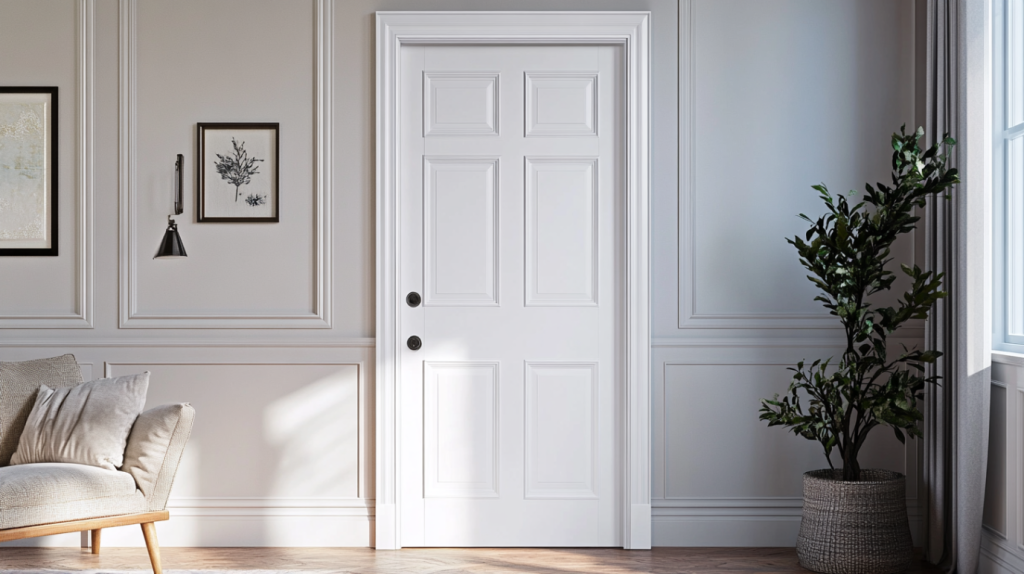
What does “6 panel door” mean? It means the face of the door is divided into six framed sections. Those sections can be raised or recessed, depending on the construction and style. The layout usually looks balanced and symmetrical, which is one reason so many homeowners find it easy to live with. General interior door guides still treat paneled doors as one of the core traditional door categories in American homes.
Today, a 6 panel door is available in many versions. You can find hollow core, solid core, molded composite, wood, slab, prehung, bifold, and closet options. Large retail platforms still group 6 panel doors into dedicated categories, which is a good signal that demand remains strong. This is not a rare or outdated style. It is still part of the standard interior door market.
How Much Does a 6 Panel Door Cost?
The cost of a 6 panel door depends more on construction than on the panel design itself. Core type, installation method, size, and material all affect the final price. If you want to understand the price logic quickly, these four factors matter most:
| Door Type | Typical Price Level | Main Advantage |
|---|---|---|
| Hollow Core | Lower | Lightweight, affordable, and suitable for budget-conscious interior projects |
| Solid Core | Higher | Heavier construction, better sound control, and a more solid feel |
| Slab Door | Lower | Lower upfront product cost and a practical choice if the existing frame is still usable |
| Prehung Door | Higher | Includes more of the door system and usually makes installation easier |
If you are trying to control budget, hollow core or slab doors are often the easier entry point. If you want a heavier feel, better privacy, and easier installation, solid core or prehung options may be worth the extra cost.
6 Panel Doors vs 2 Panel Doors
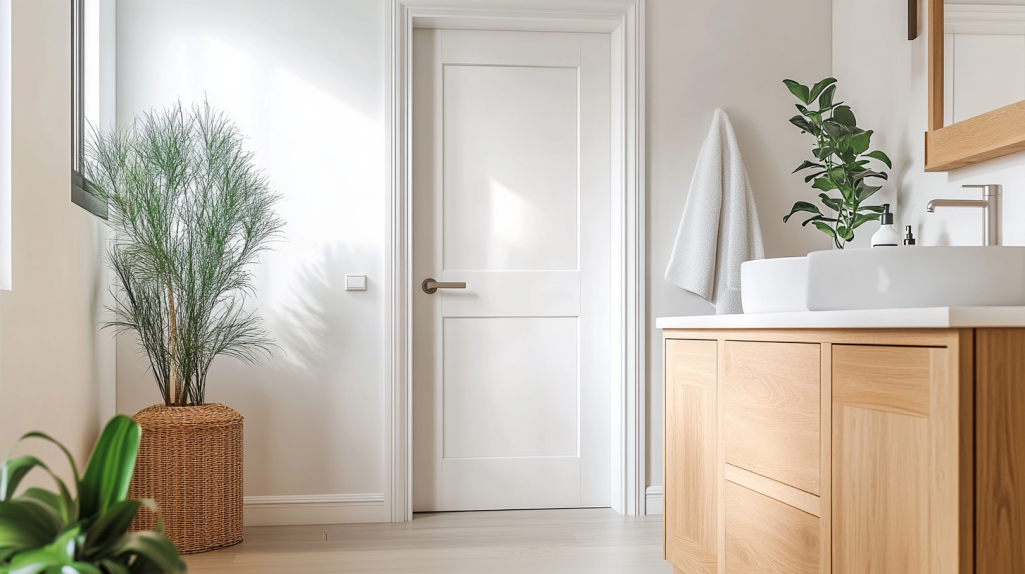
Both styles are common, but they create different visual effects. A 6 panel door feels more traditional and detailed. A 2 panel door looks simpler and a bit more updated. The better choice depends on your home style and the look you want.
| Feature | 6 Panel Doors | 2 Panel Doors |
|---|---|---|
| Overall Look | More classic and detailed | Simpler and cleaner |
| Style Feel | More traditional | More modern or transitional |
| Visual Impact | More lines and depth | Less busy and easier on the eye |
| Best For | Traditional homes, rental projects, standard home interiors | Transitional homes, newer interiors, cleaner designs |
| Matching Ability | Easy to use in many standard homes | Better for spaces with a simpler design language |
| Budget | Often budget-friendly | Can be similar, depending on construction |
6 Panel Doors vs Other Popular Door Styles
Not every door style creates the same feeling. Some look more classic. Some feel cleaner and more modern. That is why comparing styles matters. A 6 panel door is popular because it sits in the middle. It has more detail than a flat door, but it is still easy to use in many homes.
6 Panel Doors vs Shaker Doors
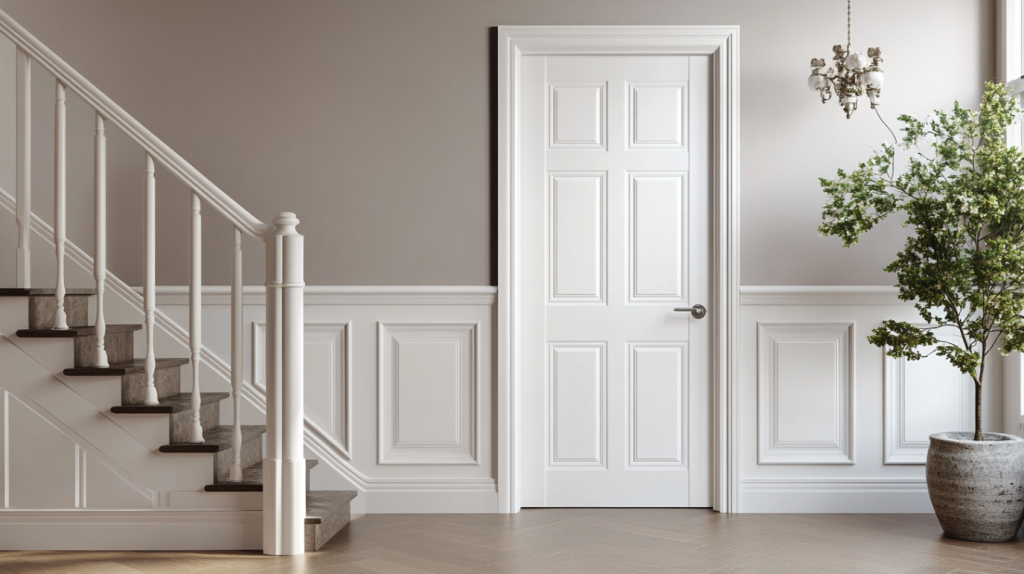
Shaker doors usually look cleaner. They use flatter panels and straighter lines. A 6 panel door has more detail, which makes it feel more traditional. So the choice often comes down to what the rest of the room is doing. If your home has flat-front cabinets, simple trim, and modern lighting, a Shaker door may feel more natural. If the house already leans classic, a 6 panel door often blends in more easily. General interior door guides continue to position paneled doors and simpler flat-panel styles as different visual families rather than direct upgrades over one another.
6 Panel Doors vs Flush Doors
Flush doors go one step further toward minimalism. They have a flat surface with very little visual interruption. That makes them easy to clean and easy to fit into modern interiors. But that same simplicity can also feel too plain in a traditional home. A 6 panel door offers more depth without becoming overly decorative. It is a middle-ground choice. That middle ground is part of its staying power.
Related Article:
What Are the Main Benefits of 6 Panel Doors?
- A familiar look
A 6 panel door is one of the most recognized door styles, so it feels natural in many homes. - A timeless design
It has enough detail to look finished, but it is not overly decorative. - Easy to match
It works well in bedrooms, closets, hallways, and other everyday spaces. - Easy to source
Standard sizes are widely available, which makes replacement easier. - Good for whole-house use
If you need multiple doors in one project, it is easier to keep the look consistent. - Flexible for different budgets
You can find both budget-friendly and more upgraded versions. - Works in many home styles
It fits especially well in traditional and transitional interiors.
How to Paint a 6 Panel Door?

Painting a 6 panel door is not difficult, but the order matters. A paneled door has corners, grooves, and edges that can collect too much paint. That is why many painting guides recommend working from the detailed areas out to the flatter sections. Sherwin-Williams and Lowe’s both advise cleaning the surface, sanding it, priming when needed, and painting paneled sections before finishing the larger faces. They also warn against heavy coats because vertical surfaces drip easily.
A simple step-by-step process looks like this:
- Remove the hardware, or mask it carefully.
- Clean the door well.
- Sand lightly and wipe off dust.
- Apply primer if the surface needs it.
- Paint the panels first.
- Paint the rails and stiles after that.
- Finish the larger flat areas in thin coats.
- Let the first coat dry fully.
- Add a second coat if needed.
Want to Buy 6 panel doors?
If you are planning a new project or replacing old interior doors, 6 panel doors are still a practical choice. They are easy to match, easy to source, and work well in many homes.
If you want more door design ideas or need a quote for your project, contact us for more details and pricing.
FAQs about 6 Panel Doors
Not necessarily. 6 panel doors still work well in traditional and transitional homes. They may look less suitable in very modern or minimalist interiors.
In many cases, yes, but the final price depends more on the construction. Hollow core doors usually cost less, while solid core and prehung options cost more.
Hollow core is more budget-friendly and works well for simple spaces. Solid core is heavier, quieter, and usually better for bedrooms or rooms where privacy matters more.
They are available in many standard interior door sizes. The exact size depends on the room and the opening.
Yes. Because they are widely available in standard sizes, they are usually easier to replace than less common door styles.
They usually cost more than slab doors because the frame is included. Basic prehung 6-panel interior doors can start at about $135, while solid-core or upgraded options often run around $250 to $580 or more, depending on size, material, and construction.