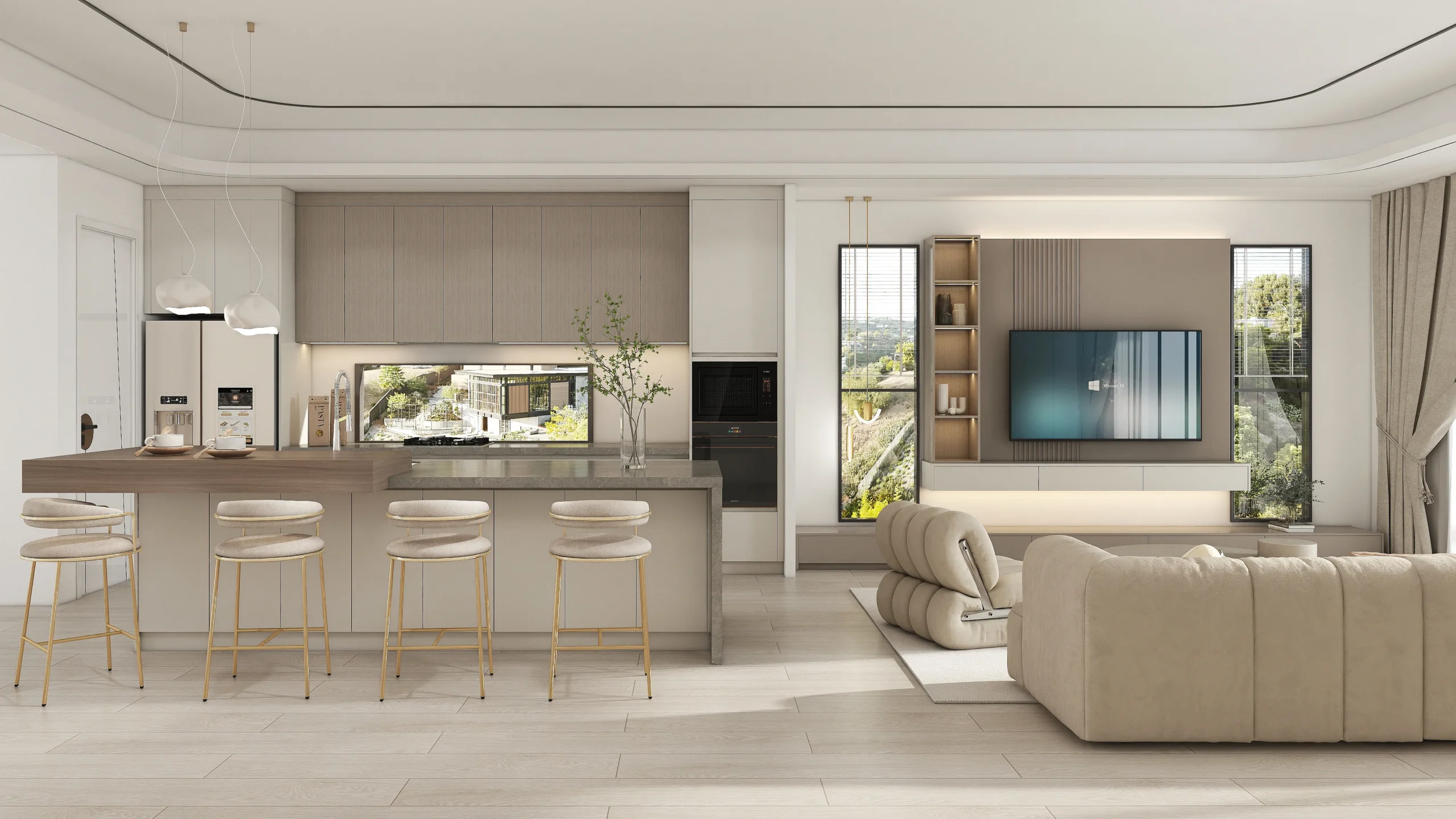
A hotel may invest heavily in lighting, furniture, and lobby design, but inconsistent doors can quickly disrupt the entire interior experience. Guests may not focus on doors directly, yet they experience them everywhere—from guest rooms and corridors to suites and service areas.
In hospitality projects, repetition exposes every detail. A small color difference, poor alignment, or low-quality finish can stand out quickly. That is why finished interior doors are a key part of modern hotel design, not just a final construction detail.
Today, hotels care about speed, consistency, durability, and guest comfort. Finished interior doors support all of these goals. Because they come pre-finished from the factory, installation is faster, cleaner, and easier to control. More importantly, they help maintain visual continuity across large hotel projects, which is essential for brand identity and guest perception.
Why Finished Interior Doors Matter in Modern Hotels
Large hotel projects demand strict consistency. With hundreds of openings across multiple floors, even minor variation becomes visible. Finished interior doors help address this by standardizing surface quality, color, and texture before installation.
They also reduce reliance on on-site finishing, which often leads to delays or uneven results. From a construction perspective, this improves scheduling efficiency. From a design perspective, it protects visual integrity across long corridors and repeated layouts.
There is also a guest experience factor. A quiet, uniform, and well-finished environment feels more premium, even if guests cannot identify the reason immediately. That perceived quality often comes from well-executed prefinished hotel doors working quietly in the background.
1. Flush Finished Doors for Minimal Hotel Design
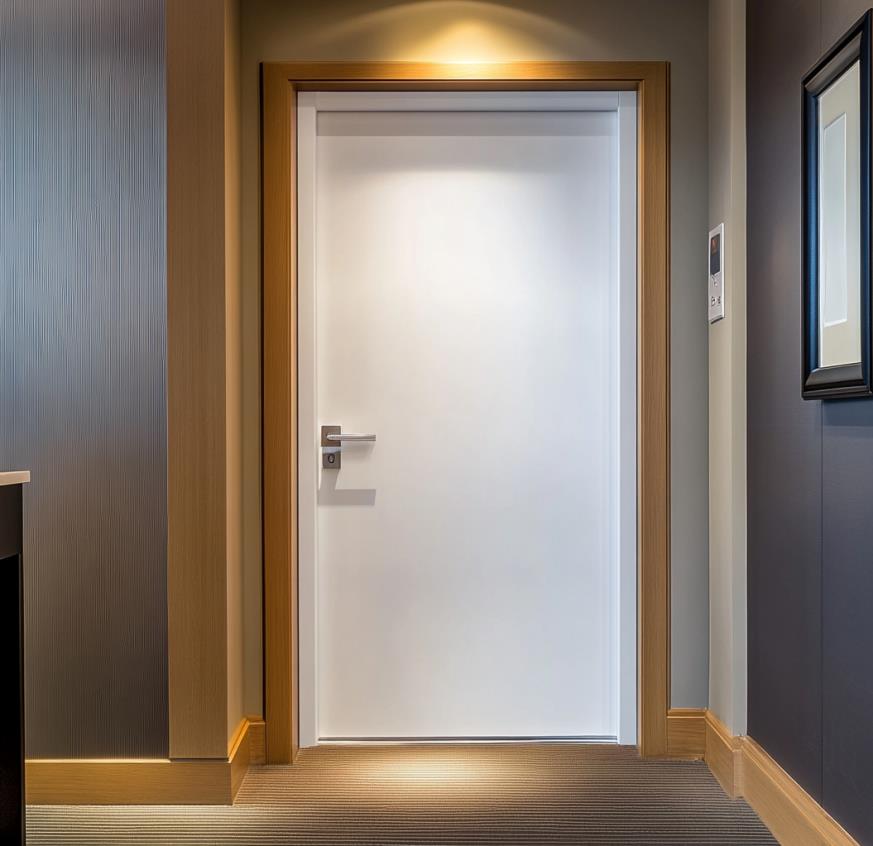
Flush finished interior doors are a popular choice for modern hotels because they remove visual noise. Their flat surface works well with walls, panels, and corridor systems, making them ideal for business hotels, serviced apartments, and contemporary guest room layouts.
Their main advantage is control. In repeated corridor environments, flush doors create rhythm without distraction. When paired with neutral wall finishes or wood panels, they support a calm and structured interior that feels consistent across the entire floor.
PA Home Case Study: Warm Wood Finished Doors for a Saudi Hotel
For a hotel project in Saudi Arabia, the PA Home team worked on a long guest corridor where every door would be seen in sequence. The client wanted the space to feel warm and modern, but not busy. That meant the doors had to look refined, stay consistent, and work naturally with the surrounding finishes.
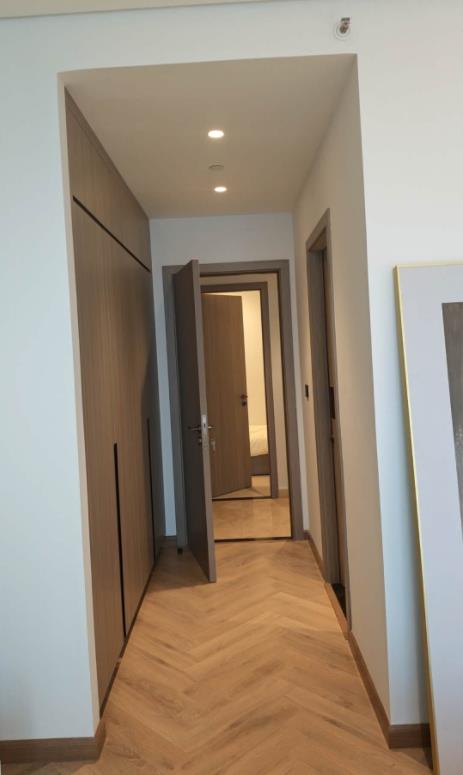
The biggest challenge was the corridor view. When several doors line up in one sightline, even a small color shift or uneven gap becomes obvious. To avoid that, PA Home used warm wood flush finished interior doors and matched the door tone with the wall panels, flooring, and hardware. The goal was to make the corridor feel like one complete design, not a row of separate openings.
During installation, the team paid close attention to frame alignment, reveal lines, door spacing, and finish direction. These small details made the final result feel much more polished. The finished corridor looked calm, warm, and consistent, showing how the right door solution can improve both the design and delivery of a hotel project.
2. Wood Veneer Doors for Warm Hospitality Spaces
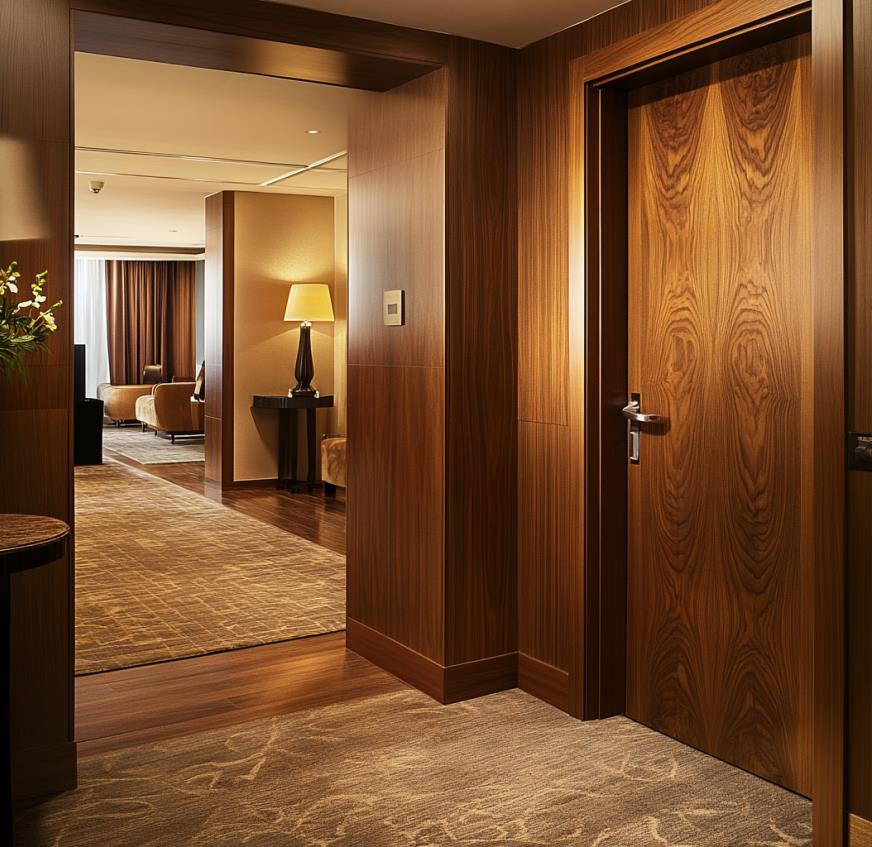
Wood veneer finished interior doors are widely used in hotels that need a warmer and more natural atmosphere. They introduce real wood texture while offering better stability than solid materials, which is important in high-traffic hospitality environments.
Within this category, oak finished interior doors are especially common because oak offers a balanced tone that works across many design styles. It fits boutique hotels, upscale business hotels, and resort environments without feeling too decorative.
Wood veneer works best when the goal is to soften minimal interiors and add subtle depth without changing the overall architectural language.
3. Painted Finished Doors for Seamless Interior Flow
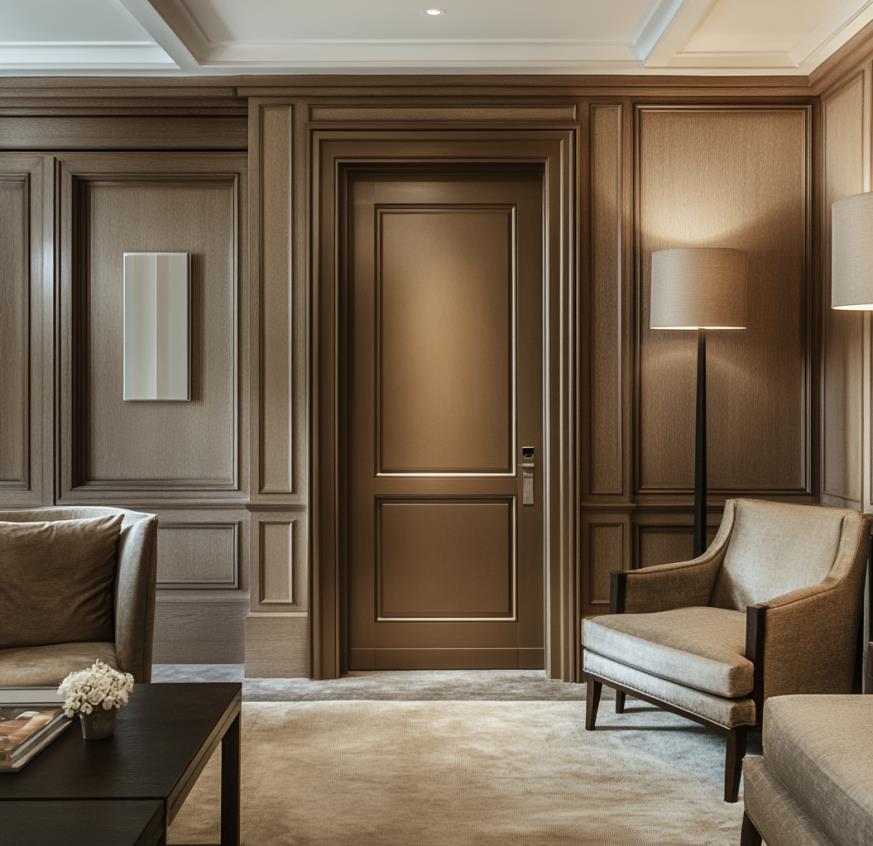
A paint finish for interior doors is often used when designers want the door to blend into the wall system. Instead of acting as a separate object, the door becomes part of the architectural surface.
This approach is common in guest rooms and suites where calmness is a priority. Neutral tones such as warm white, soft beige, or light gray help reduce contrast and create a more seamless visual field.
The best interior door paint finish is not always the glossiest or most decorative one. It is the finish that works naturally with the surrounding palette and supports the room’s overall mood.
4. Laminated Doors for Operational Hotel Areas

High-traffic zones need stronger, easier-to-maintain solutions. Laminated finished interior doors are widely used in corridors, service areas, and back-of-house spaces because they resist daily wear and are simple to clean.
Modern laminates can replicate wood textures or provide clean contemporary finishes. This makes them useful for both functional spaces and semi-visible hotel areas. While they may not be the most premium option, they offer the durability required for long-term hotel operations.
5. Dark Wood Doors for a High-End Atmosphere

Dark wood finished interior doors create stronger contrast and a more refined spatial feeling. They are often used in executive floors, luxury suites, private lounges, or boutique hotels with a more dramatic design direction.
The key is lighting. Without proper illumination, dark doors can feel heavy. But when paired with warm lights, stone surfaces, and metal hardware, they add depth and a clear sense of premium quality to the space.
6. Light Wood Doors for Open Guest Environments

Light wood finished interior doors support brighter and more relaxed hotel interiors. They are especially effective in resort hotels, lifestyle hotels, and compact guest rooms where visual lightness matters.
Light oak and ash finishes work well with neutral walls, soft flooring, and simple furniture. They help spaces feel less confined while still adding natural warmth. For hotels aiming for a fresh and welcoming atmosphere, light wood doors are a practical choice.
7. Concealed Frame Doors for Architectural Minimalism

Concealed frame systems remove visible door frames, allowing finished interior doors to align directly with wall surfaces. This creates a seamless architectural effect often used in luxury hotels, spa areas, and design-led suites.
The result is a continuous surface with less visual interruption. However, this system depends heavily on precise installation. Any deviation in alignment, wall flatness, or frame position becomes immediately visible, so execution quality is critical.
8. Panel Doors for Modern Classic Hotels

Panel doors introduce structured detailing while still maintaining a modern approach. In hospitality design, they are usually simplified to avoid traditional heaviness.
They work well in boutique hotels, heritage-inspired interiors, and modern classic suites where a slightly more decorative identity is needed. The key is restraint. Clean lines and controlled proportions keep the look current rather than outdated.
9. Acoustic Doors for Guest Comfort

Acoustic finished interior doors are important because sound control directly affects the guest experience. They help reduce noise transfer between corridors and guest rooms, improving privacy, sleep quality, and overall comfort.
However, performance depends on the full system, not just the door slab. Seals, frames, thresholds, and installation details all matter. When designed correctly, acoustic doors can make a room feel noticeably more private and premium.
10. Fire-Rated Doors for Safety Compliance

Fire-rated finished interior doors are required in many hotel projects for safety and code compliance. They are typically installed at guest room entrances, corridors, stairwells, and service areas.
In many markets, fire-rated door assemblies must comply with local codes and relevant standards such as NFPA 80, depending on the project location and authority requirements.
Modern fire-rated doors can still support the hotel’s design language. Veneer, laminate, or painted surfaces can be used to maintain visual consistency while meeting safety requirements.
Finished Interior Door Comparison for Hotel Projects
Before selecting a door finish, it is useful to compare each option by application area and main benefit. The table below summarizes common finished interior door types used in modern hotel projects.
| Door Type | Best Used For | Main Benefit |
|---|---|---|
| Flush Finished Doors | Guest rooms, corridors | Clean and minimal look |
| Wood Veneer Doors | Suites, boutique hotels, resort spaces | Natural warmth and premium texture |
| Painted Finished Doors | Guest rooms, suites, wall-integrated spaces | Seamless interior flow |
| Laminated Doors | Service areas, corridors, back-of-house zones | Durability and easy maintenance |
| Dark Wood Doors | Luxury suites, executive floors, private lounges | High-end atmosphere |
| Light Wood Doors | Resort hotels, lifestyle hotels, compact guest rooms | Bright and welcoming feeling |
| Concealed Frame Doors | Luxury hotels, spa areas, design-led suites | Minimal architectural appearance |
| Panel Doors | Boutique hotels, modern classic suites | Decorative but controlled detailing |
| Acoustic Doors | Guest room entrances, suites, private areas | Better privacy and guest comfort |
| Fire-Rated Doors | Corridors, stairwells, service zones, guest room entrances | Safety compliance |
How to Choose the Right Finished Interior Doors
Selection should start with hotel positioning. A luxury resort, boutique hotel, and business hotel all need different material strategies. For example, luxury suites may use veneer or concealed frame doors, while service zones may require laminated or fire-rated doors for durability and compliance.
Space function is the next filter. Guest rooms prioritize comfort and privacy, corridors require visual consistency, and back-of-house areas need easy maintenance. In many hotel projects, different areas use different finished door solutions rather than one single type.
Performance requirements such as acoustic control, fire rating, frame type, and hardware coordination should be defined early in the design stage. Even high-quality finished interior doors can lose their impact if alignment, frame details, and hardware coordination are not handled properly on site.
Conclusion
Finished interior doors are not decorative extras in hotel design. They support visual consistency, guest comfort, safety, and long-term performance. Whether the project needs flush doors, veneer finishes, acoustic solutions, or fire-rated assemblies, the right door choice can make the entire hotel feel more complete.
If you are planning a hotel project or renovation, PA Home can help you customize finished interior doors, wall panels, cabinets, and matching interior systems for a consistent hospitality design. Contact PA Home to discuss your project requirements and get a tailored hotel door solution.
FAQs About Finished Interior Doors
Hotel doors should be selected during the design development stage, not after construction starts. Early selection helps confirm wall thickness, frame details, hardware, fire ratings, acoustic needs, and finish coordination before production.
Use factory-finished doors from one production batch when possible. It also helps to approve physical samples under real project lighting, because wood tones and paint colors can look different in corridors than they do in a showroom.
Buyers should confirm door size, opening direction, frame type, finish sample, hardware cutouts, fire rating, acoustic requirements, and installation conditions. These details reduce mistakes during delivery and installation.
Use veneer for warmth and a premium look, laminate for durability in high-traffic areas, and painted finishes for soft, seamless interiors. The best choice depends on the space, traffic level, maintenance needs, and hotel style.