Basement windows bring natural light and ventilation into below-ground living spaces. Choosing the right type depends on your basement layout, privacy needs, budget, and whether you need an emergency escape opening.
In this guide, we’ll cover what basement windows are, the 7 best types, standard sizes, installation, costs, and how to choose custom basement windows.
What Is a Basement Window?
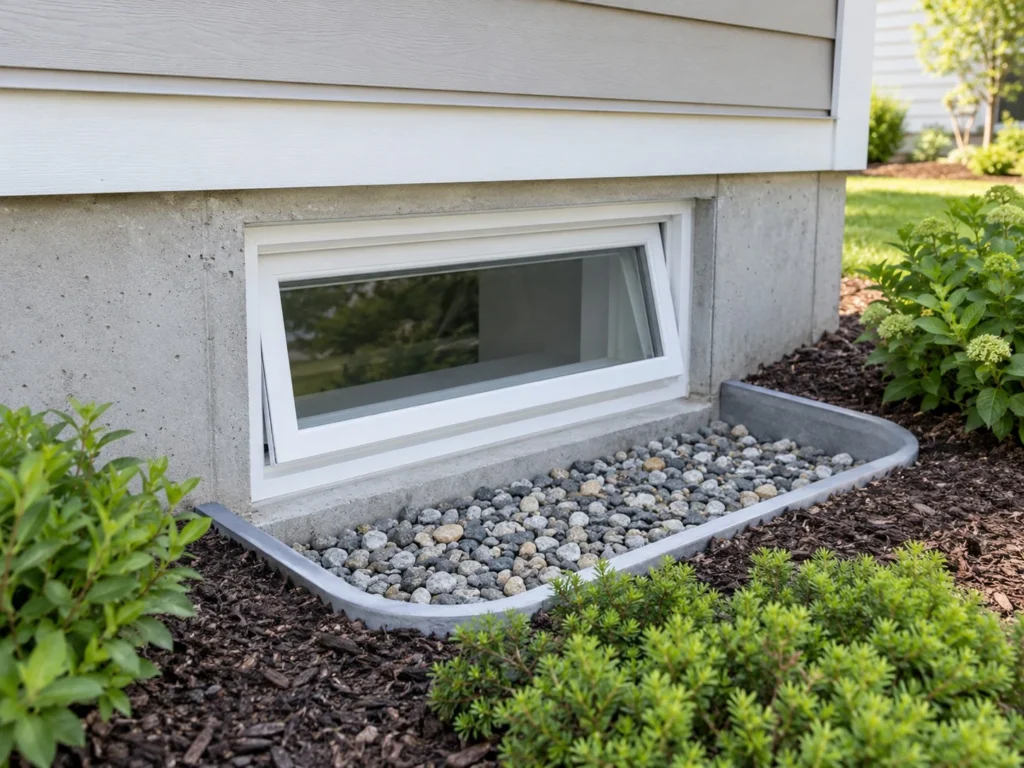
A basement window is a window installed in a home’s foundation wall, typically at or partially below ground level. It allows natural light and fresh air into basement spaces, helping create a brighter, more comfortable environment. Unlike standard above-ground windows, basement windows are often designed to fit smaller openings and withstand moisture-prone conditions. They come in various styles, sizes, and materials to suit different needs, from basic ventilation and privacy to energy efficiency and emergency escape access.
 More Concerns
 More Concerns
Related Blog: What Is an Egress Window?
7 Best Types of Basement Windows
Different basement window styles offer different levels of ventilation, privacy, and accessibility. Here are seven popular options and their main advantages and disadvantages.
1. Hopper Basement Windows
Hopper windows are typically hinged at the bottom and tilt inward from the top. Their compact design makes them a popular choice for small basement openings.
✓ Pros
- Compact and space-efficient
- Good ventilation for small openings
- Simple, practical design
- Often an economical replacement option
× Cons
- Inward opening uses interior space
- Limited daylight in smaller sizes
- May not meet egress requirements

2. Sliding Basement Windows
Sliding basement windows open horizontally along a track. They are easy to operate and work well in openings where a swinging sash would be inconvenient.
✓ Pros
- Easy to open and operate
- No swing space required
- Suitable for wider openings
- Provides natural light and ventilation
× Cons
- Tracks need regular cleaning
- Only part of the window opens
- Worn seals may affect insulation

3. Casement Basement Windows
Casement windows are side-hinged and typically open outward with a crank. They can provide a wide opening for airflow and, in suitable configurations, emergency escape.
✓ Pros
- Wide opening for better ventilation
- Good potential for egress applications
- Effective sealing when properly closed
- Convenient crank operation
× Cons
- Requires exterior clearance
- Hardware may need maintenance
- Can cost more than basic window styles

4. Awning Basement Windows
Awning windows are hinged at the top and open outward from the bottom. Their sash can provide some protection from light rain while the window is open.
✓ Pros
- Allows ventilation during light rain
- Good sealing potential when closed
- Compact and modern design
- Suitable for many basement layouts
× Cons
- Requires exterior clearance
- Small openings may limit airflow
- May not meet egress requirements

5. Single-Hung Basement Windows
Single-hung windows have two vertically arranged sashes, with the bottom sash moving upward while the top sash remains fixed.
✓ Pros
- Classic and versatile appearance
- Requires little exterior clearance
- Available in various materials and finishes
- Can match other windows in the home
× Cons
- Limited ventilation opening
- Cleaning may be less convenient
- Smaller models may not meet egress requirements

6. Glass Block Basement Windows
Glass block windows consist of glass blocks assembled into a panel. They diffuse natural light while maintaining privacy, making them useful in bathrooms and utility areas.
✓ Pros
- Excellent privacy
- Allows soft, diffused natural light
- Durable and low-maintenance
- Ideal for certain utility and bathroom spaces
× Cons
- Fixed models provide no ventilation
- Generally unsuitable for emergency egress
- Replacement may require masonry work

7. Fixed Basement Windows
Fixed windows do not open. They are designed to maximize natural light and provide an unobstructed view while maintaining a sealed window assembly.
✓ Pros
- Maximizes natural light
- Good energy-efficiency potential
- Minimal hardware and maintenance
- Clean, modern appearance
× Cons
- Cannot provide natural ventilation
- Cannot serve as an operable egress window
- May need to be paired with an opening window

Basement Window Types at a Glance
| Window Type | Main Advantage | Main Limitation |
|---|---|---|
| Hopper | Compact and practical | Limited opening size |
| Sliding | Easy operation | Track maintenance |
| Casement | Wide opening | Needs exterior clearance |
| Awning | Ventilation during light rain | Requires exterior clearance |
| Single-hung | Traditional appearance | Limited opening area |
| Glass block | Privacy and durability | Usually fixed |
| Fixed / Picture | Natural light | No ventilation |
What Are Standard Basement Window Sizes?

Basement window sizes vary depending on the home, foundation opening, window style, and intended use. Smaller openings are common in unfinished basements, while finished basements may accommodate larger windows for better daylight and ventilation.
| Window Type | Common Width | Common Height |
|---|---|---|
| Hopper | 12–36 in | 12–24 in |
| Sliding | 24–48 in | 12–36 in |
| Casement | 18–36 in | 24–48 in |
| Awning | 18–36 in | 12–30 in |
| Single-hung | 18–36 in | 24–48 in |
| Glass block | 16–48 in | 16–32 in |
| Fixed / Picture | 18–48+ in | 12–48+ in |
Note: These are approximate size ranges for reference, not universal standard dimensions. Actual sizes vary by manufacturer and market. Always verify available sizes and local egress requirements before ordering.
When measuring for replacement or custom basement windows, consider the existing rough opening, frame dimensions, installation clearance, and the manufacturer’s specifications.
Important: Egress windows must meet applicable minimum net clear opening dimensions, opening height and width, sill height, and any required window well specifications. A window’s overall size does not automatically mean it meets egress requirements.
How to Install Basement Windows?
Basement window installation depends on whether you are replacing an existing window or creating a new opening in the foundation.
For a straightforward replacement, the general process is:
Measure the Window Opening
Measure the width, height, and depth of the existing opening. Check the frame and surrounding foundation for damage before choosing a replacement window.
Remove the Old Window
Carefully remove the existing sash and frame, along with any deteriorated sealant or damaged materials.
Prepare the Opening
Clean the opening, repair damaged areas, and make sure the surface is suitable for the new window installation.
Install the New Window
Position and level the window, secure the frame, and follow the manufacturer's instructions for installation and sealing.
Check Waterproofing and Drainage
Inspect the flashing, perimeter seals, exterior grading, and window well drainage to help prevent water intrusion.
Test Window Operation
Check that the window opens, closes, and locks properly. Confirm that the seals are secure and that the finished installation meets applicable requirements.
Creating a new opening in a concrete foundation, installing an egress window, or excavating a window well is more complex. These projects may require permits, structural assessment, and professional installation.
How Much Do Basement Windows Cost?

Basement window costs vary depending on the window style, size, frame material, and installation requirements. A standard basement window typically costs around $100–$800 for the window alone, while replacing an existing window may cost approximately $400–$1,000, including installation.
Installing a new egress window is usually more expensive, with total costs often ranging from $2,700 to $5,900. Additional work, such as cutting concrete, excavation, installing a window well, and improving drainage, can increase the overall cost.
Where to Get Custom Basement Windows?
If standard window sizes do not fit your basement, custom basement windows can help you achieve a better fit, appearance, and functional design.
PA Home can be your next point of contact for exploring custom basement window solutions. Discuss your required dimensions, preferred window style, frame material, color, and performance requirements to determine the most suitable option for your project.
Contact us to discuss your basement window design and request a personalized quote. Before ordering, confirm the measurements, product specifications, installation requirements, and any applicable egress regulations.
Basement windows may need replacement if you notice water leaks, drafts, damaged frames, condensation between glass panes, or difficulty opening and closing them. Replacing old windows with properly sealed, energy-efficient models can improve comfort and help prevent moisture problems.
Not all basement windows need to be egress windows. However, local building codes may require emergency escape and rescue openings in basement bedrooms and certain other spaces. Egress windows must meet applicable requirements for clear opening size, accessibility, and window well clearance.
Yes. Black basement windows offer a modern, stylish appearance that complements contemporary and industrial home designs. They can create a striking contrast against light-colored siding, brick, or concrete. When choosing black frames, consider the frame material, finish durability, and energy performance.
A basement window well is a recessed area installed outside a basement window that sits below ground level. It helps keep soil away from the window, allows more natural light to enter, and provides clearance for the window to open. Proper drainage is essential to help prevent water from accumulating around the window.
Basement window replacement costs depend on the window size, frame material, and installation complexity. Replacing a window in an existing opening is generally less expensive than creating a new opening for an egress window, which may require concrete cutting, excavation, and a window well. Request an itemized quote for an accurate estimate.