The trim around a doorway can have a surprising impact on the overall look of a room. A plain doorway can feel unfinished, while the right door casing can add character, create a cleaner transition between the wall and door, and make the entire space look more polished.
From simple modern profiles to detailed traditional mouldings, door casing comes in many different styles. The best option depends on the architectural style of your home, the look you want to create, and how much detail you want the trim to add.
What Is Door Casing?
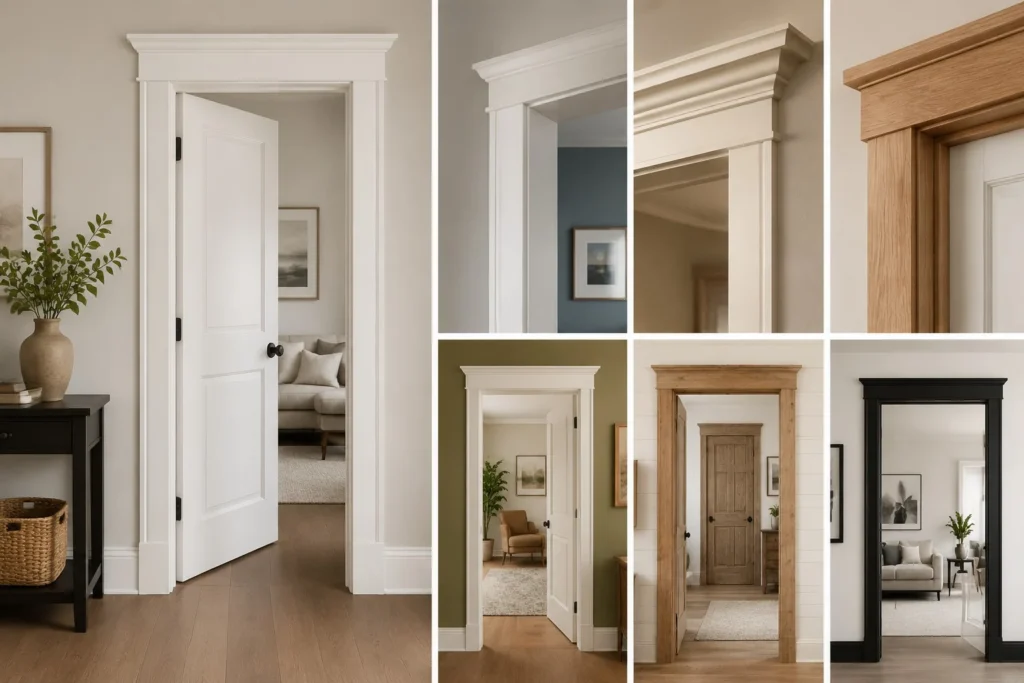
Door casing is the trim installed around a door opening to cover the gap between the door jamb and the wall. It creates a finished border around the doorway while adding decorative detail to the room.
During construction, there is usually a small space between the door frame and the drywall. Door casing covers this transition and gives the doorway a cleaner, more complete appearance.
A typical door casing includes three main parts:
- Side casing: The vertical pieces installed along both sides of the doorway.
- Head casing: The horizontal piece across the top of the door.
- Decorative details: Additional elements such as backband, rosettes, or layered mouldings, depending on the design style.
While casing has a practical purpose, it is also an important design element. The width, profile, and shape of the trim can make a doorway look modern and minimal, traditional and elegant, or warm and rustic.
10 Popular Door Casing Styles and Ideas
Door casing is a small architectural detail, but it can dramatically change the personality of a room. A simple flat trim can make a doorway feel clean and contemporary, while layered mouldings can add the character and elegance of an older home.
The best door casing style is usually the one that works with the overall design of your home. A Craftsman-style casing may feel natural in a bungalow or farmhouse, while a sleek flat profile can complement a modern interior.
Here are some popular door casing styles and ideas to inspire your next update.
1
Craftsman Door Casing
Craftsman door casing is one of the most recognizable interior trim styles in American homes. It is known for its strong, simple lines and handcrafted appearance.
Instead of relying on ornate details, Craftsman trim creates impact through proportion. Wide side boards, a substantial header, and clean square edges give the doorway a solid architectural presence.
This style works especially well in Craftsman homes, modern farmhouse interiors, and transitional spaces. It also pairs naturally with other handcrafted details, such as wood floors, built-in shelving, or wall paneling.
For a classic look, many homeowners choose painted white Craftsman casing. Natural wood finishes can create a warmer, more rustic feeling.

2
Colonial Door Casing
Colonial door casing brings a more traditional and timeless look to an interior. It typically features shaped profiles, subtle curves, and layered details that create depth around the doorway.
Compared with modern flat trim, Colonial casing feels more decorative and formal. It is often used with traditional panel doors, hardwood floors, and classic architectural elements.
This style is a good choice for homeowners who want their interiors to feel elegant without becoming overly ornate. A painted finish, especially white or soft neutral tones, helps highlight the moulding details while keeping the space bright.
3
Modern Flat Door Trim
Modern flat door trim is a popular choice for contemporary interiors because of its clean and understated appearance.
Rather than using decorative profiles, this style relies on simple boards with straight edges. The result is a minimal frame that adds structure to the doorway without competing with the rest of the room.
Flat casing works especially well with flush doors, neutral walls, and modern hardware. It is also commonly used in Scandinavian-inspired and minimalist interiors where simplicity and clean lines are key design elements. Flat trim is frequently featured in modern door trim ideas because of its versatility.

4
Minimalist Door Casing
Minimalist door casing takes modern trim design in an even simpler direction. The goal is to create a finished doorway while keeping the trim almost invisible.
Some minimalist interiors use narrow casing, while others use very clean flat profiles that blend with the wall color. Instead of becoming a decorative feature, the doorway becomes part of the overall architecture.
This style works well in contemporary homes, small spaces, and interiors that focus on simplicity. It is especially effective when combined with hidden doors, flush doors, and monochromatic color schemes.
5
Farmhouse Door Trim
Farmhouse door trim creates a warm and welcoming look by using simple shapes and generous proportions.
Unlike highly detailed traditional casing, farmhouse styles usually focus on wider boards, clean edges, and a slightly oversized appearance. The extra width helps create a stronger visual frame around the doorway.
White painted trim is a common choice for modern farmhouse interiors, but stained wood and natural finishes can add more rustic character. This style pairs beautifully with shiplap walls, exposed wood elements, black hardware, and other farmhouse details.

6
Victorian Decorative Door Casing
Victorian casing is designed for homeowners who want their doorways to make a statement.
This style often includes layered mouldings, decorative profiles, fluted details, and ornamental elements that create a dramatic appearance. Unlike modern trim styles that emphasize simplicity, Victorian casing celebrates craftsmanship and detail.
It is most suitable for historic homes, traditional interiors, or rooms where architectural details are meant to stand out.
Because this style can feel visually heavy, it is usually balanced with simple wall colors and carefully chosen furniture.
7
Rustic Wood Door Casing
Rustic wood casing uses natural materials as the main design feature. Instead of depending on decorative moulding shapes, it highlights wood grain, texture, and warmth.
Oak, pine, reclaimed wood, and other natural finishes can create a more organic look around interior doors. This style is often seen in cabins, rustic homes, and modern farmhouse spaces.
Natural wood trim works particularly well when paired with neutral walls, stone, exposed beams, or other natural textures.

8
Black Painted Door Trim Ideas
Black door trim has become a popular way to create contrast and add personality to an interior.
A dark casing around a doorway can make the opening feel more defined and architectural. It works especially well in modern, industrial, farmhouse, and transitional interiors.
Black trim does not always need to surround a black door. Many designs use black casing with lighter doors and walls to create a bold frame effect. High-contrast combinations such as dark doors with contrasting trim are often used to make architectural details stand out.
For a softer look, charcoal or deep gray can provide a similar effect with less contrast.
9
Arched Door Trim
Arched door trim adds a unique architectural feature by emphasizing the curved shape of the doorway.
Unlike standard rectangular casing, arched trim follows the natural curve of the opening and creates a softer transition between rooms. Because the shape itself already attracts attention, many designs keep the surrounding trim relatively simple.
Arched doorways are commonly found in Mediterranean, Spanish-style, and custom-designed homes, but they can also add character to modern interiors.

10
Layered or Built-Up Door Casing
Layered door casing creates a more customized and high-end appearance by combining multiple pieces of trim.
Instead of using a single casing board, several moulding elements are stacked together to add depth and shadow around the doorway. This approach can make ordinary doors feel more architectural and substantial.
Built-up casing is often used in traditional homes, luxury renovations, and spaces where interior details are meant to become a focal point.
It works especially well in rooms with higher ceilings, decorative wall treatments, or other classic architectural features.
Door Casing vs Door Trim vs Molding: What’s the Difference?
The terms door casing, door trim, and door molding are often used interchangeably, but they do not always refer to the same thing.
Understanding the difference can make it easier to choose the right trim style for your home.
| Term | Meaning |
|---|---|
| Door casing | The specific trim installed around a door opening to cover the gap between the door jamb and the wall. |
| Door trim | A broader term that includes casing and other decorative trim elements around doors and openings. |
| Door molding | Decorative trim pieces with shaped profiles that add detail and architectural character. |
In most residential projects, door casing is a type of door trim, while molding refers more generally to decorative profiles that can be used on doors, windows, walls, ceilings, and other areas.
For example, a simple flat board around a doorway is still considered door casing, while adding a decorative crown-like profile or layered trim creates a more detailed molding design.
When choosing materials or styles, homeowners usually focus on the visible result rather than the terminology. Whether you call it door casing or door trim, the goal is the same: creating a finished doorway that fits the style of your home.
How to Choose the Right Door Casing Size?

The size of your door casing affects the proportion and overall feeling of a room. Trim that is too narrow may look unfinished, while oversized casing can overwhelm a small space.
There is no single standard size that works for every home, but many interior door casings fall within the range of 2¼ to 3½ inches wide. Larger profiles are often used in rooms with higher ceilings or more traditional architectural styles.
When choosing casing width, consider:
Room Size and Ceiling Height
Larger rooms and taller ceilings can usually support wider casing. A wider trim profile can make doorways feel more substantial and balanced.
For smaller rooms, simpler and narrower casing often creates a cleaner appearance without making the doorway feel too heavy.
Interior Design Style
The style of your home also matters.
- Modern interiors often look better with simple flat casing and clean edges.
- Craftsman and farmhouse homes often use wider boards with stronger proportions.
- Traditional homes may benefit from layered profiles and decorative mouldings.
Consistency With Other Trim
Door casing should usually coordinate with existing trim, especially:
- baseboards
- window casing
- wall paneling
- crown molding
Using similar proportions throughout the home creates a more intentional and cohesive look.
Interior vs Exterior Door Casing
Although interior and exterior door casing serve a similar purpose, they have different requirements.
Interior Door Casing
Interior casing is mainly chosen for appearance. Since it is protected from weather, homeowners have more flexibility with materials and finishes.
Common interior options include:
- MDF
- pine
- poplar
- hardwood
MDF is popular for painted interior trim because it provides a smooth surface and consistent finish. Wood options are often chosen when homeowners want visible grain or a more natural look.
Exterior Door Casing
Exterior door trim needs to handle moisture, temperature changes, and weather exposure.
Common exterior materials include:
- PVC
- composite materials
- weather-resistant wood
Exterior casing also needs proper sealing and painting to prevent moisture damage.
While interior trim can focus mostly on design, exterior door trim needs to balance appearance with durability.
How Much Does Door Casing Cost?
The cost of door casing depends on the material, design complexity, and whether you install it yourself or hire a professional.
For a basic interior door, material costs are usually lower when using simple MDF or pine trim. More decorative profiles, hardwood materials, or custom-built casing will increase the price.
The main factors affecting cost include:
- Material: MDF and pine are generally more affordable than hardwood.
- Style: Simple flat casing costs less than layered or custom designs.
- Number of doors: Larger projects usually require more material and labor.
- Installation: Professional installation adds labor costs.
For homeowners updating several rooms, replacing outdated door trim can be a relatively small renovation that creates a noticeable visual improvement.
How to Install Door Trim
Installing door trim requires accurate measurements and careful cutting, especially around corners.
The basic process includes:
Measure the Door Opening
Measure the height of the side casing and the width of the top piece before cutting. Accurate measurements help ensure each trim piece fits properly around the doorway.
Cut the Trim Pieces
Cut the casing pieces according to your chosen style. Corners may use angled miter cuts for a traditional look or simpler butt joints for a cleaner Craftsman-style design.
Test Fit Before Installing
Dry-fit each piece before attaching it permanently. This helps check the alignment, spacing, and corner connections before installation.
Attach the Casing
Secure the trim with finishing nails, then fill the nail holes to create a smooth surface. The casing should sit firmly against the door jamb and wall.
Finish the Surface
Apply caulk along the gaps between the casing and the wall for a seamless transition. After the caulk dries, paint or finish the trim to complete the look.
How to Replace Door Trim
Replacing old door trim is one of the easier ways to update an interior without replacing the entire door.
The process usually involves:
- Removing the existing casing carefully.
- Checking the door jamb and surrounding wall for damage.
- Measuring the opening for new trim.
- Installing the new casing.
- Filling gaps, caulking, and painting.
Many older homes have narrow or outdated casing styles that make rooms feel less modern. Replacing them with Craftsman, flat modern, or wider farmhouse-style trim can significantly change the appearance of a doorway.
Conclusion
Door casing may be a small detail, but it can have a big impact on the overall look and feel of your home. From clean modern profiles to classic Craftsman and traditional moulding styles, the right door casing can help create a more finished and cohesive interior.
When choosing a style, consider your home’s architecture, existing trim, and the atmosphere you want to create. A well-designed doorway is not just about covering the gap around the door—it is an opportunity to add character and detail to your space.
If you need help choosing the right door trim style, material, or design for your home, PA Home’s design team can provide professional guidance and tailored solutions. Contact PA Home to explore more door and interior design ideas for your next renovation project.
The trim around a door is commonly called door casing or door trim. Door casing specifically refers to the moulding installed around the door opening to cover the gap between the door jamb and the wall.
Door casing is one type of door trim, but the terms are not exactly the same. Door trim is a broader term that can include casing and other decorative trim elements used around doors and openings.
Door trim refers to the finished pieces used around doors, windows, and other architectural areas. Molding usually refers to decorative trim with shaped profiles, such as crown molding or detailed casing profiles that add visual depth and character.
Most interior door casings are commonly around 2¼ to 3½ inches wide, although the best size depends on the room’s proportions, ceiling height, and overall design style. Larger rooms and traditional interiors often use wider casing, while modern spaces may use simpler, narrower profiles.
Yes. Replacing door casing is a common home improvement project that can update the appearance of a doorway without removing the entire door unit. Many homeowners replace outdated trim with modern flat casing, Craftsman trim, or wider farmhouse-style casing.
MDF, pine, and hardwood are common choices for interior door casing. MDF is popular for painted trim because it has a smooth surface, while hardwood is often chosen when a natural wood finish is desired.