
A bathroom vanity may seem like a simple cabinet with a sink, but it plays a much bigger role in how your bathroom looks, feels, and functions. It gives you a place to wash up, store daily essentials, hide plumbing, and create a focal point for the entire room.
Whether you are remodeling a small powder room or updating a primary bathroom, understanding what a bathroom vanity is—and how to choose the right one—can help you make a smarter, more confident decision.
What Is a Bathroom Vanity?
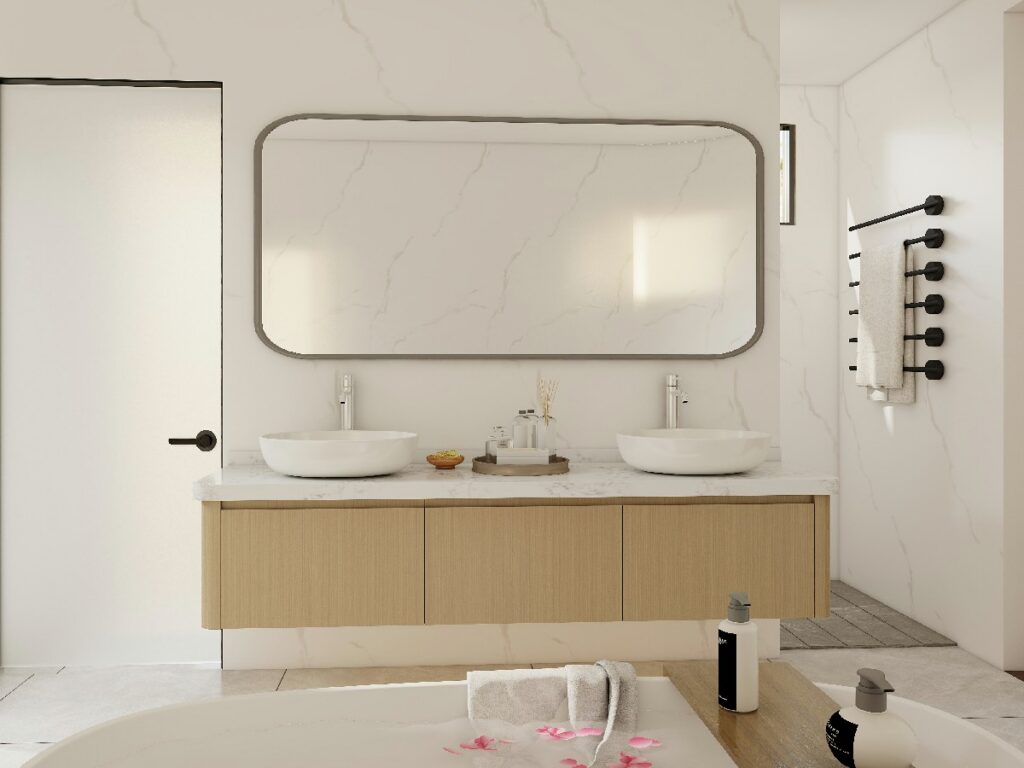
A bathroom vanity is a combination of a sink, countertop, and storage cabinet designed for use in a bathroom. In most cases, it also helps conceal plumbing while giving you usable space for toiletries, towels, cleaning products, and other everyday items.
Unlike a simple pedestal sink, a vanity adds both function and style. It can make a bathroom feel more finished, provide much-needed storage, and help define the overall design of the space.
A typical bathroom vanity may include:
- A sink or sink basin
- A countertop
- Cabinet doors or drawers
- Open shelves or built-in storage
- Faucet and plumbing connections
- Optional features such as mirrors, lighting, or integrated outlets
How Much Does a Bathroom Vanity Cost?
Bathroom vanity prices can vary depending on the size, material, countertop, sink style, and overall design. A simple single-sink vanity is usually more affordable, while a larger vanity with premium materials or a stone countertop will cost more.
The vanity itself is only part of the total budget. Depending on your project, you may also need to consider the cost of a faucet, sink, countertop, plumbing adjustments, delivery, or professional installation.
If your new vanity fits the existing plumbing, installation is usually simpler and more affordable. If plumbing needs to be moved, the total cost can increase quickly.
What Are the Different Types of Bathroom Vanities?
Bathroom vanities come in several styles, and each one works better for different spaces, layouts, and design preferences.
Freestanding Bathroom Vanity
A freestanding vanity sits directly on the floor and looks similar to a piece of furniture. It is one of the most common choices because it is easy to install, widely available, and works in many bathroom styles.

Floating Bathroom Vanity
A floating vanity is mounted to the wall, leaving open space underneath. This can make a bathroom feel more open and modern, especially in smaller spaces. However, it usually requires proper wall support and more careful installation.

Single-Sink Vanity
A single-sink vanity is ideal for small bathrooms, guest bathrooms, and powder rooms. It takes up less space while still offering useful storage and counter space.

Double-Sink Vanity
A double-sink vanity is commonly used in larger or shared bathrooms. It allows two people to use the vanity at the same time and often provides more storage, but it also requires more wall space and a larger budget.

Corner Bathroom Vanity
A corner vanity is designed to fit into a corner, making it a smart option for tight bathrooms or powder rooms where every inch matters.

Built-In Bathroom Vanity
A built-in vanity is often designed to fit a specific wall or layout. It can provide a more seamless look and more storage, but it may cost more than a standard ready-made vanity.

How to Choose the Right Bathroom Vanity Size?
Choosing the right size is one of the most important parts of buying a bathroom vanity. A vanity that is too large can make the bathroom feel cramped, while one that is too small may not provide enough storage or counter space.
As a starting point, measure the available wall space, check the location of your plumbing, and make sure there is enough clearance for doors, drawers, and foot traffic.
Key measurements to consider include:
- Vanity width
- Vanity depth
- Vanity height
- Sink placement
- Door and drawer clearance
- Distance from the toilet, shower, or bathtub
- Plumbing location
For a small bathroom, a compact or floating vanity may help save space. For a primary bathroom, a wider vanity or double-sink option may offer better comfort and storage.
For a more detailed vanity size guide, you can link to your dedicated article here: What Are Standard Bathroom Vanity Sizes?
What Are the Best Materials for Bathroom Vanities?

The best bathroom vanity material should be durable, moisture-resistant, easy to clean, and suitable for daily bathroom use. Here is a quick comparison to help you choose the right one.
Best overall choice: Plywood is a practical option for most homes because it offers a good balance of durability, moisture resistance, and cost.
Best premium choice: Solid wood gives a bathroom a high-end, natural look, but it should be properly sealed to handle moisture.
Best budget choice: MDF can work well for affordable vanities, especially with painted finishes, as long as it is protected from standing water.
For vanity countertops, common choices include quartz, granite, marble, ceramic, cultured marble, and solid surface.
Where to Buy a Bathroom Vanity?
You can buy a bathroom vanity from home improvement stores, bathroom specialty retailers, furniture stores, online marketplaces, and custom cabinet makers.

Home Improvement Stores
Large home improvement stores usually offer a wide range of ready-made bathroom vanities in different sizes, finishes, and price points. They are a convenient choice if you want something practical and easy to compare.
Online Retailers
Online retailers often provide more styles and sizes than local stores. This can be helpful if you are looking for a specific color, vanity width, or design style. Just make sure to check dimensions, delivery details, return policies, and customer reviews before ordering.
Bathroom and Kitchen Showrooms
Showrooms are a good option if you want to see materials in person or need help matching your vanity with tile, flooring, mirrors, or lighting.
Custom Cabinet Makers
A custom cabinet maker is a better choice when you have an unusual bathroom layout, specific storage needs, or a design vision that standard vanities cannot meet. Brands such as PA Home, KraftMaid, and CliqStudios offer more flexible options for homeowners who want a vanity that fits their space, style, and daily routine. A custom vanity usually costs more than a ready-made one, but it can give you a better fit, more personalized storage, and a more polished final look.
How to Install a Bathroom Vanity?

Installing a bathroom vanity can be a DIY project for someone with basic home improvement experience, especially if the new vanity is the same size as the old one and the plumbing stays in the same place.
A basic installation usually includes:
- Turning off the water supply
- Removing the old vanity
- Checking the wall and floor condition
- Positioning the new vanity
- Securing the vanity to the wall
- Installing the sink and countertop
- Connecting the faucet and drain
- Sealing edges with caulk
- Checking for leaks
However, professional installation is often the safer choice if plumbing needs to be moved, the vanity is wall-mounted, the countertop is heavy, or electrical work is involved.
Before installation, always check the product instructions and local plumbing requirements.
Ready to Buy a Bathroom Vanity?
A bathroom vanity can change both the look and function of your bathroom. Before choosing one, consider your space, storage needs, material, budget, and installation requirements.
If you are looking for a bathroom vanity that fits your style and daily routine, PA Home can help you explore more design options and create a solution that works for your space. Contact PA Home to get more bathroom vanity ideas and design support.
A bathroom vanity usually includes a sink, countertop, and storage cabinet. A bathroom cabinet may only refer to the storage part and does not always include a sink or countertop.
A single sink vanity is better for small bathrooms or guest bathrooms. A double sink vanity is more practical for shared or primary bathrooms, especially when two people need to use the space at the same time.
A good bathroom vanity can last many years if it is made from quality materials and properly maintained. Keeping it dry, cleaning it regularly, and avoiding standing water can help extend its lifespan.
To paint a bathroom vanity, remove the doors and hardware, clean the surface, sand it lightly, apply primer, then paint with a moisture-resistant cabinet paint. Let each coat dry fully before reassembling the vanity.
To replace a bathroom vanity, turn off the water, disconnect the plumbing, remove the old vanity, position and secure the new one, then reconnect the sink, faucet, and drain. If plumbing needs to be moved, it is best to hire a professional.