Choosing an interior door sounds simple. You pick a style, choose a finish, and move on, right? Not always. The right choice depends on what each room needs from a door.
Some rooms need privacy and quiet. Others only need a clean-looking option that keeps costs low. That is why the best choice is not always the same throughout a home. A bedroom, bathroom, home office, closet, and pantry all have different jobs.
This guide compares hollow core vs solid core doors by cost, sound control, privacy, durability, installation, and room function. You will see when hollow core interior doors make sense, when solid core interior doors are worth the upgrade, and when mixing both is the smartest choice.
What Is the Difference Between Hollow Core and Solid Core Doors?
To understand hollow core vs solid core doors, start with the core. The outside may look similar, but the inside changes the weight, feel, sound control, and durability.
What is a hollow core door?
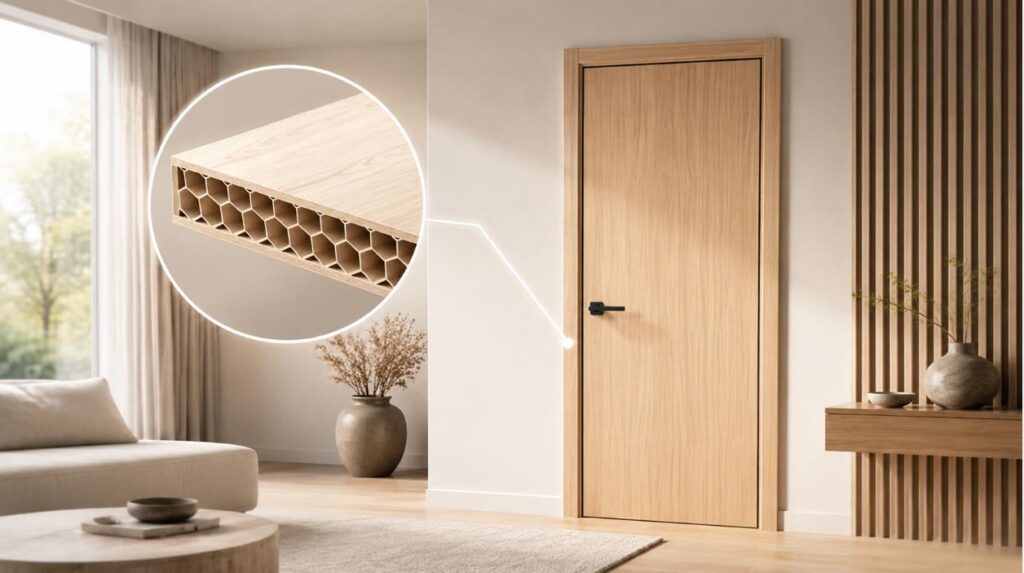
According to The Spruce, hollow core doors are lightweight doors with a honeycomb core and wood or fiberboard surfaces. In other words, they are not completely empty. Most have a lightweight support structure inside and a thin outer layer of wood, fiberboard, or molded material. That simple construction keeps the door affordable, easy to move, and simple to install.
They are a practical choice for budget remodels, rental updates, and multi-door projects. The downside is weaker sound control and lower durability. Lowe’s notes that hollow core doors are less sturdy and provide less sound insulation than solid core doors.
What is a solid core door?
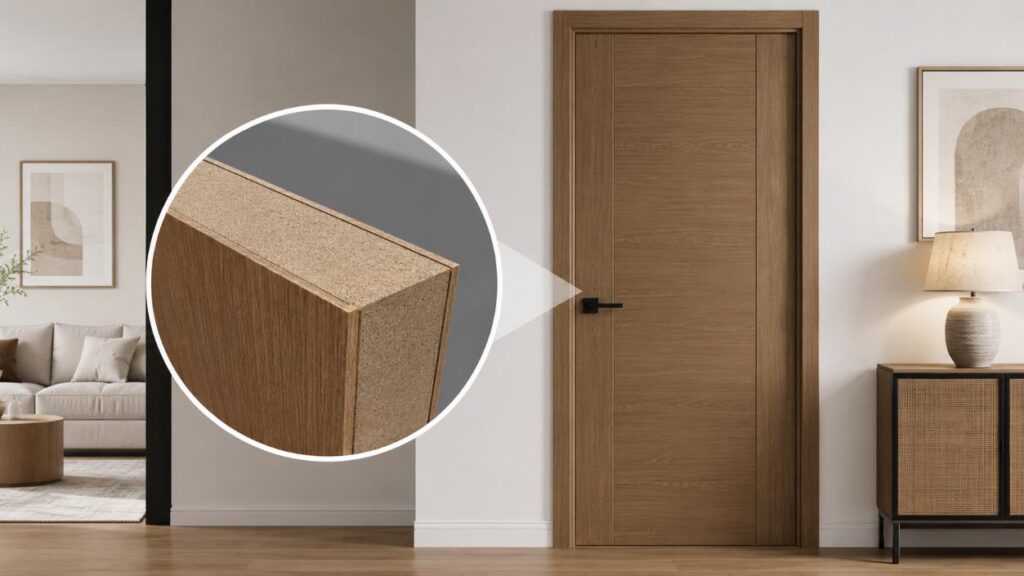
A solid core door has a dense inner core, usually made from engineered wood, MDF, particleboard, or composite material. This added density makes the door heavier and gives it a more substantial feel than a hollow core door. The trade-off is cost and installation: solid core doors are more expensive, heavier to handle, and often require more care during installation.
How Do Hollow Core vs Solid Core Doors Compare?
The easiest way to compare hollow core vs solid core doors is to match each feature with your real needs.
| Feature | Hollow Core Doors | Solid Core Doors |
|---|---|---|
| Cost | Lower | Higher |
| Weight | Lightweight | Heavy |
| Sound Control | Basic | Better |
| Privacy | Limited | Better |
| Durability | Lower | Higher |
| Installation | Easier | More difficult |
| Feel | Light and basic | Solid and premium |
| Best Use | Low-priority rooms | Privacy-sensitive rooms |
Neither option is the clear winner for every room. Hollow core doors are best when cost and convenience matter most. Solid core doors are better when the door affects daily comfort, privacy, or sound control.
Which Interior Door Is Better for Sound Control?
Sound control is one of the biggest reasons homeowners compare hollow core vs solid core doors. A door may look great but still let voices, footsteps, TV noise, or hallway sounds pass through. That can become annoying in bedrooms, offices, bathrooms, and nurseries.
When is sound control important for interior doors?
Sound control matters more when the room is used for rest, work, privacy, or focus. It is especially important if:
- The room is near a hallway, kitchen, living room, or laundry area.
- Someone sleeps, works, studies, or takes calls in the room.
- You want conversations to feel more private.
- The room is used as a bedroom, bathroom, nursery, or home office.
- Kids, pets, TVs, or appliances create noise nearby.
- You want the room to feel calmer and more separate from the rest of the home.
If several of these points apply, sound control should be a priority. In that case, the door’s weight, density, and sealing matter more than looks alone.
How Solid Core Doors Improve Sound Control
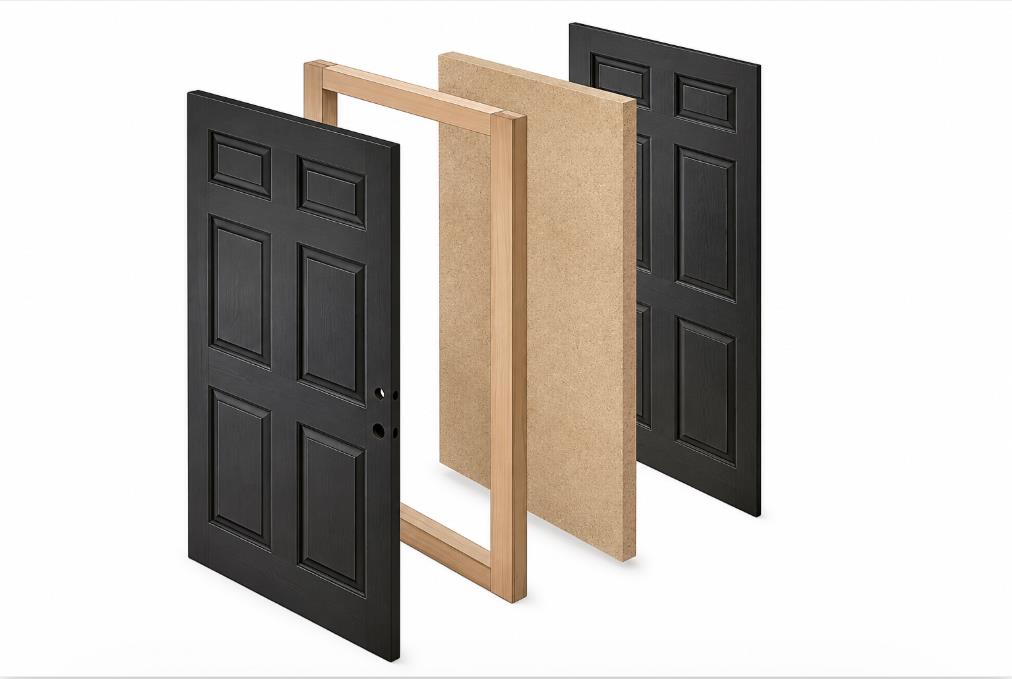
Sound control starts with mass. The lighter and thinner a door is, the easier it is for sound to pass through. Solid core interior doors have a denser core, so they add more mass between one room and another. That extra density helps slow sound movement and makes everyday noise feel less intrusive.
This is why solid core doors are often used in rooms where quiet and privacy matter, such as:
- Bedrooms
- Bathrooms
- Home offices
- Nurseries
- Media rooms
- Shared hallways
A solid core door can make a room feel more separated from surrounding noise. But it is important to set the right expectation. The door slab is only one part of sound control. Gaps around the frame, the space under the door, wall construction, flooring, and vents can still let sound travel through.
For better sound control, you may also need to:
- Add a door sweep.
- Use weatherstripping.
- Seal gaps around the frame.
- Make sure the door closes tightly.
- Reduce the gap under the door.
When a Hollow Core Door Is a Practical Choice
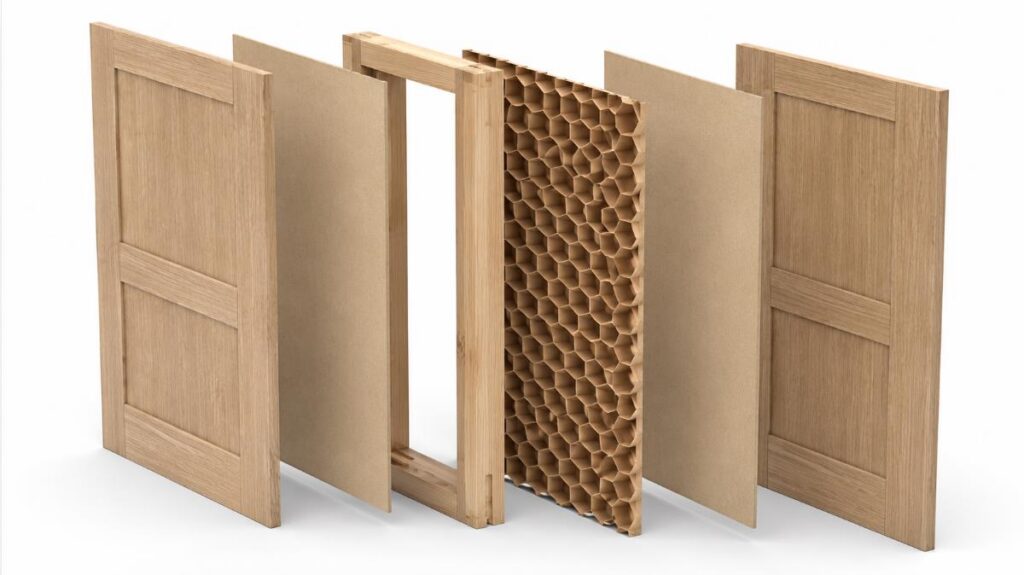
A hollow core door can still be a smart choice when the room has simple needs. If the space does not require much privacy, heavy daily use, or strong sound control, a lighter door may be enough.
Hollow core doors usually work well for:
- Closets
- Pantries
- Storage rooms
- Utility closets
- Low-use rooms
- Budget remodels
- Rental updates
For these spaces, a hollow core door is practical, affordable, and easy to install. It gives the room a clean finished look without adding unnecessary cost. But for rooms used for sleeping, working, studying, or private conversations, a solid core door may offer a better everyday experience.
In simple terms: hollow core doors are fine for basic separation. Solid core doors are better when sound control affects daily comfort.
Which Door Type Works Best in Different Rooms?
The best way to choose between hollow core and solid core doors is to think room by room. A door for a bedroom does not need to do the same job as a pantry door. Some rooms need quiet and privacy. Others only need a simple, lightweight door that looks clean and keeps costs low.
Before choosing, ask three questions:
- Does this room need privacy?
- Does this room need better sound control?
- Will this door be used every day?
If the answer is yes, a solid core door is usually the stronger choice. If the room is low-use and sound control is not important, a hollow core door may be enough.
Rooms Where Solid Core Doors Usually Work Best
Solid core interior doors are usually better for rooms where people sleep, work, relax, or need privacy.
Bedroom
Helps reduce hallway noise and improve privacy.
Bathroom
Better for privacy and a sturdier everyday feel.
Home Office
Helpful for calls, meetings, and focus. It can reduce everyday household noise.
Nursery
Helps soften noise from hallways, TVs, pets, and busy rooms.
Media Room
Helps keep outside noise out and reduce sound leaking into nearby rooms.
Rooms Where Hollow Core Doors Usually Work Well
Hollow core interior doors work well when the door has a simple job.
Closet
Low privacy and sound needs. A hollow core door is usually enough.
Pantry
Simple, lightweight, and cost-effective. It does the job without adding extra cost.
Storage Room
Good for low-use spaces where sound control is not a priority.
Utility Closet
Easy to install and budget-friendly. A practical choice for basic access.
How Much Do Hollow Core vs Solid Core Doors Cost?
Door prices can vary widely by size, design, finish, core material, brand, market, and whether you choose a slab door or a prehung door. The ranges below are general estimates for comparison only, not fixed prices.
The cost difference between hollow core and solid core doors becomes more noticeable when you replace several doors. One upgraded door may feel manageable, but a whole-home project can change the budget quickly.
Hollow core interior doors are usually more affordable because they use lighter materials and a simpler internal structure. They are also easier to move and install, which can help reduce handling effort. This makes them a practical choice for closets, pantries, storage rooms, utility closets, rental updates, and budget remodels.
Solid core interior doors cost more because they use denser materials and weigh more. Installation may also take more care. In return, you get better performance in rooms where privacy, noise control, and daily use matter. If a door affects sleep, privacy, focus, or daily comfort, the upgrade can be worth it.
| Door Type | Estimated Door Price Range | Best For |
|---|---|---|
| Hollow Core Door | About $30–$400 per door | Closets, pantries, storage rooms, rental updates, budget remodels |
| Solid Core Door | About $70–$500 per door | Bedrooms, bathrooms, home offices, nurseries, media rooms |
| Solid Wood Door | Usually higher than solid core | Premium interiors, natural wood appearance, high-end projects |
In many U.S. retail projects, basic hollow core doors often sit at the lower end of the price range, while solid core doors usually cost more because of their denser construction. For a whole-home remodel, the total cost difference becomes more noticeable, so many homeowners choose to mix both types by room.
Instead of using the same door core throughout the home, it often makes sense to match the door to the room and budget.
How Should You Choose Based on Budget?
| Budget Situation | Suggested Strategy |
|---|---|
| Tight budget | Use hollow core doors in low-use spaces |
| Moderate budget | Upgrade rooms where privacy and noise matter |
| Flexible budget | Use solid core doors in main living areas |
| Whole-home remodel | Mix both types for better value |
Once you know which rooms need which type of door, the next question is installation. After all, the right door also needs to fit your frame, your budget, and your ability to install it properly.
Which Interior Door Is Easier to Install?
Hollow core doors are usually easier to install because they are lightweight. They are easier to lift, carry, trim, and position. This makes them a practical choice for DIY replacements, especially when the existing frame is still in good condition. They also put less stress on hinges and door jambs, so minor alignment issues are often easier to manage.
Solid core doors require more planning. Because they are heavier, they can be harder to hold in place during installation. You may need two people to hang the door safely. The extra weight also means the existing hinges, screws, and frame need to be strong enough. If the frame is old, loose, or slightly out of square, a solid core door may reveal those problems quickly.
Before replacing an interior door, check these details:
- Door size: Measure the height, width, and thickness.
- Swing direction: Make sure the new door opens the same way.
- Hinge placement: Check whether the hinge locations match the old door.
- Bore hole position: Make sure the knob or lever hole lines up.
- Latch alignment: The latch should meet the strike plate cleanly.
- Frame condition: Look for loose jambs, cracks, or warping.
- Hinge strength: Heavier doors may need stronger hinges or longer screws.
- Slab or prehung: Choose a slab if the frame is good. Choose prehung if the frame also needs replacement.
In short, hollow core doors are easier for quick replacements. Solid core doors can still be worth it, but they need better planning and installation.
FAQs
No. Solid core doors are not the same as solid wood doors. Solid core doors usually have an engineered wood, MDF, particleboard, or composite core, while solid wood doors are made mostly from natural wood. Solid core doors feel heavier and more substantial than hollow core doors, but they are usually more affordable than solid wood doors.
Yes, solid core doors are worth it if you want better durability, a more substantial feel, and a higher-quality interior finish. They cost more than hollow core doors, but the upgrade is often worth it in frequently used rooms.
They can. Interior doors are not usually the biggest factor in home value, but they do affect how finished and high-quality a home feels. Solid core doors often create a higher-quality impression. Hollow core doors can still look good, but they may feel more basic when opened and closed.
Both types can last for years with proper use, but solid core doors usually hold up better over time. Their denser construction makes them more resistant to dents, impact, and daily wear. Hollow core doors can still last a long time in low-use areas, but they are more likely to show damage in busy spaces.
Conclusion
Your interior doors do more than open and close. The best interior doors should fit how each room is used. A hollow core door is simple, light, and budget-friendly, while a solid core door adds strength, privacy, and a more substantial feel.
For many homes, the smartest choice is to mix both types: upgrade bedrooms, bathrooms, and home offices, and save hollow core doors for closets, pantries, and other low-use spaces.
Planning an interior door upgrade? PA Home can help you choose the right doors for your space, style, and budget. Contact us today for a quick quote.