A modern kitchen can look polished and still feel a little flat. That is the problem many homeowners run into. The lines are clean. The layout works. But the room still feels like it needs something. Not more clutter. Not more color. Just more character. That is why fluted kitchen cabinets feel so relevant right now.
The timing makes sense too. Houzz’s 2026 kitchen trends coverage says wood cabinets have edged past white, pointing to a warmer and more textured direction in kitchen design. NKBA’s trend reporting also highlights the growing role of lighting in shaping mood and depth in the kitchen. Together, those shifts help explain why fluting works so well today. It adds texture, catches light, and gives a modern kitchen more life without making it feel busy.
Below are ten ideas worth saving if you want a kitchen that feels modern, layered, and easy to live with.
Why Fluted Kitchen Cabinets Work So Well
- More Depth, Less Flatness
- Softer Modern Lines
- Warmth Through Texture
- Easy Styling Across Spaces
- Better Light, Better Detail
One reason fluted kitchen cabinets work so well is the extra depth they bring to flat surfaces. The vertical grooves create light and shadow, so the cabinetry feels more layered and less plain. In a modern space, that small detail can make a big difference.
A lot of modern kitchens rely on straight edges and smooth finishes. That keeps the room clean, but it can also make it feel a little hard. Fluting softens those lines in a subtle way. Whether you are planning a full fluted kitchen design or just adding one accent area, the result usually feels warmer and more inviting.
A kitchen does not always need more colors or more materials to feel richer. Sometimes texture does the job better. Fluted fronts bring warmth because they catch light differently across the surface. That makes the cabinetry feel more tactile and more natural, especially when paired with wood, warm neutrals, or soft lighting.
One reason fluted kitchen cabinets are so appealing is their flexibility. You can use them on a full cabinet wall, a kitchen island, upper cabinets, or just one accent area. That means the look can be adapted to different layouts and budgets. In some kitchens, a little fluting is enough. In others, it can shape the whole design.
Fluted surfaces respond beautifully to both daylight and built-in lighting. Natural light helps the grooves feel softer during the day, while integrated lighting makes the texture stand out more at night. That is why fluted glass kitchen cabinets and fluted solid fronts often feel more refined than flat cabinet doors.
1. Bold Black Fluted Cabinets for High-Contrast Appeal

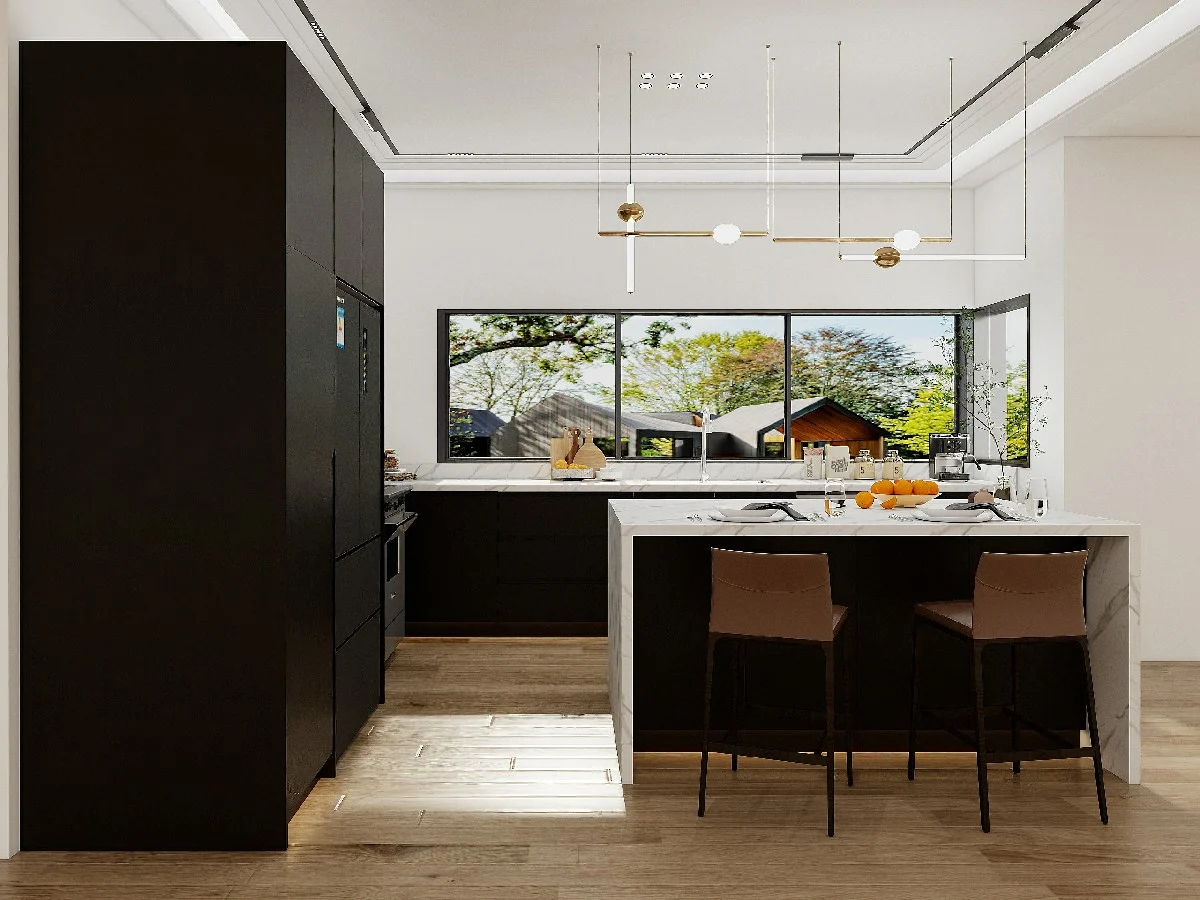
If you want your kitchen to make a statement, start here. Black fluted cabinets create strong contrast and deep shadow lines. The grooves look sharper, so the texture reads clearly from across the room.
This style works best in kitchens with enough natural light. In a bright space, the finish feels dramatic and refined. In a darker room, it can feel heavy fast. That is why balance matters. Pair black fluting with warm wood floors, light stone counters, or brushed metal hardware.
This is a great fit for open-plan homes where the kitchen needs presence. It also works well if you want a more tailored, almost architectural mood. If full black feels too intense, use it only on the island or pantry wall.
2. Custom Fluted Cabinets with Open Shelving Details
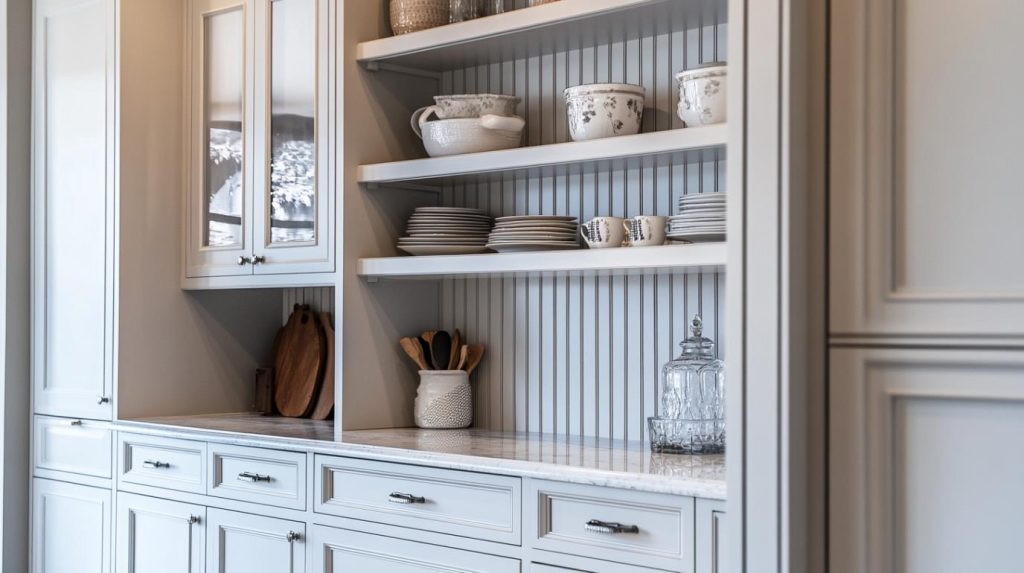
Not every kitchen needs to be dramatic. Some need balance more than anything else. That is where this idea shines. Closed fluted cabinets keep the room tidy. Open shelving keeps it light.
This mix works especially well in kitchens that need personality without feeling crowded. A few shelves can hold dishes, glassware, cookbooks, or a small group of decorative objects. The key is editing. Open shelving should feel intentional, not packed.
This layout also helps break up long runs of cabinetry. If your kitchen has a lot of storage, but you do not want it to feel bulky, this is a smart move. It gives the room texture and breathing space at the same time.
3. Floor-to-Ceiling Fluted Cabinets for a Seamless Built-In Look

This is one of the strongest ways to make a kitchen feel custom. Floor-to-ceiling cabinets stretch the eye upward and create a built-in look that feels calm and complete.
There is a practical benefit too. You get more storage, less visual clutter, and no awkward gap above the cabinets. That is especially helpful in smaller homes or apartment kitchens where every inch matters. In the right layout, fluted kitchen cabinets can make tall storage feel more elegant instead of more imposing.
To keep the look from feeling too heavy, stay disciplined with the palette. Light wood, soft taupe, warm gray, or matte painted finishes work well here. Let the fluting carry the detail. The rest can stay simple.
4. Fluted Glass Cabinet Doors for an Airy, Open Feel
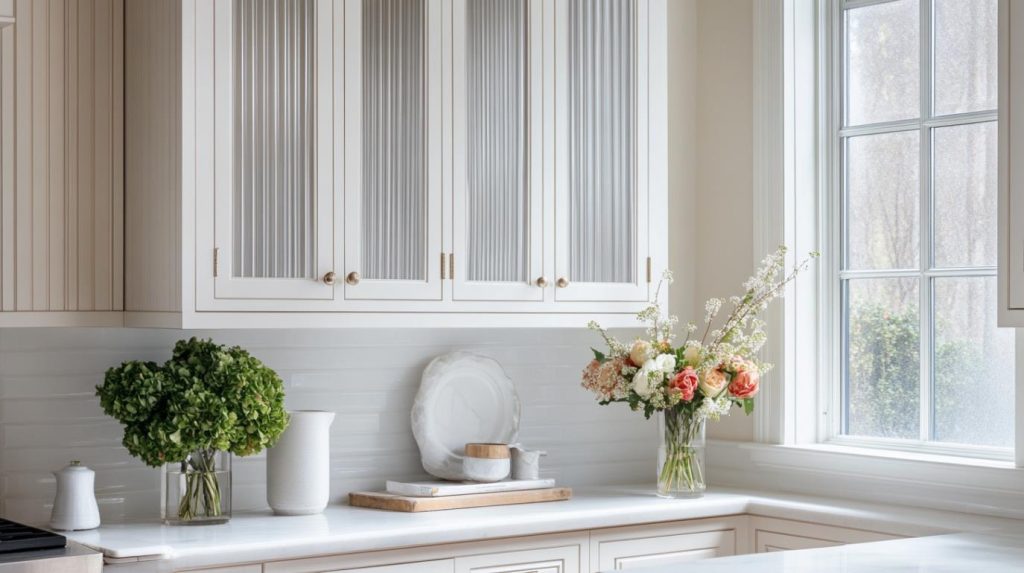
Love texture, but do not want everything to feel solid? Go with glass. Fluted glass kitchen cabinets bring detail and openness at the same time. The glass lightens the look, while the ribbed surface softens whatever sits behind it.
This is a great option for upper cabinets, coffee stations, or a dining-side storage wall. It also looks beautiful with interior cabinet lighting. In the evening, the glow through the fluted glass feels soft and elevated.
If fully solid fluted fronts feel too dense for your kitchen, this is an easy middle ground. You still get the texture. You just get it with more lightness.
5. Fluted Kitchen Islands for a Statement-Making Focal Point

If you are not ready to commit to a full fluted run, start with the island. It is the easiest place to create impact. The island already acts as the center of the room. Add fluting, and it becomes a real focal point.
This is also one of the smartest ways to control budget. You get the trend where it matters most, but avoid using it everywhere. One move, big payoff. For many homeowners, this is the easiest way to introduce fluted kitchen cabinets without redesigning the whole space.
A light oak island feels warm and organic. A painted charcoal island feels stronger and more dramatic. A curved island wrapped in fluting feels even more custom. No matter which route you take, keep the surrounding cabinets quieter so the island can lead.
6. Fluted Panels with Asymmetrical Curves for Dynamic Visual Impact

This is where things get more sculptural. Instead of using fluting only on straight cabinet faces, you bring it onto curved or asymmetrical surfaces. The result feels more custom and more expressive.
Curves can soften a kitchen in a way straight lines never can. Even one rounded island corner or curved pantry edge can change the mood of the whole space. It makes the room feel less boxy and more fluid.
This idea works best when used with restraint. One signature moment is usually enough. Too many curves, and the kitchen can start to feel overdesigned.
7. Fluted Cabinet Panels with Metal Inlays for a Contemporary Edge
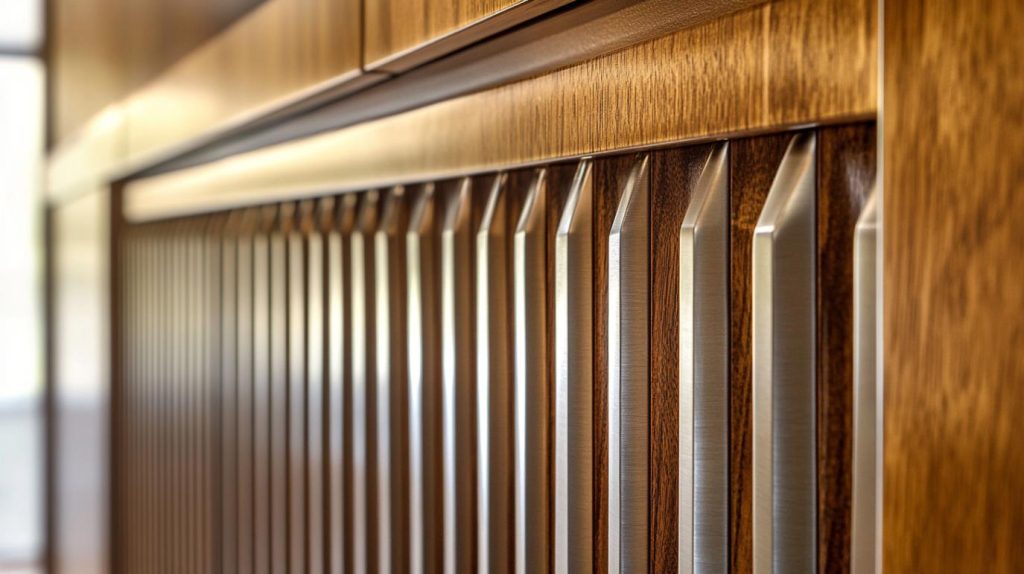
If plain fluting feels a little too soft, metal inlays can give it a sharper, more structured look. In this design, the warm wood fluted panels are paired with slim brushed metal inserts, creating a clean contrast that feels refined and architectural.
The key is subtlety. A narrow metal inlay adds detail without overpowering the fluted texture. It makes the cabinet front look more custom, more polished, and more modern. That is exactly why this kind of detail works so well. It adds edge, but still keeps the overall look controlled.
This style pairs especially well with warm wood finishes, handle-free cabinetry, and soft integrated lighting. It suits modern kitchens that want texture and warmth, but still need a crisp contemporary feel.
8. High-Gloss Fluted Cabinets in a Bold Modern Finish
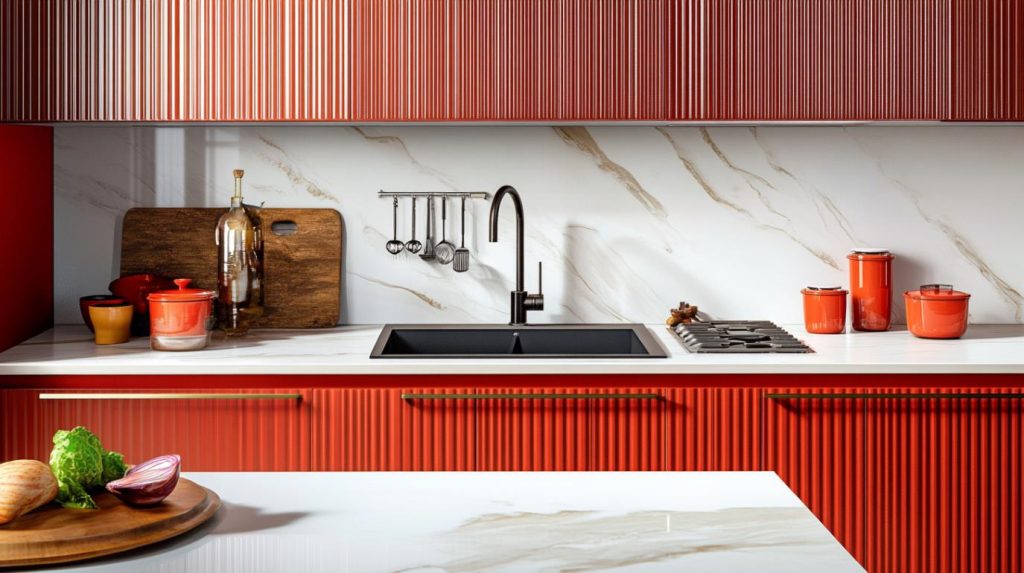
High-gloss fluting is not shy. It is reflective, polished, and strong. Because the finish bounces light across each groove, the texture feels more dramatic than it would in matte.
This style works best in homes with a crisp architectural look. If the rest of the kitchen is already busy, though, glossy fluting can push things too far. It needs room to breathe.
There is also a practical trade-off. Gloss shows fingerprints more easily. So yes, it looks sharp. But it also asks a little more from daily maintenance. That is fine if you love the look and know what comes with it.
9. Light Wood Fluted Cabinets for a Warm, Natural Vibe
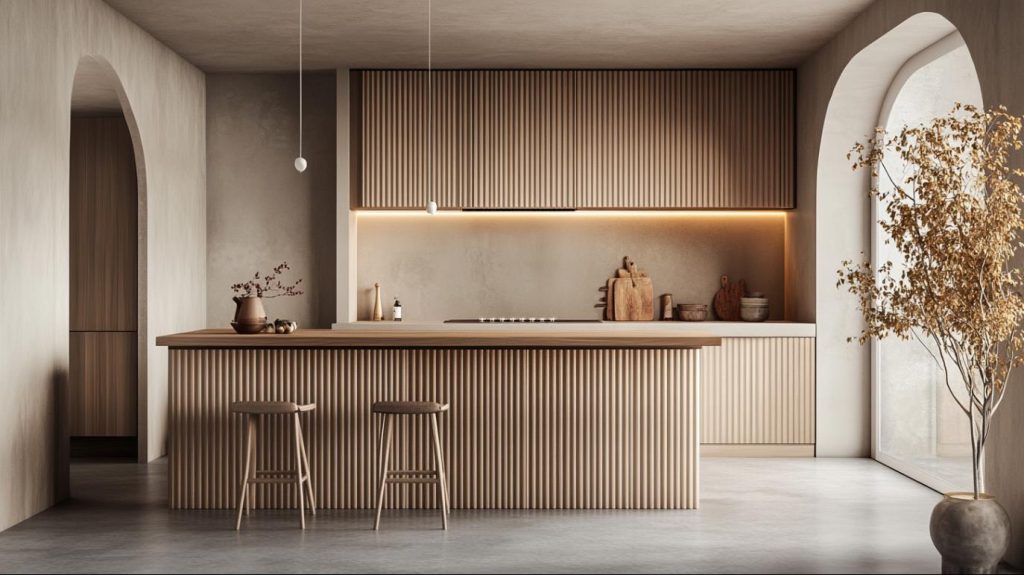
If you want a softer and more timeless direction, light wood is hard to beat. Fluted wood kitchen cabinets add warmth without heaviness. They feel modern, but they do not feel cold.
This is one of the easiest looks to live with long term. It pairs beautifully with white stone, off-white walls, warm gray floors, and muted earthy accents. It also works across several styles, from Scandinavian-inspired homes to organic modern interiors.
A well-planned fluted cabinet kitchen in light wood can feel textured and calm at the same time. That balance is exactly why this look has so much staying power.
10. Minimalist Fluted Cabinet Design with Integrated Lighting
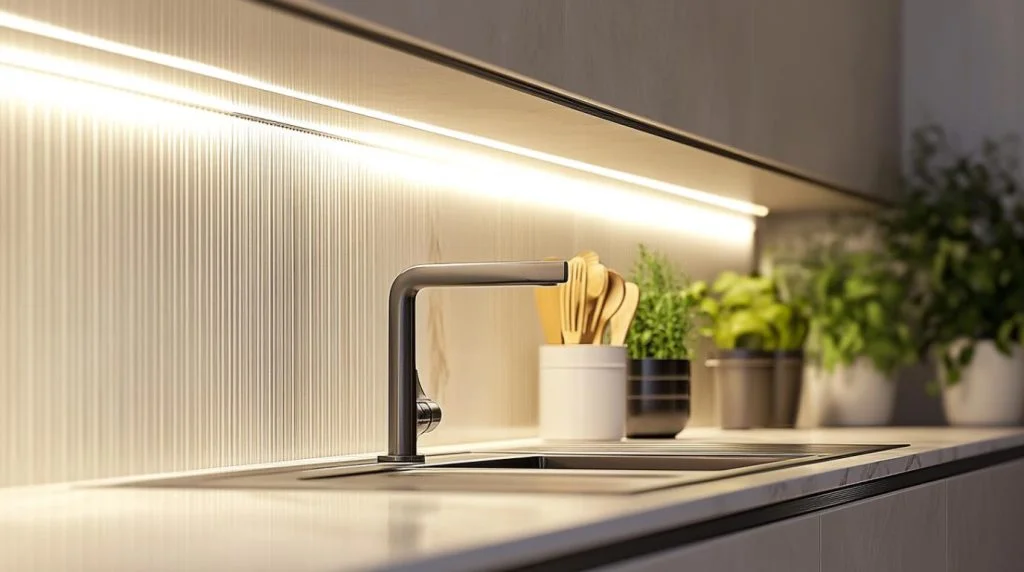
This might be the most balanced look on the list. You get the clean lines of minimalism, but you also get the depth that fluting brings. Add integrated lighting, and the cabinetry feels even more refined.
Under-cabinet lighting works well here. So does lighting inside glass cabinets, beneath floating shelves, or under an island overhang. The light skims across the grooves and brings out the texture in a subtle way. This is also where fluted kitchen cabinets feel especially strong, because the light makes every detail work harder.
That matters because lighting is doing more work in kitchens now. A fluted surface gives that light something to play across, which is exactly why this pairing feels so effective.
How to Choose the Right Fluted Kitchen Cabinet Design
Choosing the right style is not just about looks. The best option should also match your kitchen size, lighting, lifestyle, and overall design direction.
| What to Check | How to Choose Smartly |
|---|---|
| Kitchen Size | In a small kitchen, use fluting as an accent. In a larger kitchen, fluted kitchen cabinets can be used more widely. |
| Natural Light | Light wood and fluted glass kitchen cabinets work well in darker spaces. Dark finishes need more light to feel balanced. |
| Maintenance | Deep grooves, glass, and glossy fronts need more cleaning. Simpler fluting is easier to maintain. |
| Overall Mood | Light wood feels warm and calm. Black or high-gloss fluting feels bolder and more dramatic. |
| Placement | You do not need fluting everywhere. A fluted panel kitchen cabinet on an island or pantry wall is often enough. |
| Style Consistency | A fluted kitchen design should match the rest of the home, not feel separate from it. |
| Budget | Full fluted kitchen cabinets cost more. Using fluting in one key area is often more practical. |
Conclusion
The best fluted kitchen cabinets are not the most complicated ones. They are the ones that add depth, texture, and character without making the kitchen feel busy. That could be a fluted island, a wall of light wood cabinetry, or a few fluted glass cabinet doors with soft lighting. The right choice depends on your layout, your style, and how you want the space to feel every day.
If you want a fluted kitchen design that looks refined and works in real life, PA Home can help. PA Home offers custom kitchen cabinet solutions that balance style and function, helping you create a kitchen that fits your space and your overall interior design.
FAQs About Fluted Kitchen Cabinet
Yes. Fluted kitchen cabinets are still in style because they add texture, depth, and a more custom look without making the kitchen feel busy. They work especially well in modern interiors that need warmth and visual interest.
They can take a little more effort than flat cabinet doors because dust and grease may collect in the grooves. The easiest way to manage them is to use fluting in selected areas and choose finishes that are easy to wipe down.
Yes, but placement matters. In a small kitchen, it is usually better to use fluting as an accent, such as on an island, pantry wall, or one fluted panel kitchen cabinet detail, instead of using it on every cabinet front.
That depends on the look you want. Fluted wood kitchen cabinets feel warm and natural, while painted finishes look cleaner and more modern. Fluted glass kitchen cabinets are a good choice when you want the kitchen to feel lighter and more open.