Imagine this: on a summer afternoon, your walk-in closet carries a faint sense of stuffiness; behind that beautiful pantry door, you wish air could circulate freely to keep food dry; or perhaps you’re looking for a room divider that defines space without blocking light or disrupting the feeling of togetherness at home…
If any of these scenarios sound familiar, the answer you’re looking for may well be a classic Louver Door. Far from being just a “door with slats,” it is a time-tested and intelligently engineered solution. In this guide, we’ll uncover how it works at its core and help you decide whether it’s the right answer to your spatial challenges.
What Are Louvre Doors?
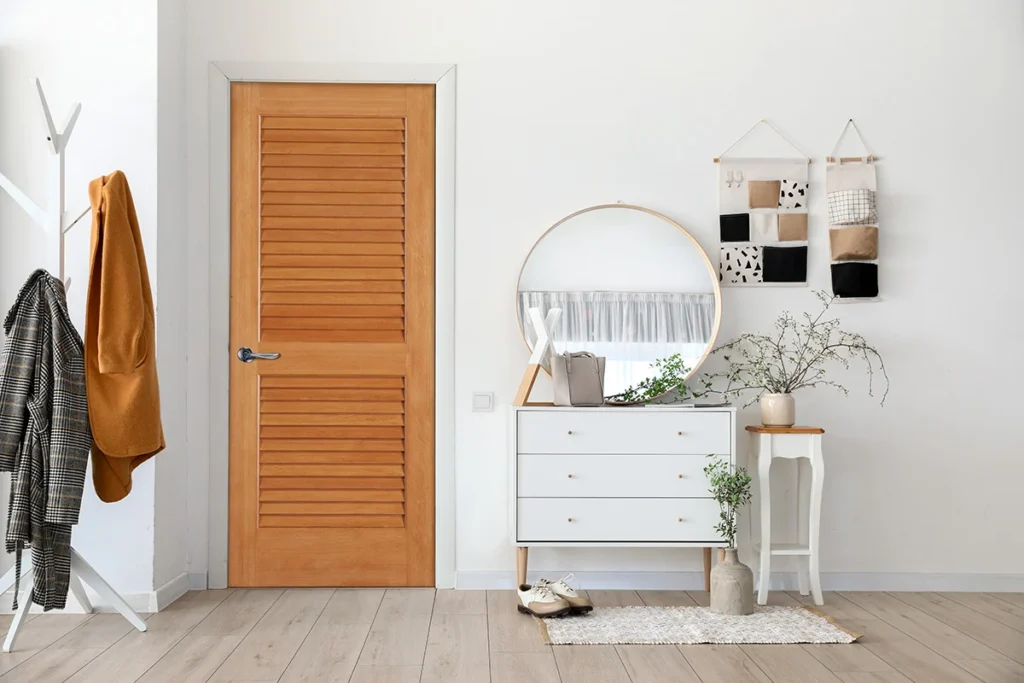
At its most basic level, a louvre door is a door fitted with a series of fixed or adjustable angled slats, known as louvers. These parallel slats are its defining feature—and the source of both its function and its visual character.
The key to understanding a louvre door is to distinguish it from other common door types:
Compared with solid doors:
A louver door does not provide full airtight sealing. Its primary design intent is to allow air to pass through.Compared with glass doors:
It does not offer clear transparency. Instead, the slats create a rhythmic balance of visual screening and light filtering.Compared with louvered shutters:
While the principle is similar, a louvre door is a complete, operable door leaf designed for door openings or cabinetry. Functionally, it belongs to the architectural door and window system rather than to window treatments.
In essence, a louvre door represents a carefully controlled middle ground between “closed” and “open.” It is both a physical partition and a breathable interface.
How Does a Louvre Door Work?
All of its functionality stems from the simple physics of the slat design.
The angled louvers perform two core functions: guiding airflow and filtering sightlines. Acting like fixed miniature deflectors, the slats allow air to circulate gently through the door even when it is closed. At the same time, their angle and overlap block direct frontal views to maintain privacy, while still allowing light to diffuse from the sides and preserve a sense of openness.
It is precisely this foundational physical principle that determines both the distinctive advantages and the necessary compromises of a louver door in real-world use. Next, we’ll translate these mechanical characteristics into the practical pros and cons you’ll experience in everyday life.
What Are the Benefits of Louvre Doors?
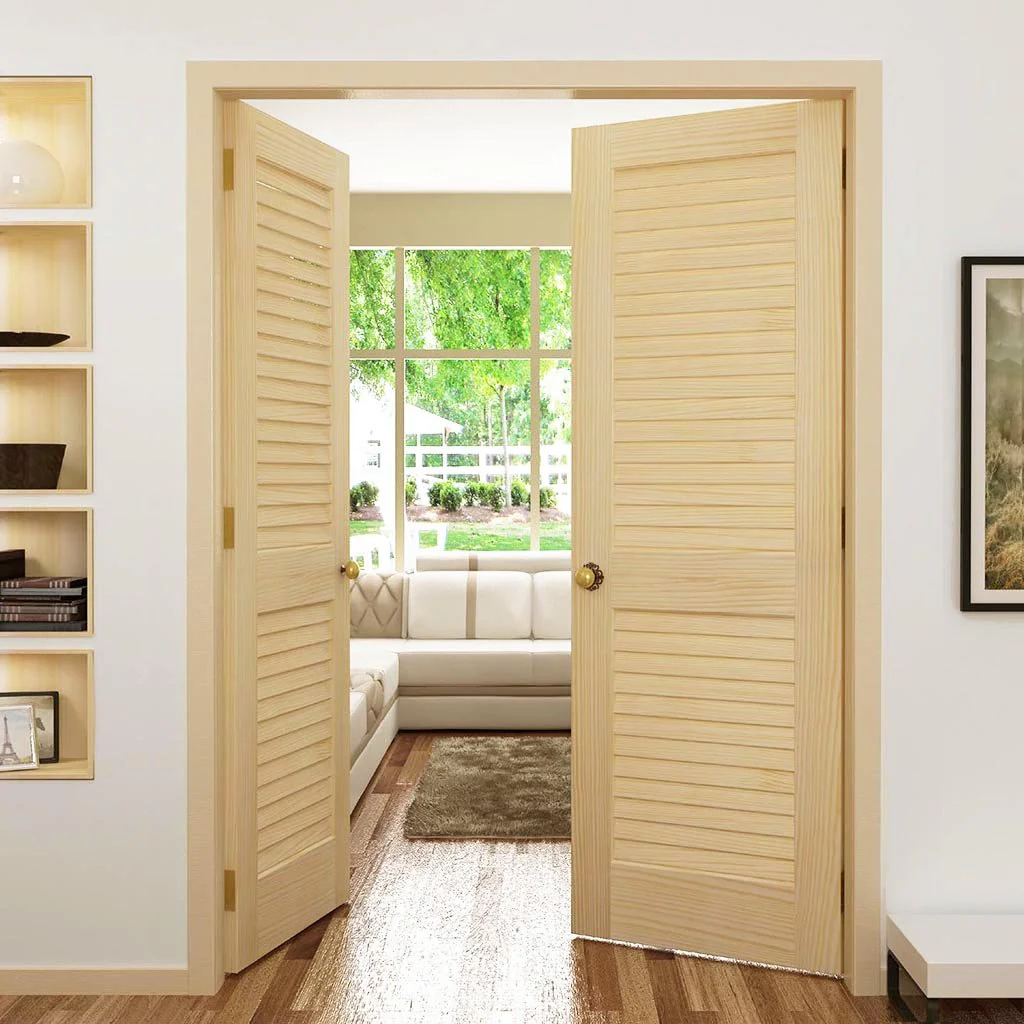
Louver doors are not only stylish but highly functional, offering a range of benefits that make them a great choice for various spaces in your home or business. Here are some of the key advantages:
Enhanced Ventilation
It effectively helps prevent moisture buildup, mold, and unpleasant odors in enclosed spaces. For closets, laundry rooms, storage areas, or pantry cabinets, this is a functional necessity, not just a design choice. In suitable climates, improved air circulation can also reduce reliance on air conditioning or dehumidifiers, enabling a more passive and energy-efficient form of climate control.
Light Control
While they allow airflow, louvre doors also control the amount of light entering a room. You can adjust the angle of the slats to create a soft, diffused light that brightens the room without the harshness of direct sunlight. This is especially beneficial in spaces like living rooms or kitchens.
Privacy Without Sacrificing Transparency
Louvered door offers a privacy solution that’s different from frosted glass doors or solid doors. While the louvers block direct lines of sight, they still allow light and sound to pass through, preserving a sense of connection between spaces and avoiding a closed-off or oppressive feel. This makes louvre doors especially suitable for studies, living room dividers, or home offices.
Aesthetic Appeal
The angled louvers cast shifting patterns of light and shadow throughout the day, adding a dynamic texture to walls—something no flat door can achieve. Whether it’s used to add depth to a modern minimalist space or to reinforce a tropical, coastal, or rustic style, a well-designed louvre door can instantly elevate the sense of finish and professional design within a space.
What Are the Disadvantages of Louvre Doors?
While louver doors come with many benefits, there are also a few drawbacks to consider before making a decision. Here are some of the main disadvantages:
Limited Soundproofing
Louvered doors are not soundproof doors. Sound travels through the slats along with the air. They are not suitable for spaces where sound sensitivity is important, such as bedrooms, home theaters, or conference rooms requiring a high degree of privacy.
Maintenance Needs
Dust easily accumulates in the gaps between the slats, a common characteristic of louvered products. Cleaning requires more time or the use of specific tools. If you opt for a wooden louvre door, you may also need to treat it periodically to prevent warping or cracking, particularly in moisture-prone environments.
Not Ideal for Extreme Weather Conditions
Due to their open structure, louvre doors are not effective barriers for thermal insulation, heat retention, or wind protection. Unless you choose a specially engineered, high-sealing exterior door louver, they are not recommended for spaces that require strict temperature control or as primary exterior entrances. Standard interior louvre doors offer limited protection. For outdoor use, it’s essential to select aluminum louvered doors or metal louvre doors with a solid structure and proper locking systems.
How Much Does a Louvre Door Cost?
After understanding how a louvered door works, a very practical question naturally comes up: how much does it cost? The honest answer is that the price range is quite broad — from just a few hundred to several thousand (or even tens of thousands) depending on what you choose. The difference isn’t simply brand premium — it comes down to four core factors: material, size, process complexity, and degree of customization.
To give you the clearest reference, here’s a louver door cost analysis table based on current market conditions. It will help you quickly locate the type of product that matches your budget and needs:
Louver Door Type and Cost Comparison Reference Table
| Louvre Door Type / Feature | Typical Price Range | Best For |
|---|---|---|
| Basic PVC Louvre Doors | $50 – $150 | Bathrooms, closets, laundry rooms |
| Standard Aluminum Louvre Doors | $150 – $400 | Outdoor use, patios, utility areas |
| Wooden Louvre Doors (Standard Size) | $200 – $600 | Interior doors with a classic look |
| Metal Louvre Doors (Standard) | $250 – $700 | Interior & exterior applications needing durability |
Key Factors Affect Louvre Door Price

Material is the Foundation
The material is the primary factor influencing the price. A standard MDF louvered door is an economical choice, while a custom solid wood door is a long-term investment. Aluminum louvered doors vary in price based on the thickness, strength, and surface treatment of the profiles.
Customization is the Biggest Variable
The price of custom louvre doors can easily be several times higher than standard ones. Custom sizes, special paint colors, unique shapes, or complex louver door designs all contribute to the increased cost.
Beware of Hidden Costs
When planning your budget, consider:
Installation Fees: Typically 10%-20% of the door price, especially for heavy doors or complex systems.
Hardware: High-quality hinges, locks, and tracks may need to be purchased separately.
Modification Fees: Non-standard door openings may require wall adjustments or custom frames.
How to Get an Accurate Quote?
The most reliable way is: After defining your basic requirements, bring the specific information to request a quote.
You can prepare: Exact measurements of the installation location (width, height, wall thickness), a clear description of the usage scenario (e.g., “exposed to sunlight and rain on an outdoor balcony”), material preferences, and reference images. Then consult local manufacturers or authorized dealers. Based on this information, they can provide the most accurate quote for your custom louvre doors.
How to Choose Louvre Door Types?

After understanding the features of louvre doors, how do you choose the right type among so many options? No need for side-by-side comparisons—follow these three simple steps to quickly identify the best louvre door for your space and needs.
Step 1: Identify the Core Purpose and Key Requirements
First, clarify the main issue you need the door to address. The table below lists the most common core needs and their corresponding best choice direction:
Step 2: Assess Space Conditions and Choose the Opening Mechanism
| Core Requirement | Best Type Direction | Key Considerations |
|---|---|---|
| 1. Solve moisture and stuffiness in storage areas (e.g., closets, storage cabinets, pantries) | Functional storage louvre doors | Prioritize ventilation efficiency. Choose options with wider slat spacing. MDF or pine material offers good value. |
| 2. Serve as interior room doors or decorative dividers (e.g., study, living room, bathroom) | Interior louvre doors | Balance ventilation, privacy, and aesthetics. Focus on material texture (e.g., the warmth of solid wood or the smoothness of MDF) and design style (e.g., minimalist narrow slats or traditional wide slats) to match home decor. |
| 3. Use for outdoor spaces like courtyards or balconies | Professional exterior louvre doors | Prioritize weather resistance and security. Must choose rust-resistant materials such as aluminum or wood treated for deep corrosion resistance. The structure must be sturdy. |
Once the primary use is determined, choose the most appropriate opening style based on the physical conditions of the installation location:
Limited space with no room for door swing → Choose louvered sliding doors.
Need maximum opening for easy access or storage → Choose bifold louver doors.
Standard door opening for regular use → Choose louver swinging doors.
Step 3: Match Style and Budget, Finalize the Details
Finally, within the selected options, make your final decision based on aesthetic preferences and budget:
Limited budget, modern finish desired → MDF is the best cost-effective choice.
Larger budget, love for natural texture and intricate carvings → Solid wood louver door offers a unique warmth and premium feel.
For outdoor use or industrial minimalist style → Aluminum louver door stands out in durability and modern appeal.
By completing these three steps, you’ll be able to narrow down the best louvre door for your needs from a wide range of options, and be well-prepared to move on to the next step of gathering ideas or inquiring about products.
What Are the Popular Louvre Door Design Ideas for 2025?

Entering 2025, louvre door designs are evolving beyond traditional functionality to become key elements in shaping spatial aesthetics. The core trends focus on innovations in materials and forms, aiming to achieve a cleaner visual appeal and more personalized expression.
The most popular design directions today are centered around the disruption of traditional forms. On one hand, the combination of ultra-narrow metal frames and slender slats has become mainstream, significantly reducing the mass of the door, making it feel like a part of the wall or a delicate screen. On the other hand, the creative mixing of materials is leading the trend, such as embedding rainbow glass in solid wood louvres or combining matte lacquered slats within an aluminum frame. This fusion enhances both light permeability and texture, while also meeting more diverse functional needs.
In terms of color and details, designs are becoming bolder. In addition to classic black, white, and gray, deep olive green, matte black, and low-saturation terracotta hues are emerging as new choices to showcase individuality. At the same time, hidden hinges, handle-free designs, and electric opening systems integrated with smart home features make louvre doors more aligned with modern living’s convenience and aesthetic, all while retaining their vintage charm.
Where to Buy Louvre Doors?
Once you’ve narrowed down the type you’re interested in, the next practical question is: where to buy? Different channels come with their own advantages, costs, and services, and understanding their differences can help you make the most cost-effective and hassle-free decision.

Large Home Improvement Stores
Best for: Shoppers who prefer seeing samples in person, comparing options, and want one-stop shopping with standard product value.
Advantages: Ample stock, ability to inspect materials and craftsmanship in person, transparent pricing with frequent promotions, and basic measurement and installation services.
Things to Consider: Most styles are standard sizes or popular designs with limited custom options. Service quality may vary depending on the store and installation team.
Specialized Door and Window Manufacturers / Custom Makers
Best for: Buyers needing non-standard sizes or unique designs (Custom Louvre Doors), or those seeking high-end materials and craftsmanship.
Advantages: Strong customization capabilities, unique designs, professional consultation, finer craftsmanship, and full service from measurement to installation.
Things to Consider: Generally the highest price, with longer production cycles (usually weeks). Service depends heavily on the professionalism and reputation of the manufacturer, so thorough research is essential.
Online Platforms and E-commerce
Best for: Tech-savvy buyers who are good at researching online, looking for standard doors or small-sized units.
Advantages: Wide selection with access to global brands, easy price comparison, transparent user reviews, and home delivery.
Things to Consider: Unable to inspect products in person, color and texture discrepancies may occur. Measurement is the buyer’s responsibility, which can lead to costly mistakes. Installation usually requires an external professional.
Local Carpenters / Workshops
Best for: Buyers with specific ideas for Wooden Louvre Doors or those needing doors that match other furniture pieces in their project.
Advantages: Maximum flexibility with direct communication, highly personalized Louver Door Designs, supports small batches or even single-item customizations.
Things to Consider: Prices vary depending on the craftsman and materials. Production cycles and consistency need careful attention. Requires strong aesthetic judgment and quality control on the buyer’s part.
Action Checklist: What to Confirm Before Buying
-
✔
Accurate Measurements: Measure the width, height, and wall thickness of the door opening (at least check three points—top, middle, and bottom), and confirm whether the wall is vertical.
-
✔
Clear Requirements List: Write down your confirmed choices for type, material, dimensions, opening style, color/finish, and hardware preferences (hinges, locks).
-
✔
Obtain and Compare Quotes: Request detailed quotes from 2-3 selected channels, including product costs, shipping fees, installation costs, and warranty terms.
-
✔
Check Samples and Reviews: If possible, request to see physical samples. For custom manufacturers and online stores, carefully study case images and customer reviews.
Conclusion
A louvre door is far more than just a ventilation gap; it represents a delicate balance of functionality and aesthetics within a space. Whether solving moisture issues or creating unique light and shadow effects, it offers an elegant and intelligent choice.
If you have any professional questions during the selection, customization, or installation of a louvre door, PA Home is here to assist you. Contact us today to find the perfect door for your home or business, and elevate your space with both functionality and style.
FAQs about Louver Doors
The lifespan of a louver door depends on the material and maintenance. Properly cared-for wooden or metal louver doors can last for many years, especially if installed in appropriate environments.
While louver doors provide good ventilation, they are not the best option for insulation. For energy efficiency, they may need to be paired with additional sealing or insulation solutions in extreme climates.
Louver doors are typically made from wood, aluminum, metal, or PVC. Each material offers different benefits in terms of durability, aesthetic, and suitability for indoor or outdoor use.
The installation process varies based on the door type and space. While some louver doors are designed for DIY installation, more complex designs (like bifold or exterior doors) may require professional help.
Yes, louver doors made of wood or metal can be painted to match your desired color scheme. It’s important to use the right type of paint for the material to ensure durability and proper adhesion.
Standard louver door dimensions typically range from 24 to 36 inches in width and 80 inches in height. Custom sizes are also available to fit specific door openings.