When it comes to upgrading your home’s windows, you may have come across the term “tilt and turn windows.” But what exactly does that mean, and why should you consider them for your home? Let’s explore these innovative window design!
What Are Tilt and Turn Windows?
Tilt and turn windows are a unique and versatile style of window that have gained popularity across Europe, where they are often referred to as German windows or European windows. These windows are favored in many European countries due to their functionality, security, and aesthetic appeal. While tilt and turn windows have been a staple in European homes for many years, they are also becoming more common in countries like the United States and Australia due to their modern design and practical functionality.
These windows are particularly valued for their three-in-one functionality, allowing homeowners to control ventilation, enhance security, and easily clean the windows, all with a single design.
How Do Tilt and Turn Windows Work?
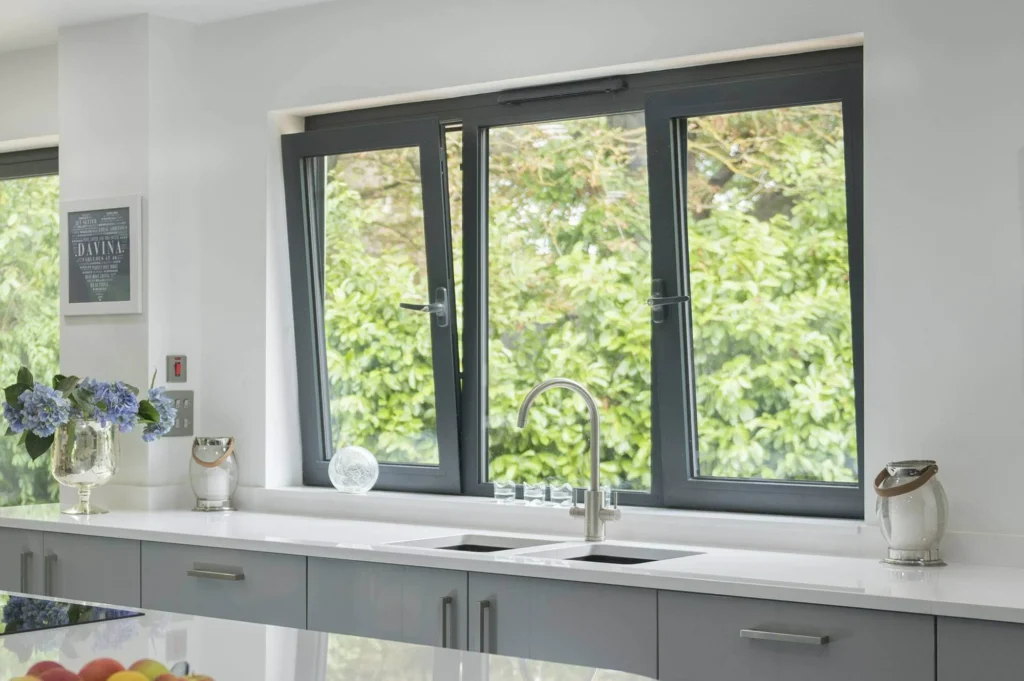
A tilt and turn window has a similar appearance to a casement window, with large, uninterrupted glass in the center of the frame. The key feature of this window style is its three distinct positions, each tailored to the needs of the homeowner or occupants:
Closed and Locked Position: In this position, the window functions as a standard, locked window—perfect for providing a clear, unobstructed view of the outside world, much like a picture window. It offers maximum security and insulation.
Turned Open Position: By rotating the window from hinges on the side, it opens like a door, allowing for easy access to fresh air and a larger opening for cleaning or emergency escape.
Tilted Open Position: In this mode, the bottom of the window tilts inward from the hinges, creating a small opening that allows air to flow into the room. This is ideal for ventilation without compromising security, as the window remains partially closed at the bottom.
This flexibility allows tilt and turn windows to adapt to different needs, whether you want to secure your home, maximize airflow, or simply enjoy an unobstructed view of the outside world.
How Much Does a Tilt and Turn Window Cost?
The cost of tilt and turn windows varies based on factors like material, size, and features.
uPVC Tilt & Turn Windows: Typically range from $200 to $500 per window. uPVC tilt and turn windows are the most cost-effective option, offering durability and energy efficiency.
Aluminum Tilt & Turn Windows: Prices range from $250 to $9,00 per window. Aluminum frames provide a sleek, modern aesthetic and are known for their strength.
Wooden Tilt & Turn Windows: High-end wooden tilt and turn windows can start from $400 and may exceed $1,000 per window, depending on customization and quality.
Average Cost of Tilt and Turn Windows
The prices listed below reflect the average cost of aluminium tilt and turn windows. Generally, prices range from $400 to $1,200 per window. For instance, a 36″ x 72″ aluminum tilt and turn window may cost approximately $850 .
| Window Size (inches) | Approximate Price Range |
|---|---|
| 24" x 36" | $250 – $500 |
| 36" x 48" | $400 – $700 |
| 48" x 72" | $600 – $1,100 |
| 72" x 60" | $800 – $1,400 |
More Concerns
How Do Tilt and Turn Windows Compare to Other Window Types?
Tilt and turn windows stand out in the many regions for their versatility and unique functionality. Unlike traditional windows like awning, double-hung, or sliding windows, which only open by sliding upward or horizontally, tilt and turn windows offer two distinct opening mechanisms: they can either tilt inward at the top for ventilation or swing open fully, like a door, providing flexibility for various needs.
The only window type comparable to tilt and turn windows is the casement window, which also opens with a tilt-in motion. However, tilt and turn windows offer the added benefit of being able to swing open from either the side or the bottom, depending on the user’s preference.
In addition to their ventilation capabilities, tilt and turn windows provide enhanced security. The unique locking mechanism ensures that when the window is partially open, it remains difficult for intruders to force entry. This combination of effective airflow, security, and flexibility makes tilt and turn windows an ideal choice for modern homes.
| Feature | Tilt and Turn Windows | Double-Hung Windows | Casement Windows | Sliding Windows |
|---|---|---|---|---|
| Opening Mechanism | Tilt inward or open fully like a door | Both sashes slide vertically | Swing outward from the side | Slide horizontally along tracks |
| Ventilation | Controlled ventilation with tilt; full airflow when open | Allows ventilation through both sashes | Provides excellent ventilation | Continuous airflow, limited direction control |
| Security | Multi-point locking system for added security | Single-point locking system | Single-point locking system | Single-point locking system |
| Energy Efficiency | High insulation, tight seals | Good insulation, may have leakage around sashes | Excellent insulation, tight seals | Moderate insulation, possible air leakage |
| Cost | High | Mid | Mid-High | Low |
More Concerns
Tilt and Turn Windows: Pros and Cons
Tilt and turn windows bring a lot to the table, but like anything, they have their ups and downs. Let’s break it down in a simple way, just like choosing between an apple and an orange—both have their unique benefits!
Advantages of Tilt and Turn Windows
Versatility at Its Best
Tilt and turn windows are a bit like a Swiss Army knife for your home. Not only do they let in fresh air by tilting inward at the top, but they can also swing open like a door when you need a larger opening. Whether it’s a gentle breeze or full ventilation, these windows offer you exactly what you need, when you need it.
Enhanced Security
When it comes to security, tilt and turn windows are like a fortress in disguise. The clever locking system makes it hard for burglars to break in. You can leave them slightly open for ventilation while still keeping your home safe—just like locking your door with a key but leaving the window cracked for a bit of fresh air.
Easy to Clean
Imagine not having to juggle a ladder every time you want to clean your windows. With tilt and turn windows, cleaning both sides is a breeze. Since they open inward, you can easily wipe down the inside and outside from the comfort of your home. No more climbing to the second floor to clean a stubborn smudge!
Energy Efficiency
These windows are like the cozy blankets of the window world. They fit tightly when closed, keeping the cold out in winter and the cool air in during summer, helping you save on heating and cooling bills. It’s a small investment that pays off in comfort and savings
Disdvantages of Tilt and Turn Windows
Higher Initial Cost
Like buying a quality leather jacket, tilt and turn windows can be pricier than the standard ones. While the initial investment might be a bit steep compared to double-hung or sliding windows, the long-term benefits—security, energy savings, and ease of use—can make it worth the price.
Complex Installation
These tilt turn windows are a bit more complicated to install, like assembling a piece of furniture with a hundred pieces. You’ll need a professional to get it right. This might add to the cost of installation, so make sure to factor that in when budgeting for your windows.
Size Limitations
While tilt and turn windows are versatile, they don’t always work for every space. Large windows or very tall windows might not operate as smoothly as smaller ones, so you might have to choose a different type if you’re looking for massive panes of glass.
Handle and Operation Complexity
The handle can be a little tricky at first, especially if you’re used to simple sliding windows. While it’s a flexible system, it may take a bit of getting used to before you feel comfortable using it every day. Think of it like learning a new dance move—it looks impressive once you get the hang of it!
More Concerns
When Do Tilt and Turn Windows Need to Be Replaced?
Tilt and turn windows are durable, but like anything, they eventually show signs of wear. If you start noticing issues like difficulty opening or closing the window, broken locks, or damaged seals, it might be time for a replacement. These problems can lead to drafts, security concerns, or simply poor functionality, which are often more cost-effective to fix by installing a new window.
Another sign is if the frame or glass becomes damaged beyond repair, or if the window’s insulation performance drops significantly. This could result in higher energy bills as the windows no longer keep your home as comfortable as before. Replacing them ensures you continue enjoying the security, comfort, and energy efficiency tilt and turn windows are known for.
How to Clean Tilt and Turn Windows?
Cleaning tilt and turn windows is simple, thanks to their design that allows easy access to both the interior and exterior. Start by tilting the window inward using the top hinge. This gives you access to the glass from the inside, so you can clean it with a microfiber cloth and glass cleaner. Don’t forget to wipe down the window frame and seals as well.
Next, fully swing the window to clean the outside surface. This gives you easy access to areas that would otherwise be hard to reach. Make sure to also clean the hinges and locks, as dust and dirt can affect their performance. Finally, wipe everything dry to avoid streaks and keep your windows looking spotless.
Are Tilt and Turn Windows Worth It?
Tilt and turn windows are like a good pair of shoes—slightly more expensive, but comfortable and durable. They’re the “powerhouse” of windows: ventilation as natural as breathing, security like a safe, and no more risky glass cleaning. If you’re looking for long-lasting comfort and are willing to invest in quality, they’re definitely worth it.
However, if your budget is tight or your space is small, they might be like “high heels in the gym”—great to look at but not very practical. Regular sliding or casement windows will do just fine. After all, sometimes “good enough” is all you need.
Tilt & turn windows are perfect for those who want the “one-stop solution,” especially for high floors, families with kids, or those focused on energy efficiency. But if you’re just passing through or on a budget, it might be better to spend on what’s more urgent. After all, “the best” isn’t always “the best fit”—it all depends on whether your needs can handle this level of sophistication.
Where to Buy Tilt and Turn Windows in the U.S.
Tilt and turn windows are becoming more popular in the USA. You can find them through reputable window suppliers online and locally, with a variety of options to suit different styles and budgets.
Home Depot offers a variety of tilt and turn windows suitable for both new construction and replacement projects. Brands like Avora, PX, and TEZA provide options in vinyl and aluminum, with prices ranging from $328 to over $1,000, depending on size and features.
PA Home specializes in high quality aluminium tilt and turn windows. They offer custom sizes and configurations, including large units up to 8 feet high and 5 feet wide. PA Home are known for their energy efficiency and modern design.
DenCo offers authentic European tilt and turn windows with dual-action hardware, allowing for both inward tilting and full 180° opening. Their windows feature steel-reinforced frames for added durability and are suitable for high-end residential applications.
EuroLine is the largest manufacturer of tilt and turn windows in North America, with showrooms in Toronto, British Columbia, and the U.S. They offer a range of sizes and configurations to suit various architectural styles.
Bieber specializes in custom wood, aluminum-clad, and tilt-turn windows, catering to both residential and commercial projects. They are known for their craftsmanship and attention to detail.
Conclusion
Tilt and turn windows are popular window design options for homeowners, builders and contractors in 2025.
If you’re looking for high-quality windows, PA Home, a top 10 whole house customization manufacturer in China, offers not only aluminum tilt and turn windows but also aluminum doors, interior doors, wall panels, kitchen cabinets, and bathroom vanities. PA Window provides a one-stop solution for all your home design needs.
Contact us today for the latest designs and quotes!
FAQs about Tilt & Turn Windows
No. Standard tilt and turn windows are designed to operate inward only—tilting at the top or swinging fully into the room. If you need an outward-opening option, consider casement or awning windows instead.
Window Sticks or Rattles – Tighten hinge and lock-point screws with an Allen key; adjust the sash alignment until it moves smoothly.
Handle Feels Loose – Remove the handle cover, tighten the grub screw on the spindle, then replace the cover.
Drafts or Leaks – Inspect and replace worn seals; adjust the corner-gear cams to increase compression against the frame for a tighter seal.
Yes—these windows give you flexible ventilation (tilt mode) and full access (turn mode), plus superior security and energy efficiency in one design.
Absolutely. Many national and local suppliers (e.g., Home Depot, Zola Windows, PA Window) offer tilt and turn styles in vinyl, aluminum, and wood.
Use an Allen key to tweak the side-hinge screws for sash alignment and the bottom-hinge screw for tilt tension. Then cycle through both modes and apply a light silicone spray to hinges and locks.