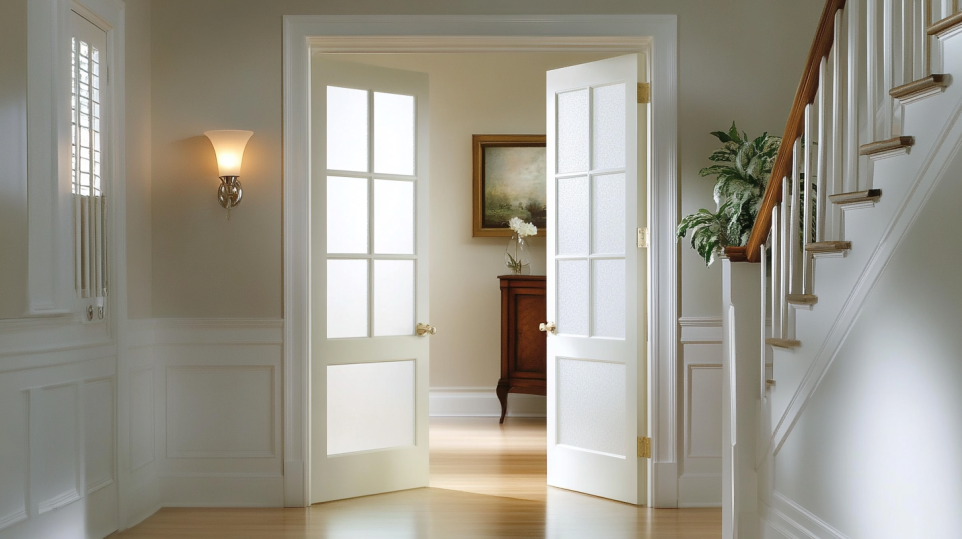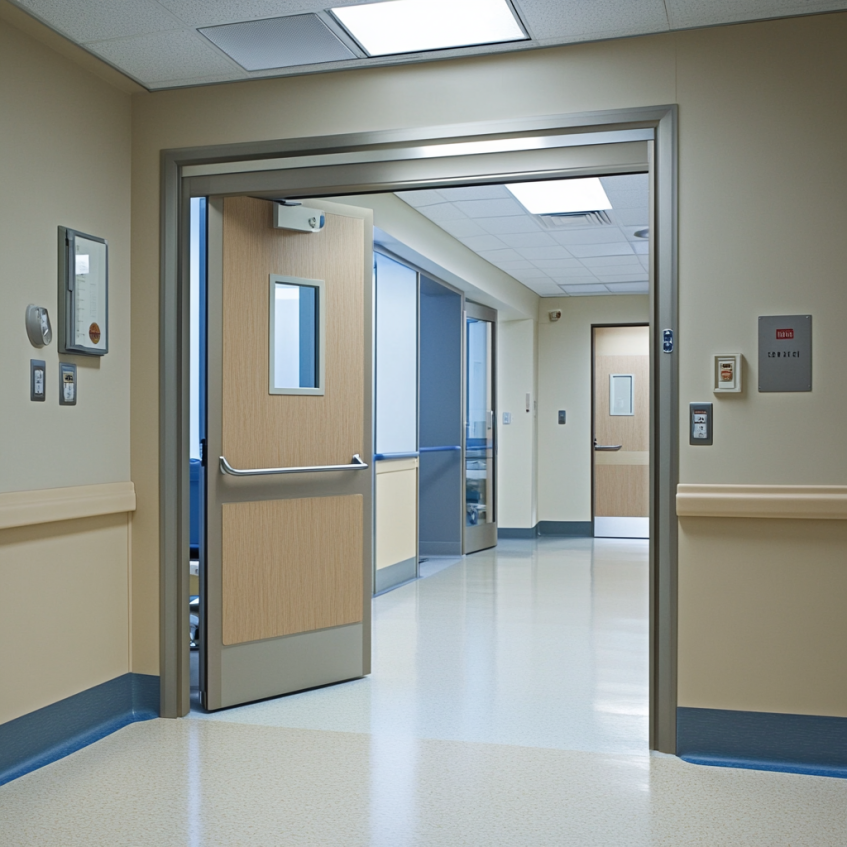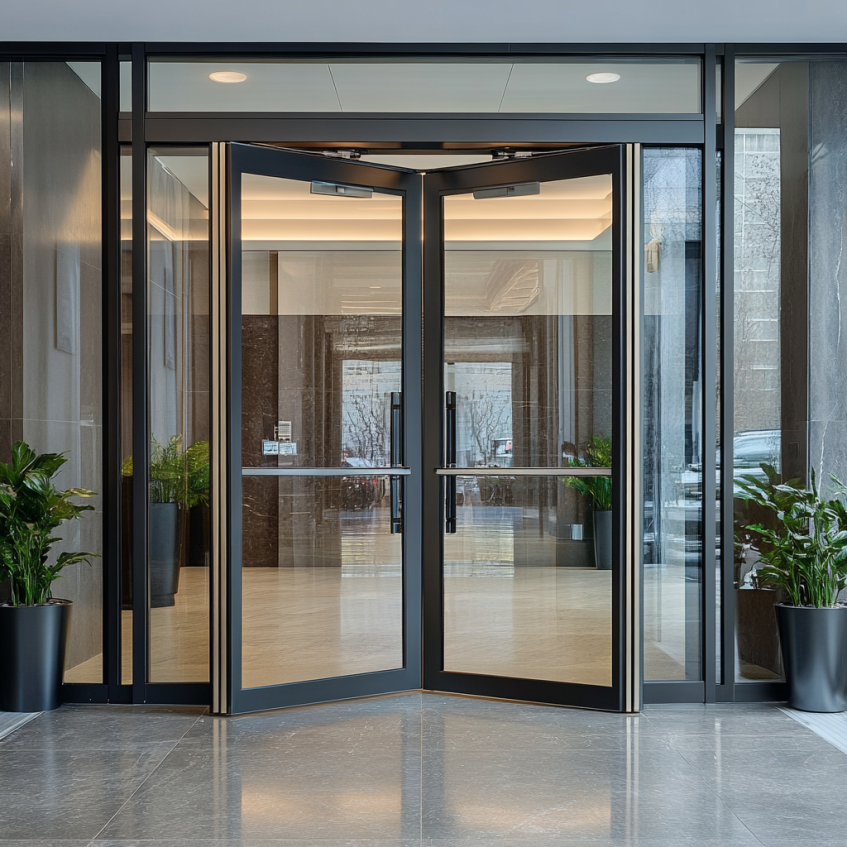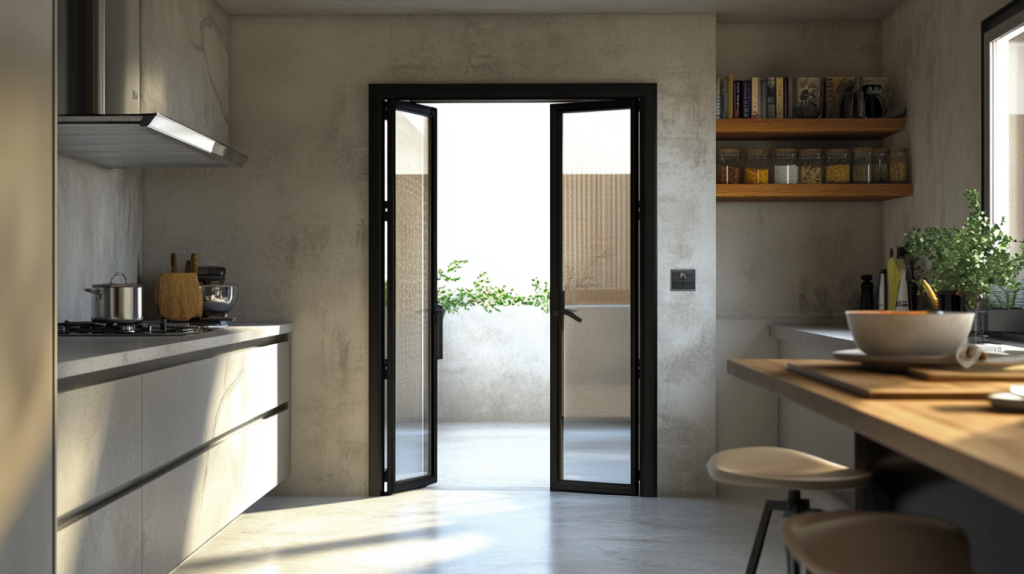
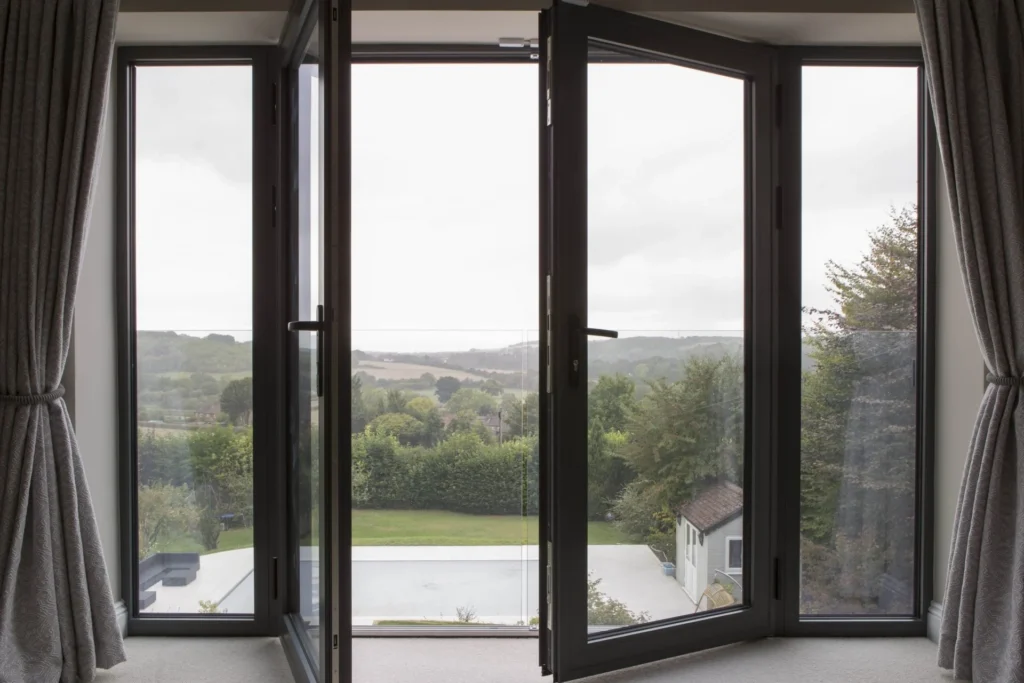
When it comes to doors, swing doors are a classic choice that combines simplicity and functionality. Whether you’re upgrading your home or designing a new space, these doors offer a practical solution that works seamlessly in various settings.
What is a Swing Door?
Unlike sliding or folding doors, the swing door is a type of door that pivots on one or more hinges, allowing it to swing open and closed. It can either open inward or outward, depending on the installation. This door type can either be a single door (single swinging door) or a double door (double swing door). It can be equipped with double-acting hardware, which allows the door to swing in either direction and automatically return to the center.
Swinging doors can be found in a wide range of spaces, including kitchens, pantries, bathrooms, bedrooms, and kitchens. After selecting the ideal spot for your swinging door, the next step is to consider the design and style that best suits your space.
Today’s swinging doors have evolved far beyond their traditional, rustic look. They now feature modern touches like sleek glass panels, while also incorporating classic design elements such as raised panels, louvered accents, barn-style details, or even minimalist shaker panels. With countless design options available, there’s a swinging door style to complement any interior designs.
More Concerns
1. **Stand on the side where the door opens.**
2. **Identify the hinge placement.** If the hinges are on the left side of the door, it's a left-handed door. If the hinges are on the right side, it’s a right-handed door.
3. **Check the swing direction.** If the door swings toward you, it’s a left-handed door. If it swings away from you, it’s a right-handed door.
This is important when choosing the correct door hardware to ensure the handle works with the door’s swing direction.
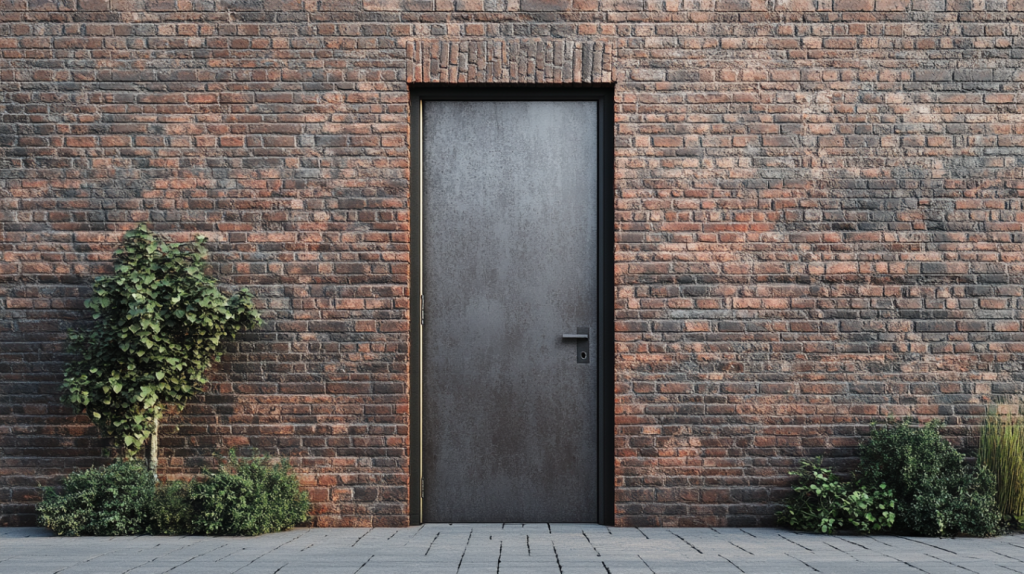
Single Swing Door vs Double Swing Door
Swing doors come in two primary styles: the single swing door and the double swing door. You may wonder: single swing door vs double swing door, which is better? While both serve similar functions, they differ in design, mechanism, and best-use scenarios.
Single Swing Door
A single swing door is a classic choice, consisting of one door panel that swings open in one direction. This type of door typically uses standard butt hinges or single-action hinges, which only allow the door to swing in one direction. Depending on the layout of the space, the door can open either inward or outward. Single swing doors are a simple, cost-effective solution commonly found in smaller spaces such as bedrooms, bathrooms, or closets. They are also often used in commercial spaces where one-way access is sufficient. Though easy to install and maintain, they offer limited opening width, which can be restrictive in areas with high traffic.
Double Swing Door
In contrast, a double swing door consists of two panels that meet in the middle. These doors are mounted on double-action hinges or pivot hinges, allowing each door to swing in both directions and return to the center automatically. This makes double swing doors ideal for spaces where bi-directional traffic is needed. The ability for the doors to swing both ways is particularly useful in high-traffic areas, such as restaurants, commercial kitchens, or hospitals, where constant movement from both directions is common. Double swing doors provide a much wider opening than their single counterparts, making them perfect for larger entrances and creating a more open and elegant look. They are also frequently used for French doors, which bring a touch of sophistication to any space.
While double swing doors offer greater flexibility, they do require more space for installation and may be more complex to maintain. The hinges and hardware involved are specialized, which makes installation a bit more involved compared to single swing doors. However, their versatility and functionality in high-traffic areas often justify the extra effort.
More Concerns
**Casement Doors** open outward from a side hinge, similar to a window. They’re great for ventilation, take up less space when open, and are commonly used for small spaces or outdoor areas.
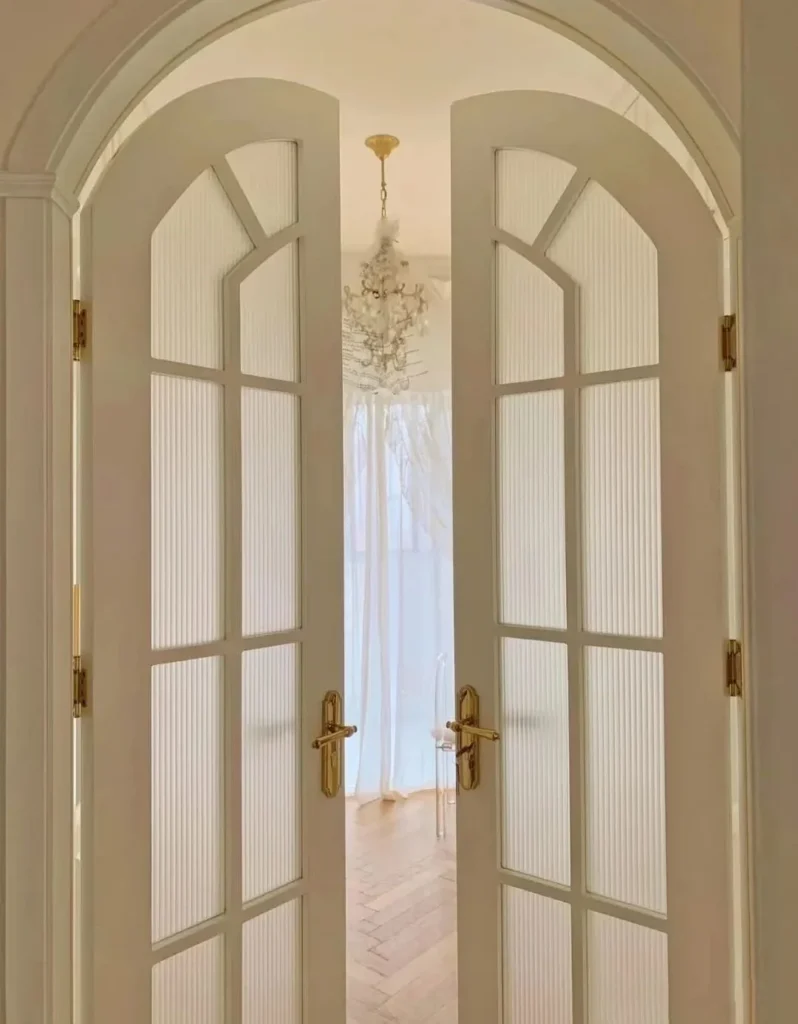
Interior Swing Door vs. Exterior Swing Door
The most significant difference between interior and exterior swinging doors lies in their durability. Interior swing doors focus on a clean, stylish design, while exterior swing doors need to be more robust to withstand harsh weather conditions. They are typically heavier, made from stronger materials, and come with additional security features.
Another important factor is installation. Installing an exterior swing door involves more than just hanging the door; it requires consideration of weatherproofing, insulation, and added security measures. In contrast, interior swing doors are easier to install and don’t require the same level of reinforcement.
Since interior swing doors don’t need to withstand harsh weather, you can choose lighter materials like wooden swing doors or glass swing doors, and even experiment with interior designs like raised panels or smooth finishes.
When considering exterior swing doors, consider exterior doors that are made from sturdy materials, such as aluminum swing doors. These materials not only offer durability but also better insulation.By the way, consider the features like weather seals or reinforced locks to enhance security.
Swing doors can be installed with automatic features. (True)
Yes, automatic swing doors are available and are commonly used in commercial settings like hospitals, malls, and offices to allow hands-free access. These doors improve convenience and accessibility, especially in high-traffic environments.
Swing doors are more energy-efficient than sliding doors. (False)
Sliding doors are generally more energy-efficient than swing doors because they have a tighter seal, reducing heat loss. Swing doors, especially exterior ones, may allow air leakage if not properly sealed.
Swing Door vs Sliding Door vs French Door
Selecting the right door style is often one of the most important decisions in any home improvement project.
Swing Doors
Swing doors are hinged doors that open inward or outward. They come in both single-panel and double-panel variations, making them ideal for larger openings.
Sliding Doors
Sliding doors (also known as bypass doors) operate by sliding horizontally along a track, rather than swinging open. In addition to traditional sliding doors, trackless sliding doors are also available. These innovative designs eliminate the need for a track on the floor, offering a cleaner and more minimalistic look.
French Doors
French doors are a type of double door that typically has glass panes, offering an elegant, traditional style. Both doors open outward, allowing for a wider opening.
Comparison Table: Swing Door vs Sliding Door vs French Door
| Feature | Swing Door | Sliding Door | French Door |
|---|---|---|---|
| Movement | Pivots on hinges, swings open inward or outward | Slides horizontally along a track | Opens outward; both doors swing simultaneously |
| Space Requirements | Requires clearance to swing open | Minimal clearance needed, space-efficient | Requires ample space for both doors to open fully |
| Best For | Larger openings, residential and commercial use | Indoor-outdoor transitions, patios, tight spaces | Grand entrances, creating an elegant visual impact |
| Aesthetic | Classic, versatile; can be made of wood, glass, or metal | Modern, sleek; ideal for seamless indoor-outdoor spaces | Elegant, traditional; often features glass panes |
| Advantages | Simple, cost-effective, customizable designs | Maximizes natural light, creates a modern look | Adds elegance, allows for wide openings and lots of light |
| Disadvantages | Needs space to swing open, less suitable for tight spaces | Limited design options, track system may wear out over time | Needs space for both doors to open, often more expensive |
Where Swinging Doors Are Used?
Swinging doors are a versatile deisgn choice in both interior design and commercial design.
1
Hospitals and Medical Facilities
In hospitals, double-swinging doors are commonly used in areas like operating rooms, emergency rooms, and between patient wards. They allow medical staff to move quickly and easily, even when their hands are full, improving the flow of movement in critical spaces. These doors also provide privacy between rooms while ensuring quick access when needed.
2
Hotels and Public Buildings
In hotels and public buildings, swinging doors are often used in lobbies, conference rooms, and restrooms. They provide smooth, efficient access in busy environments, allowing people to pass through in both directions without interruption. Double-swing doors are especially useful in high-traffic areas, maintaining the flow of movement while offering a stylish and practical solution.
3
Swinging Kitchen Doors
Whether you’re looking for restaurant swinging doors or residential swinging kitchen doors, both options are available with a wide variety of designs. Single-swing doors or double-swing doors can be used to separate spaces between kitchens and dining areas, providing both privacy and ease of access. In commercial kitchens, swinging doors are required for the separation of spaces between kitchens and dining rooms. These doors help control noise and odors while still allowing quick and easy access. A simple push of the door is all it takes to open—no knobs or handles are needed, making them perfect for high-traffic spaces.
4
Bathroom Swinging Doors
For added privacy and convenience in bathrooms, swinging bathroom doors are an excellent choice. These doors can be used to create water closets or add privacy to a master suite bathroom. Compared to traditional doors, swinging bathroom doors are easier to install and require less space to operate, making them a great choice for smaller bathrooms or areas that need more privacy.
5
Swinging Closet Doors
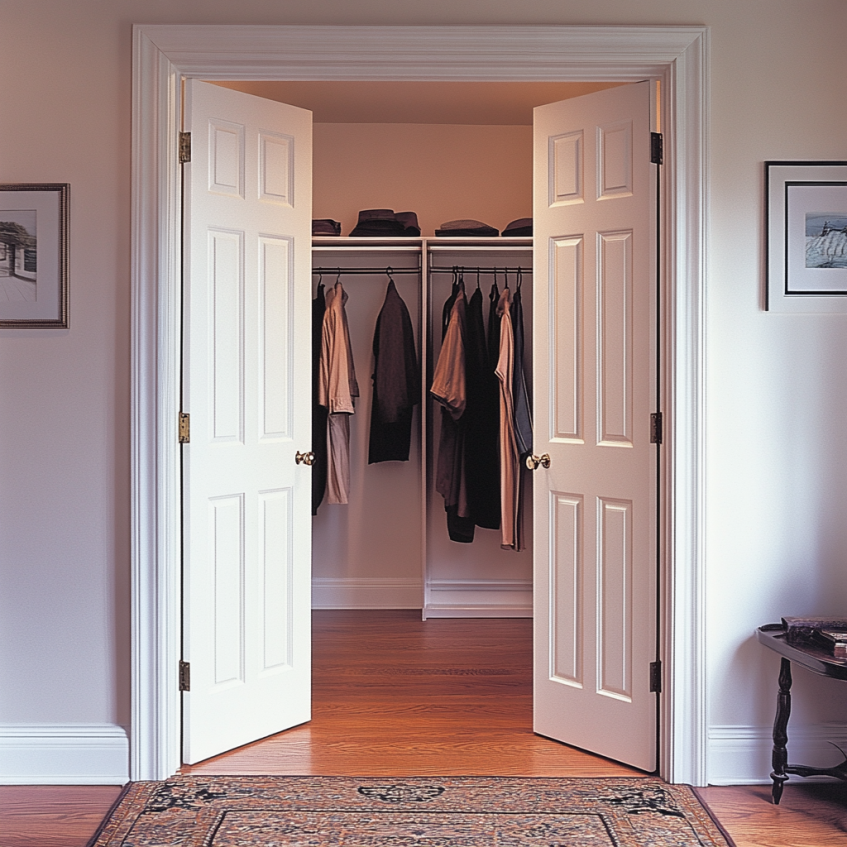
Swinging closet doors maximize closet space while offering ease of access. Double swinging closet doors are a great option because they swing outside the closet, taking up less space than traditional single-hinge doors. This extra space helps to better organize your closet, and the doors can be painted to match the walls or add a pop of color to make a statement.
6
Pantry and Butler Doors
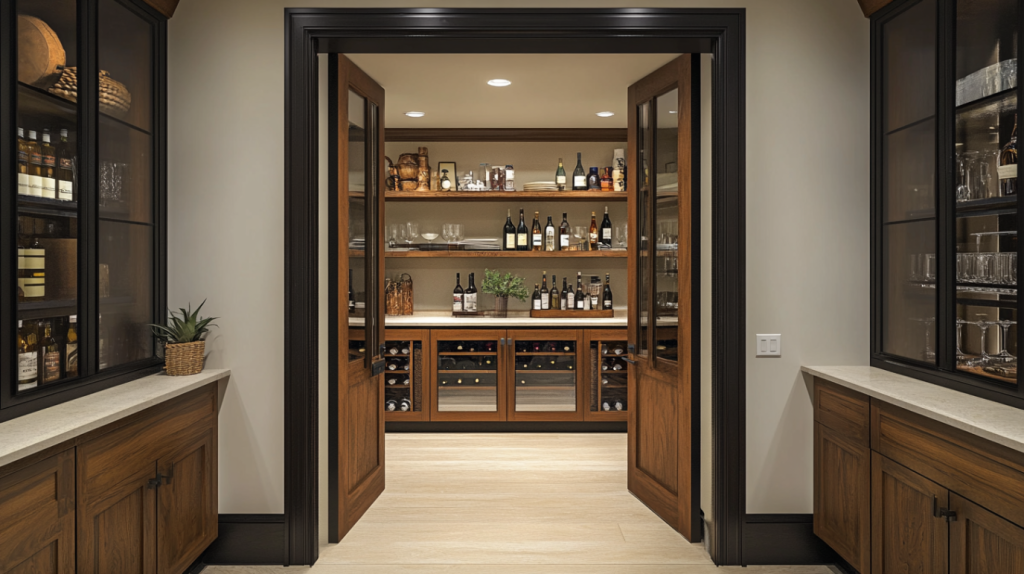
Doors that swing are an excellent choice for pantry doors. These doors can be made to full- or half-length, with customizable heights available. With swinging pantry doors, you can easily open them with your elbow, finger, or hip when your hands are full. The doors will automatically return to the closed position, keeping the pantry hidden. Many of these doors come with a hold-open feature, which allows them to stay open when needed, making it easy to load or unload items from your pantry.
7
Restaurant Swinging Doors
In restaurants, double-swinging doors are a must-have, especially between the kitchen and dining areas. These doors help create separation, reduce noise, and keep kitchen smells from reaching the dining room. Popular designs include the Maritime Porthole Door, a stylish and practical choice for restaurants. Many of these door designs, originally used in restaurants, have now made their way into residential applications.
8
Saloon Swing Doors(Cafe Doors)
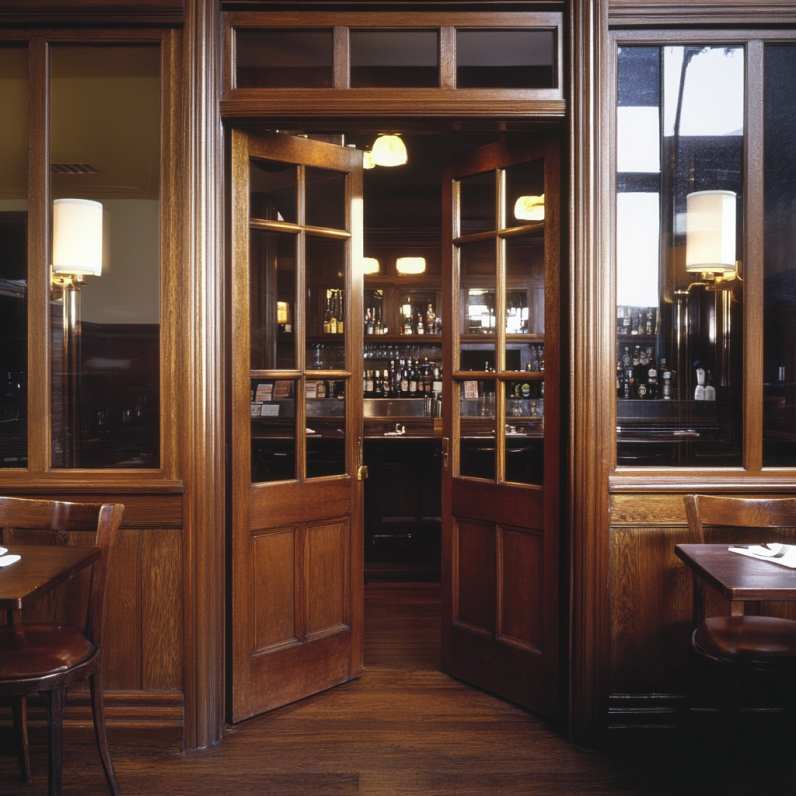
Saloon doors(Cafe doors), a type of double-swing door, are typically used in restaurants, bars, and cafes. They allow staff to move quickly in and out of spaces like kitchens or service areas, while still providing separation between different parts of the establishment. These doors come in a variety of designs, including modern, traditional, barn-style, and contemporary. Often seen in western-style setups, saloon doors add a decorative touch to spaces while ensuring easy access and a smooth flow of movement.
Conclusion
Thinking of replacing your door? A swinging door offers seamless operation and a stylish upgrade to any space.
For latest door designs and customization options, reach out to PA Home to explore a wide range of swing doors that perfectly suit your needs.
FAQs about Swinging Doors
Outswing doors require more space outside, are more vulnerable to weather elements, and may pose a security risk in certain settings.
To determine the swing type, stand on the side where the door opens towards you and see if it swings to the right or left.
Single-swing doors are generally the easiest to install as they require fewer components compared to double-swing or sliding doors.
The most common types of moving doors are sliding doors, swing doors, bi-fold doors, and pivot doors.
A double-acting door swings both ways and is often used in high-traffic areas.
In door terminology, RH and LH refer to Right-Hand and Left-Hand doors, respectively. These labels indicate the direction in which a door swings when you are standing on the side where the door opens.
RH (Right-Hand): If you stand on the side of the door where it opens and the hinges are on the right, the door is considered Right-Hand.
LH (Left-Hand): If the hinges are on the left side when you are standing on the side where the door opens, the door is considered Left-Hand.
Automatic swing doors use sensors to detect movement. When someone approaches, the door automatically swings open without needing to be touched, making them ideal for high-traffic areas where hands-free operation is necessary.